

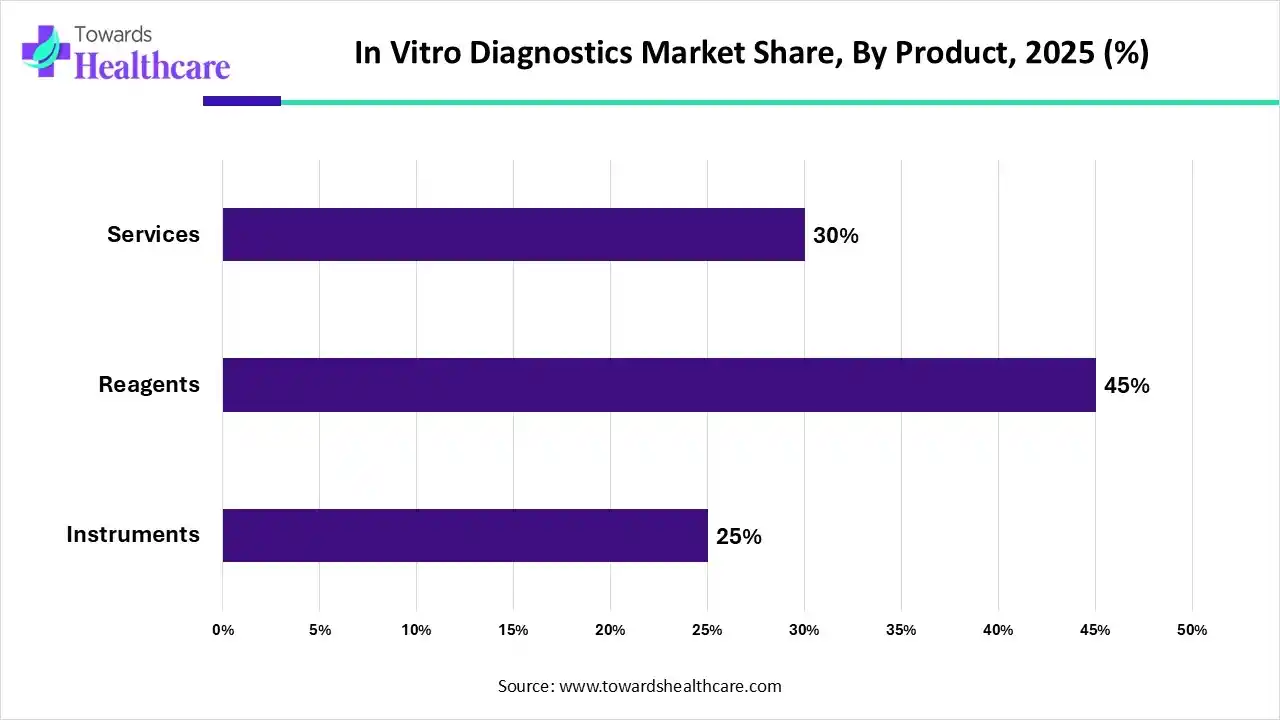
Why Are Reagents Powering 25% of the In Vitro Diagnostics Market Growth?!

Download Free Sample: https://www.towardshealthcare.com/download-sample/5229
Reagents: The Backbone of Every Test
Reagents are not just supporting elements—they are the core functional components of diagnostic testing.
They include enzymes, antibodies, primers, buffers, and chemical solutions that directly interact with patient samples. Without them, even the most advanced diagnostic instruments become ineffective.
These components are available as complete kits or individual materials, depending on laboratory needs. Their flexibility makes them essential across hospitals, research labs, and diagnostic centers.
Why Reagents Are Leading the Market
The dominance of reagents is not accidental. It is driven by their continuous consumption and irreplaceable role in testing workflows.
Every test requires fresh reagents. This recurring demand ensures consistent market growth, unlike instruments, which are purchased less frequently.
Here are the key reasons behind their dominance:
-
High usage frequency: Every diagnostic test consumes reagents, making them indispensable
-
Wide application range: From infectious diseases to genetic disorders, reagents are used everywhere
-
Customization flexibility: Labs can choose specific reagents based on test requirements
-
Technological integration: Advanced diagnostics like PCR and immunoassays rely heavily on reagents
This constant demand makes reagents the most stable and scalable segment in the IVD ecosystem.
Accuracy Begins with Quality
In diagnostics, accuracy is everything.
Reagents directly influence the reliability of test results. Even a slight variation in reagent quality can lead to incorrect outcomes, affecting patient care decisions.
That is why manufacturers invest heavily in:
-
Rigorous quality control systems
-
Clinical validation processes
-
Regulatory approvals and compliance
These steps ensure that reagents deliver consistent and precise results, making them the most trusted component in diagnostics.
Innovation Is Transforming Reagents
The reagents segment is not static. It is rapidly evolving with advancements in biotechnology and molecular diagnostics.
Modern reagents are now designed to work with cutting-edge technologies such as:
-
Real-time PCR
-
Next-generation sequencing (NGS)
-
Immunoassays and biosensors
These innovations allow faster detection, improved sensitivity, and better disease monitoring.
For example, in September 2023, a Bengaluru-based company, NeoDx Biotech Labs, introduced an IVD kit for Ankylosing Spondylitis using real-time PCR technology.
This development highlights how reagents are enabling precision diagnostics at a deeper molecular level.
The Shift Toward Personalized Medicine
Healthcare is moving toward personalized treatment. Diagnostics plays a key role in this transformation, and reagents are at the center of it.
Reagents help identify genetic variations, biomarkers, and disease-specific indicators. This enables doctors to tailor treatments based on individual patient profiles.
As personalized medicine grows, the demand for specialized and high-performance reagents will increase significantly.

Get a Sample of this Report
Why Are Reagents Powering 25% of the In Vitro Diagnostics Market
