

Lancets Market Size, Trends, Forecast with Latest Industry Reports 2026

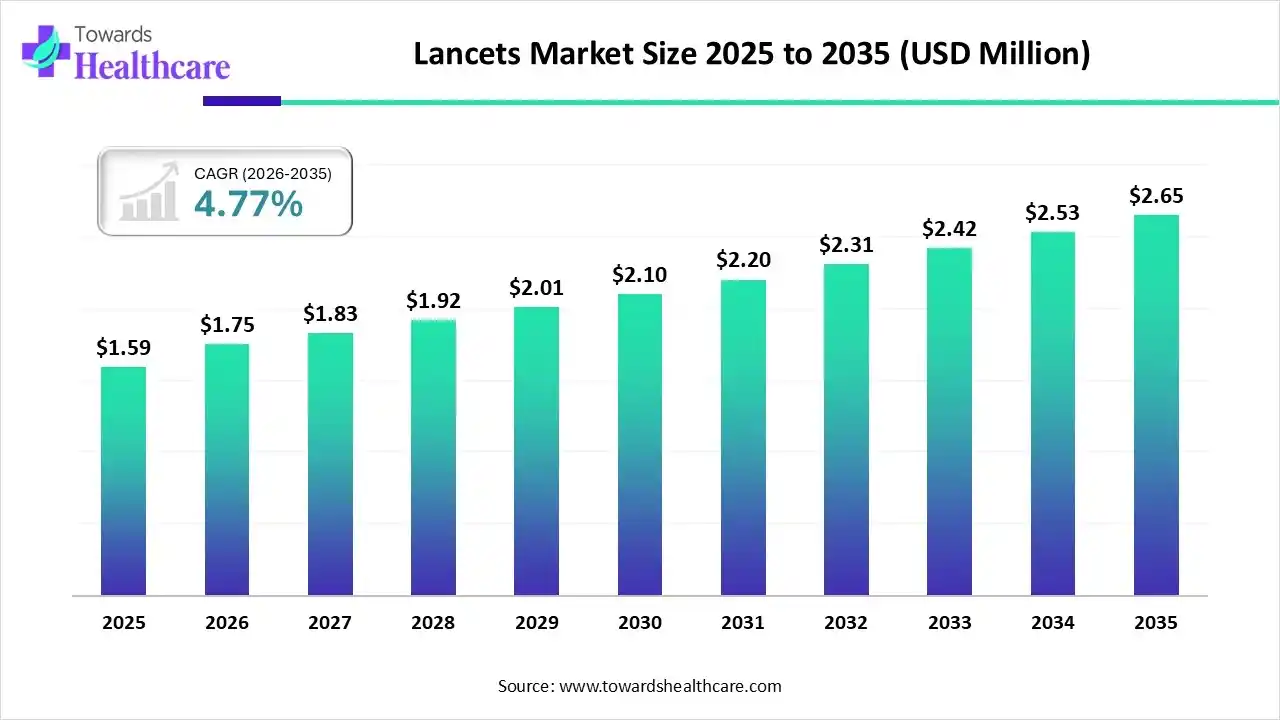
Market Size
Base Market (2025): USD 1.59 billion.
Forecast Market (2035): USD 2.65 billion.
Overall Growth Rate: CAGR of 4.77% between 2026 and 2035.
Regional Importance:
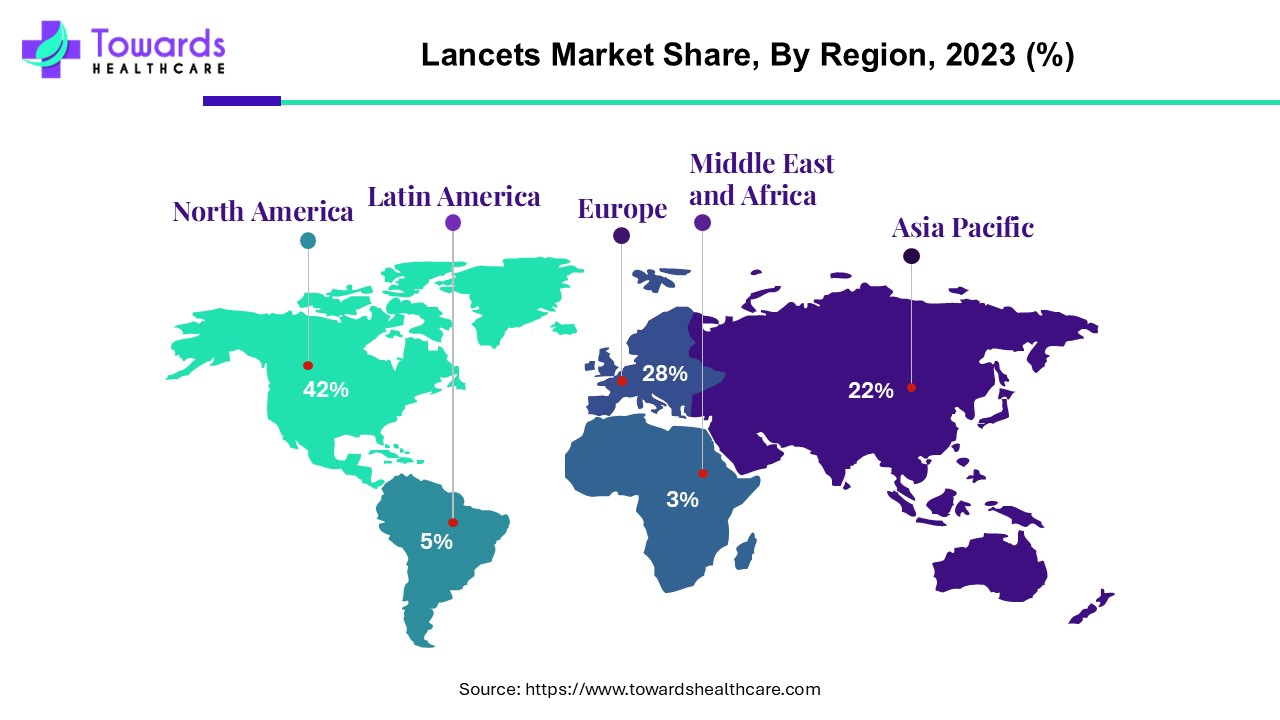
North America holds the largest share globally (≈ 42% in 2024), due to advanced healthcare infrastructure and high chronic disease burden.
Asia‑Pacific is the fastest-growing region over the forecast period.
India shows especially strong growth potential: from ~USD 120 million (2024) to ~USD 414.35 million by 2034 — implying a high regional CAGR (~13.2%).
Segment Strength:
By type, “Standard lancets” remain the volume leaders.
By needle gauge, 23G–33G sizes dominate in volume (versatile for general blood tests).
By end‑user facility type, hospitals currently lead usage.
Growth Potential Zones: Growing adoption of safety and advanced lancing technologies, especially in emerging regions (Asia-Pacific, India), indicates significant upside beyond base-case projections.
Market Trends
Rising Diabetes and Chronic Disease Prevalence: As global diabetes cases (type I & II) and other chronic conditions (like cholesterol, hemoglobin disorders) increase, demand for regular blood sampling hence lancets climbs sharply.
Shift toward At-Home Testing: There’s growing demand for home blood tests (diabetes monitoring, cholesterol, HbA1c, etc.), driving sales of disposable lancets, at-home lancing devices, and homecare kits.
Demand for Safety and Pain-Free Devices: Patients, especially elderly and pediatric, prefer lancets designed for minimal pain (e.g., retractable safety lancets, nano‑lancets, adjustable-depth lancets).
Regulatory Approvals & Certifications: New products obtaining CE mark or regulatory clearances (e.g., for over-the-counter (OTC) and home-use blood sampling) are accelerating market acceptance.
Mergers & Acquisitions Boosting Capacity: Consolidation (e.g., acquisitions by larger players) helps scale production, improve distribution networks, and reduce per-unit cost — making lancets more accessible globally.
Technological Innovation — Nano‑Lancets & Smart Devices: Adoption of nanotechnology in lancets for finer needles and less pain; future direction toward integrating sensors and smart blood analyzers.
Rise in Safety Concerns & Infection Control: Growing awareness of needlestick injuries, bloodborne infections (Hepatitis, HIV) encourages safety-lancets over conventional ones.
Cost-Effectiveness Pressure in Developing Regions: In price-sensitive emerging markets, standard lancets dominate because of lower cost, balancing growth vs advanced-lancet adoption.
Growth of Ambulatory Surgical Centers (ASCs) and Homecare Diagnostics: As more diagnostics shift from hospitals to ASCs and homecare, demand patterns evolve — pushing for portable, safe, user-friendly lancets.
Public Health & Preventive Care Emphasis: Increased preventive health check-ups and chronic‑disease screening programs worldwide fuel routine blood testing, supporting steady growth in lancet demand.
AI’s Potential Impact / Role in the Lancets Market
Demand Forecasting & Inventory Optimization: AI-driven analytics can model disease prevalence, demographic shifts, and healthcare trends to better forecast regional lancet demand, reducing shortages or overproduction.
Smart Lancing Devices with Adaptive Sampling: AI-enabled lancing devices could adjust needle depth, pressure, and timing based on real-time feedback (skin thickness, blood flow), minimizing pain and improving sample quality.
Integration with Telehealth & Remote Diagnostics: AI platforms can analyse data from lancet-based blood samplings (e.g., glucose, HbA1c, lipid profile) remotely — enabling chronic disease monitoring without clinic visits.
Quality Control in Manufacturing: AI-powered vision systems or sensors can ensure sterility, needle integrity, and compliance with safety standards during mass production of lancets.
Predictive Patient Compliance & Usage Patterns: AI can analyze patient history (age, diabetes severity, frequency of testing) to recommend optimal lancet type (gauge, safety vs standard), reducing waste and improving compliance.
Personalized Lancet Recommendations: AI tools (e.g., mobile apps) can suggest lancet size/type based on user demographics (skin thickness, age, sensitivity), reducing trial-and-error and enhancing comfort.
Smart Waste Management: AI-enabled tracking of used lancets to ensure safe disposal, avoid re-use, and monitor compliance — reducing risk of infection and needlestick injuries.
Market Expansion Analytics: AI-driven market intelligence can highlight emerging high-growth regions (e.g., parts of Asia, Africa) by analyzing demographic, disease, and healthcare infrastructure data — guiding companies where to invest.
Integration into Wearable or Continuous Monitoring Ecosystems: AI could help merge lancet sampling data with continuous glucose monitors or other wearable health devices — providing holistic, real-time health insights.
R&D Acceleration & Lancet Innovation: AI-driven simulation and design can help develop new lancet types (e.g., nano‑lancets, painless retractable, sensor‑embedded), optimizing safety, patient comfort, and manufacturing efficiency before physical prototypes.
Regional Insights
North America:
Market leadership (≈ 42%) — due to high chronic disease burden and well-established healthcare infrastructure.
Advanced homecare & diagnostics adoption — high demand for at-home blood testing (diabetes management, cholesterol, etc.).
Favorable regulatory environment & insurance coverage — supports frequent blood testing and lancet usage.
Asia-Pacific:
Fastest growth trajectory — driven by aging populations, rising chronic disease rates, improved healthcare access.
Emerging markets (e.g. China, India) — large diabetic populations and growing awareness of regular health monitoring.
Cost sensitivity driving mixed adoption — while developed urban areas may adopt safety/nano lancets, rural or low-income regions may continue using standard, lower-cost lancets.
India (Subregion Insight):
From ~USD 120 million (2024) to projected ~USD 414.35 million (2034).
High growth due to rising diabetes prevalence (millions of affected adults), increasing health awareness, and expansion of homecare diagnostics.
Potential for leapfrogging to safety / advanced lancets as affordability and awareness improve.
Europe:
Moderate growth driven by chronic disease prevalence, aging population, and governmental support for preventive screening.
Adoption of improved lancets due to higher safety and regulatory standards.
Other Regions (Latin America, MEA):
Emerging demand as healthcare infrastructure improves; growth may be uneven due to cost and access constraints.
Opportunity for low-cost standard lancets to dominate initially, with gradual shift toward safety/advanced types if health awareness and affordability increase.
Market Dynamics
Key Drivers:
Rising global burden of diabetes and chronic diseases → regular blood sampling demand.
Growth in at-home diagnostics and self-monitoring.
Innovation in lancet technology: safety, pain-free, nano‑lancets.
Aging populations worldwide — more frequent diagnostics, chronic disease monitoring.
Healthcare infrastructure expansion and regulatory acceptance of home-use lancets.
Restraints / Challenges:
Risk of needlestick injuries and associated bloodborne infections (Hepatitis, HIV).
Pain and discomfort associated with traditional lancets — may discourage frequent use.
Cost constraints, especially in low-income or developing regions — limiting adoption of advanced lancets.
Regulatory and compliance barriers for safety/advanced lancets and disposal standards across regions.
Opportunities:
Rising demand for safety-lancets and pain-free nano‑lancets especially in homecare and pediatric/geriatric use.
Growth of ambulatory surgical centers (ASCs) and home-testing kits expanding user base beyond hospitals.
Mergers, acquisitions, and collaborations enabling improved production, distribution, and innovation.
Integration with telemedicine and smart health ecosystems — broadening market beyond diabetes to general chronic disease monitoring and preventive health.

Get a Sample of this Report
Lancets Market
