

Nucleic Acid Drugs Market Growth : The $286 Million Opportunity

Unpacking the Nucleic Acid Drug Phenomenon
The healthcare world is rapidly evolving, and at the heart of this transformation lies nucleic acid drugs, a class of therapeutics designed to interact directly with genes and RNA to combat diseases at their source. Unlike traditional drugs, which often treat symptoms, nucleic acid drugs aim to correct or silence the genetic errors causing illnesses. They include antisense oligonucleotides (ASOs), small interfering RNAs (siRNAs), messenger RNA (mRNA), DNA plasmids (pDNA), aptamers, and other genetic constructs.
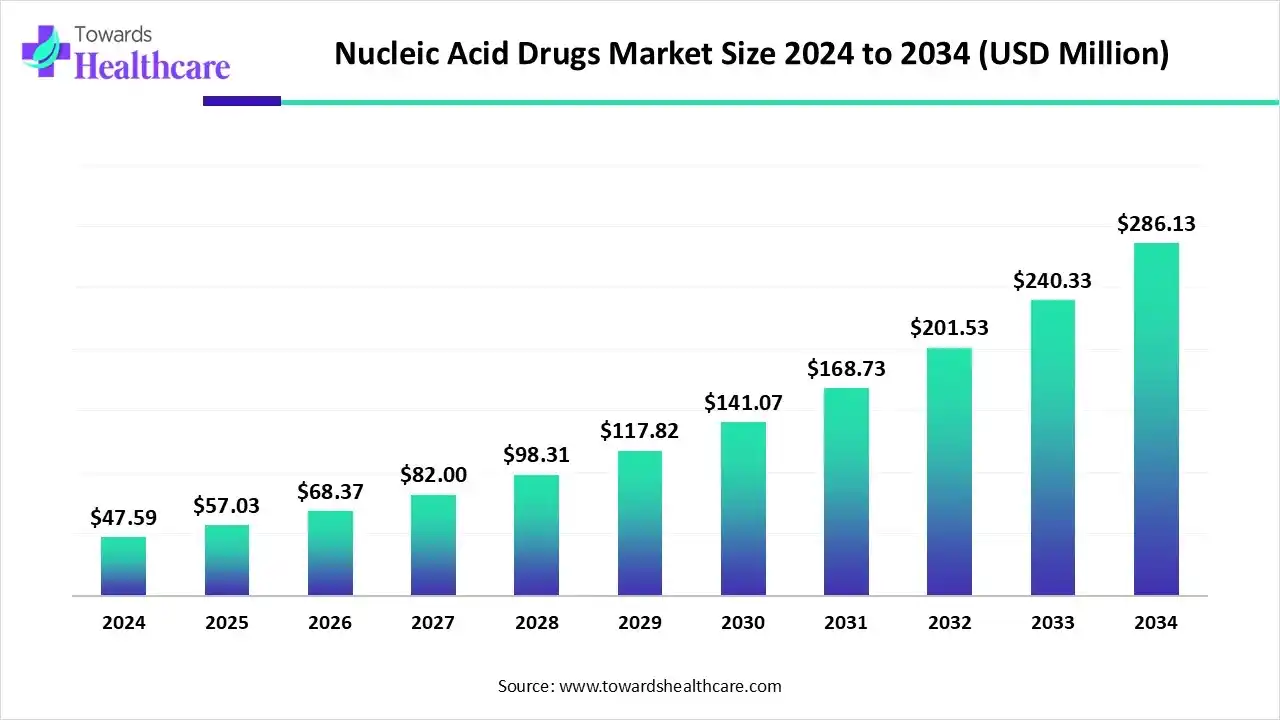
This field is expanding rapidly. The global nucleic acid drugs market is estimated to grow from $57.03 million in 2025 to a staggering $286.13 million by 2034, reflecting a CAGR of 19.84%. These numbers underscore how researchers, pharmaceutical companies, and biotech startups are collectively reshaping medicine.
Download Free Customized Sample Now @ https://www.towardshealthcare.com/download-sample/6378
Why Are Nucleic Acid Drugs Gaining Momentum?
1. Precision at Its Core
Nucleic acid drugs act at the genetic level, offering high specificity and precision. Unlike conventional treatments that might affect multiple pathways in the body, these drugs target the exact sequence of RNA or DNA responsible for a disease. This precision reduces side effects and opens doors to personalized medicine, where treatments are tailored to an individual’s genetic profile.
2. Growing Burden of Genetic and Chronic Diseases
The rise of chronic illnesses, cancer, and rare genetic disorders worldwide is fueling the demand for nucleic acid therapeutics. Traditional drugs often fall short in treating these conditions, whereas nucleic acid drugs provide targeted, gene-level interventions. Diseases that were once considered untreatable now have hope through antisense therapies, RNA interference, and mRNA-based treatments.
3. AI and Advanced Technologies Supercharge Development
Artificial intelligence (AI) is now playing a central role in drug design and optimization. Platforms can predict RNA structures, assess cellular functions, and model drug interactions with incredible accuracy. This technological boost enhances stability, efficacy, safety, and binding affinity, accelerating development timelines and expanding the scope of possible therapies.
Market Insights: Who’s Leading the Way?
North America currently dominates the nucleic acid drugs market, holding about 45% of global share, thanks to robust pharmaceutical infrastructure, R&D investment, and access to cutting-edge technologies. The U.S., in particular, is home to major biotech hubs driving innovation in mRNA and RNA editing therapies.
Asia Pacific is projected to become the fastest-growing market, led by countries like China, Japan, and India. Increased healthcare investments, government support, and a growing biotech startup ecosystem are propelling adoption. Meanwhile, Europe is steadily advancing, backed by strong government funding, research institutes, and startups exploring RNA and DNA-based therapeutics.
Drug Types: What’s Making the Biggest Impact?
Antisense Oligonucleotides (ASOs) – The Current Leader
ASOs held a 30% market share in 2024, primarily due to their effectiveness in treating genetic diseases and rare conditions. They are relatively easy to synthesize, which accelerates production and encourages innovation. ASOs continue to dominate because they offer precision targeting of disease-causing genes, particularly in neurology and metabolic disorders.
Messenger RNA (mRNA) – The Fastest Growing Star
The mRNA segment is expected to see rapid growth, thanks to the success of COVID-19 vaccines and the expanding use of mRNA in oncology and rare diseases. mRNA drugs work by instructing cells to produce therapeutic proteins, offering a flexible and potent approach to treatment. Their scalability and adaptability make them particularly attractive for personalized medicine.
Other Promising Types
-
siRNAs: Silence disease-causing genes with high specificity.
-
pDNA: Facilitate long-term protein expression.
-
Aptamers and miRNA modulators: Provide novel approaches for targeted therapy.
Therapeutic Areas: Where Nucleic Acid Drugs Shine
Oncology – Precision Strikes Cancer
Cancer remains a leading therapeutic area for nucleic acid drugs, with a 35% market share in 2024. These therapies offer target-specific action, reducing collateral damage to healthy cells. Nucleic acid drugs are instrumental in cancer immunotherapies and vaccine development, allowing for highly individualized interventions.
Genetic Disorders – The Future of Personalized Medicine
While oncology currently dominates, genetic disorders are projected to see the fastest growth. Nucleic acid drugs can correct faulty genes or modulate RNA to restore normal cellular function, providing hope for patients with rare or inherited conditions.
Expanding Horizons
The use of nucleic acid drugs is extending to infectious diseases, cardiovascular disorders, neurological conditions, and metabolic or ophthalmic diseases, showcasing their versatility.
Delivery Technologies: Making Genetic Medicine Work
A critical challenge for nucleic acid drugs is safe and effective delivery. These molecules are fragile and can degrade quickly without proper carriers.
Lipid Nanoparticles (LNPs) – Proven Success
LNPs dominate the market with a 40% share in 2024, largely due to their successful application in mRNA vaccines. They protect the nucleic acid payload and enhance targeted delivery, improving both safety and efficacy.
Ligand Conjugates – Targeted Precision
Ligand conjugates are emerging as the fastest-growing delivery method, particularly in siRNA therapies. They provide targeted delivery to specific tissues, minimizing side effects and maximizing therapeutic outcomes.
Other Innovative Approaches
-
Viral vectors (AAV, lentivirus): Efficient gene delivery systems.
-
Polymeric nanoparticles: Customizable carriers for stability and controlled release.
-
Electroporation & physical methods: Facilitate direct cellular uptake in challenging tissues.

Get a Sample of this Report
Nucleic Acid Drugs Market
