

South America Biologics Market to Hit $54.5 Billion; Is the Region Entering a New Era of Advanced Healthcare?

A Market That Is Expanding at Full Speed
The biologics market in South America was valued at US$ 16.5 billion in 2023 and is projected to reach nearly US$ 54.5 billion by 2031, growing at a strong CAGR of 16.1%.
This rapid expansion reflects a structural shift in the healthcare system. Biologics, derived from living cells, are becoming essential in treating complex and chronic diseases.
At the same time, the broader biopharmaceutical sector is also growing steadily, expected to reach around US$ 35 billion by 2028, with a growth rate close to 12% annually.
Even more striking is the growth of biosimilars, which are expanding at over 30% CAGR, making biologics more accessible and cost-effective across different income groups.
The Real Drivers Behind This Growth
The rise of biologics in South America is not just about innovation—it is driven by real healthcare needs.
Chronic diseases such as cancer, autoimmune disorders, and infectious diseases are increasing significantly. Countries like Brazil and Argentina are witnessing a surge in patients who require more targeted and effective therapies.
In Brazil alone, millions of people are affected by rare and chronic conditions, creating strong demand for biologic treatments that offer precision and better outcomes.
Another key factor is awareness. Patients and healthcare providers are increasingly choosing therapies that provide long-term effectiveness rather than short-term relief.
Global Market Growth
The biologics market size is projected to reach USD 1009.33 billion by 2035, growing from USD 522.06 billion in 2026, at a CAGR of 7.6% during the forecast period from 2026 to 2035.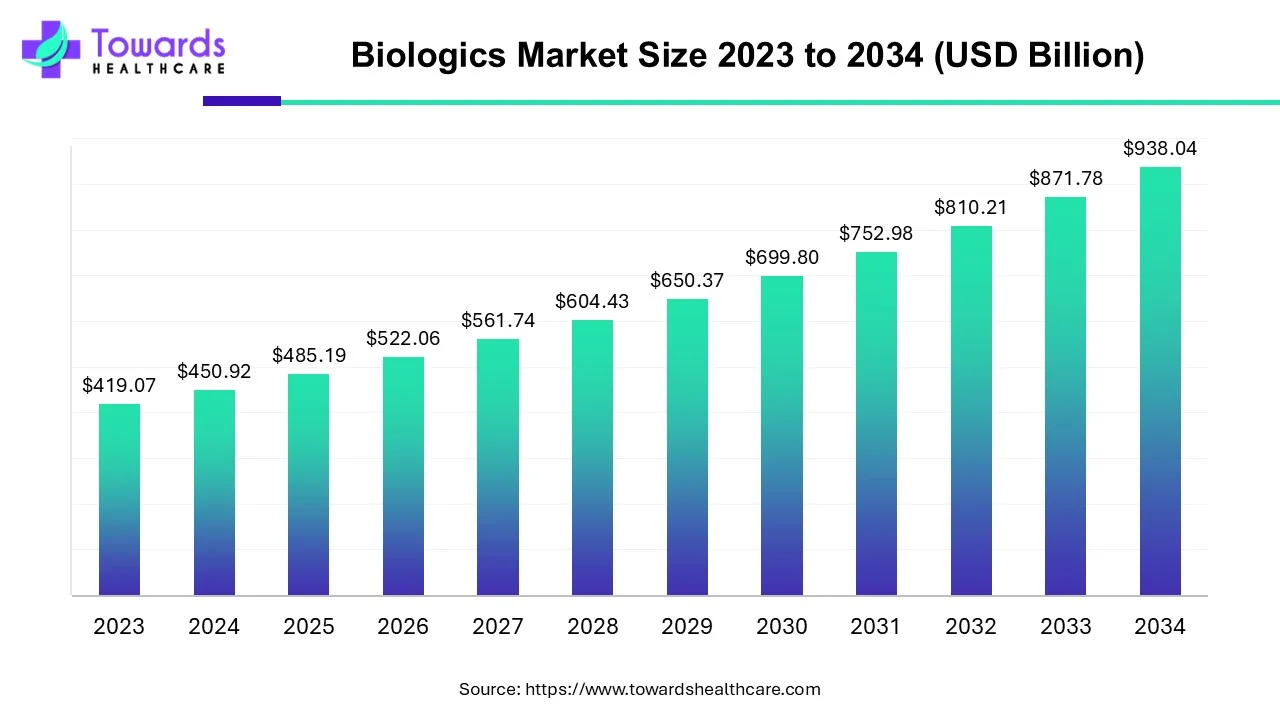
Segment Insights: Where the Market Is Concentrated
Monoclonal Antibodies Lead the Market
Monoclonal antibodies dominate the product segment, holding around 36% market share.
This segment generated close to US$ 6 billion in 2023 and is expected to cross US$ 20 billion by 2031.
These therapies are widely used in oncology and autoimmune diseases, making them one of the most critical pillars of the biologics industry.
Cancer Remains the Largest Application Area
Cancer accounts for the largest application segment, contributing approximately 42–43% of the total market share.
The segment generated over US$ 7 billion in 2023 and is projected to exceed US$ 24 billion by 2031.
The growing cancer burden and the shift toward targeted therapies are the key reasons behind this dominance.
Mammalian Cell-Based Biologics Dominate Production
Biologics derived from mammalian cells hold nearly 62% of the market share.
These products accounted for more than US$ 10 billion in 2023, driven by their ability to produce complex proteins required for advanced treatments.
If you want more data, insights, competitors analysis and many more, then download our FREE customized sample report: https://www.towardshealthcare.com/download-sample/5108
Their reliability and effectiveness make them the preferred choice for large-scale biologics production.
Outsourcing Is Becoming the New Normal
Outsourced manufacturing is gaining strong traction, capturing close to 75% of the market share.
This segment generated over US$ 12 billion in 2023, as pharmaceutical companies increasingly rely on contract manufacturing organizations to reduce costs and accelerate production.
This shift is helping companies scale faster while maintaining quality and efficiency.
Brazil Leads, Others Follow
Brazil continues to dominate the South American biologics market, accounting for around 65% of the total regional share.
With a market value exceeding US$ 10 billion, the country benefits from a strong pharmaceutical base, increasing research investments, and a large patient population.
Argentina and other South American countries are gradually strengthening their position, but Brazil remains the central hub for biologics growth.
Trends That Are Redefining the Market
The biologics market is not just growing—it is evolving rapidly with new trends shaping its future:
- Increasing shift toward personalized medicine
- Rising adoption of gene and cell therapies
- Expansion of biosimilars for affordability
- Growing reliance on contract manufacturing and partnerships
These trends highlight a transition from volume-driven healthcare to value-driven treatment approaches.

Get a Sample of this Report
South America Biologics Market
