

Subcutaneous Biologics Market Set to Surge: A Self-Care Revolution in Therapeutics

Market Overview
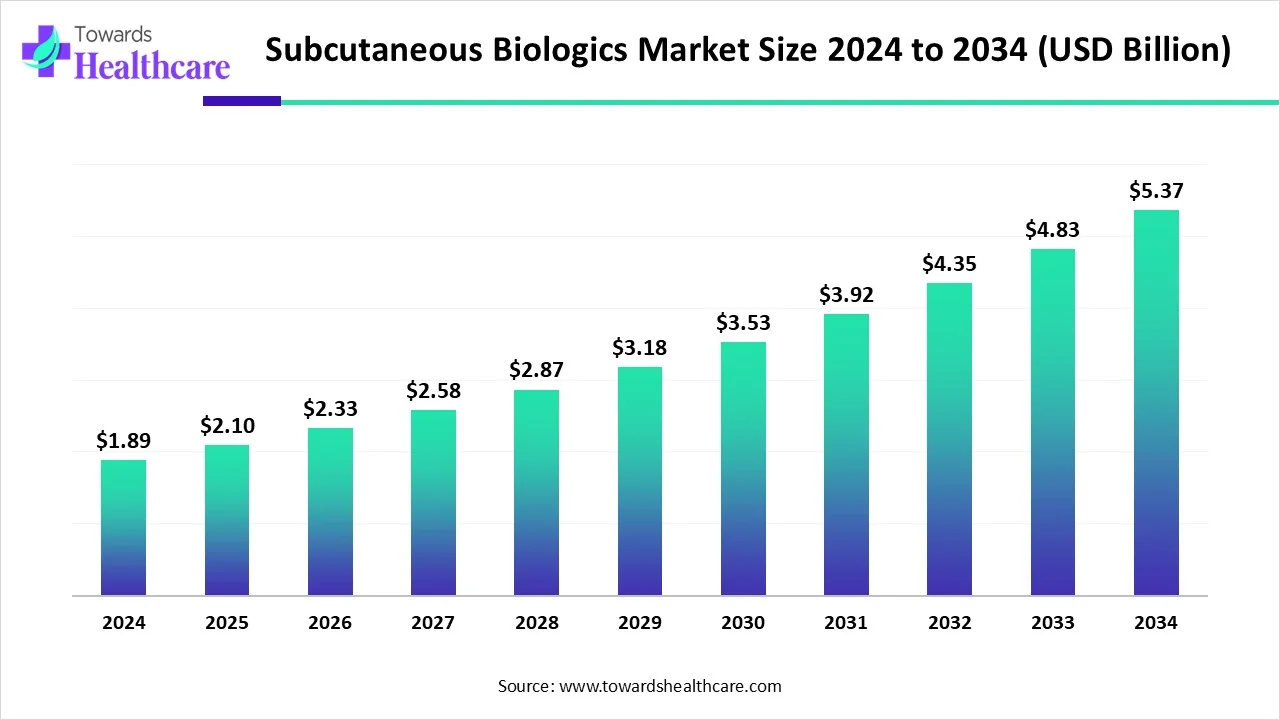
The global subcutaneous biologics market is on a strong growth trajectory, projected to expand from USD 1.89 billion in 2024 to USD 5.37 billion by 2034, marking a robust CAGR of 11.09%. This surge is largely driven by the increasing demand for self-administered therapies, patient-friendly delivery methods, and advancements in biologics and drug delivery technologies.
What are Subcutaneous Biologics?
Biologics are complex therapies derived from living cells, including monoclonal antibodies, vaccines, gene therapies, and more. These are administered either intravenously (IV) or subcutaneously (SC). Subcutaneous administration involves injecting the drug directly into the fatty tissue beneath the skin, allowing for slower and sustained absorption, making it a preferred route for many therapies.
Invest in Our Premium Strategic Solution: https://www.towardshealthcare.com/download-databook/5726
Key Market Highlights
-
2024 Market Size: USD 1.89 Billion
-
2034 Forecast: USD 5.37 Billion
-
Growth Rate (2025–2034): 11.09% CAGR
-
Regional Leader: North America
-
Fastest-Growing Region: Asia-Pacific
Segmental Insights
By Biologic Type:
-
Dominant in 2024: Antibodies led the market revenue.
-
Emerging Leader: Nucleotides are anticipated to witness rapid growth.
By Administration Method:
-
Top Contributor in 2024: Injections
-
Fast-Growing Segment: Infusion methods are gaining traction due to ease of use and patient compliance.
By Therapeutic Area:
-
Leading Segment: Autoimmune disorders
-
Highest Projected Growth: Oncological disorders due to increasing cancer cases and advancements in immunotherapy.
Market Trends Fueling Growth
1. Rising Preference for Self-Administration
Subcutaneous delivery is revolutionizing patient care by enabling home-based treatment. It eliminates the need for clinical visits, improves treatment adherence, and promotes a more patient-centric approach.
2. Technological Collaborations
-
Novartis & Lindy Biosciences (Aug 2024): Partnered to develop single-dose injectables using microglassification technology.
-
OneSource & Bhami’s Research Laboratory (Aug 2024): Collaborated on HILOPROO technology to reduce viscosity for high-concentration biologics.
AI Empowering Drug Delivery
Artificial Intelligence (AI) is increasingly being embedded into smart drug delivery systems. AI can:
-
Automate dose measurement and reminders
-
Ensure regulatory compliance
-
Provide real-time insights to healthcare professionals
-
Enhance personalized dosing and medication adherence
FAQ's

Get a Sample of this Report
Subcutaneous Biologics Market
