

U.S. Dental Services Market Size, Regional Insights, Growth and Reports 2034

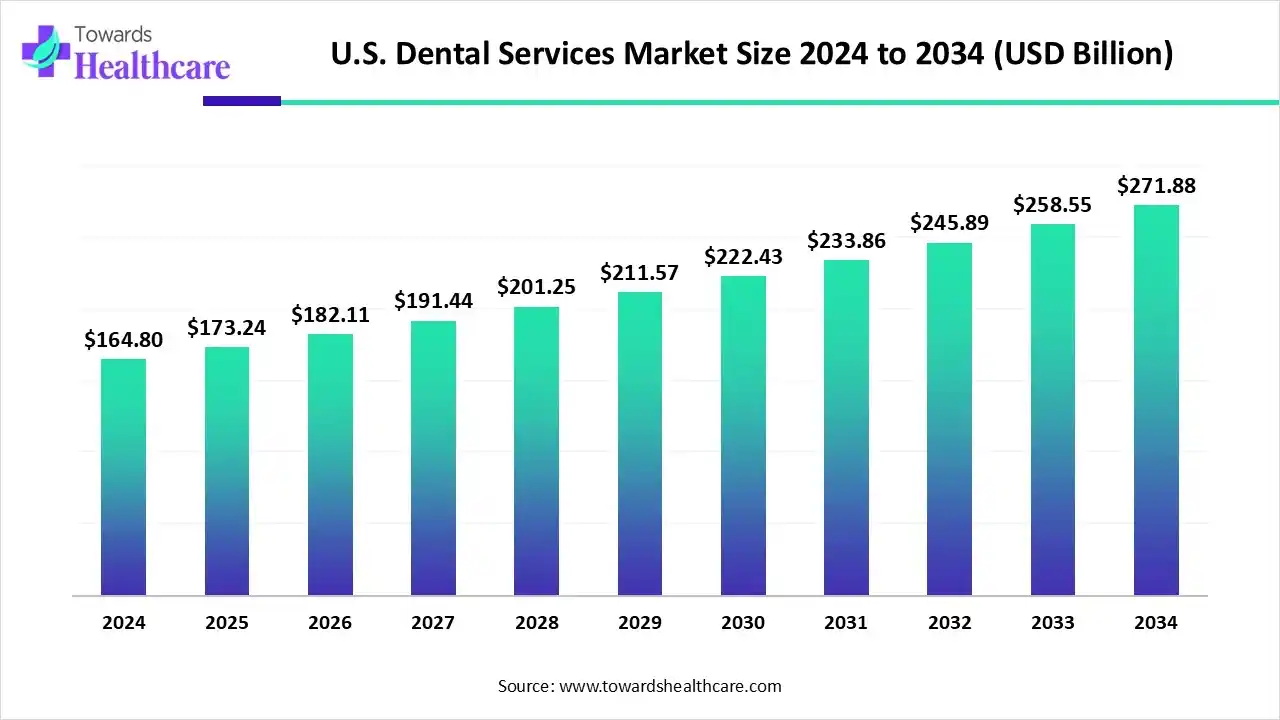
Market Size (2024-2034)
▶Market Size (2024): USD 166.5 billion
▶The market is expected to grow to USD 172.6 billion in 2025, with a CAGR of 4.4% between 2025 and 2034.
▶Projected Market Size (2034): USD 254.7 billion
▶A robust growth trajectory, propelled by an increase in consumer spending, healthcare awareness, and government initiatives.
Market Trends
Rising Disposable Incomes:
▶Continuous economic growth and urbanization are leading to higher disposable incomes, encouraging increased spending on dental care.
Awareness of Oral Health:
▶Growing awareness of the link between oral and systemic health is driving demand for preventative and cosmetic dental services.
Technological Advancements:
▶AI, digital imaging, teledentistry, and CAD/CAM are becoming more integrated into dental practices, making procedures more efficient and accessible.
Cosmetic Dentistry Growth:
▶More people are opting for cosmetic dental treatments such as teeth whitening, clear aligners, and smile design. This segment is poised to grow at the fastest CAGR.
Rising Demand for Endodontic Procedures:
▶Endodontic procedures, particularly root canals, dominate the market with around 23-25% market share due to the growing need for preserving natural teeth.
Private Health Insurance Dominance:
▶The private health insurance segment holds the largest share (79% of Americans have dental benefits), and this trend is likely to continue as healthcare coverage expands.
Shift Towards Dental Service Organizations (DSOs):
▶DSOs and group practices are expected to grow significantly during the forecast period due to their ability to handle administrative burdens and utilize cutting-edge technology.
Sustainability Trends:
▶"Green dentistry" aims to reduce the environmental footprint of dental care through sustainable practices in energy, waste, and materials usage.
Increased Funding for Oral Health:
▶Initiatives such as the $119 million investment by Delta Dental in 2025 for oral health improvement in all 50 states showcase strong financial support for expanding dental services.
Age Demographics:
▶The adults segment holds the largest share of the market, while the children and adolescents segment is expected to grow at the fastest CAGR.
AI's Impact on the U.S. Dental Services Market
AI-led Diagnostics:
▶AI algorithms are used to detect oral diseases early, improving diagnostic accuracy and treatment planning.
Enhanced Patient Engagement:
▶AI enhances communication through automated appointment reminders, patient education, and treatment suggestions.
Optimized Workflow:
▶AI-powered tools streamline administrative tasks like scheduling, billing, and record-keeping, improving efficiency.
Personalized Treatment Plans:
▶AI can tailor treatment recommendations to individual patients based on their health data and treatment history.
AI-Powered Teledentistry:
▶AI is enabling virtual dental consultations, particularly in remote areas, improving access to care.
Cost Reduction:
▶By automating routine tasks and improving diagnostic accuracy, AI reduces overall costs for dental practices.
Improved Follow-Up:
▶AI ensures better follow-up care, including timely reminders for routine visits or specific treatments, leading to improved patient outcomes.
Precision in Cosmetic Dentistry:
▶AI aids in creating precise cosmetic solutions, such as clear aligners and teeth whitening, by analyzing dental structures in real-time.
Predictive Analysis:
▶AI can predict future dental conditions based on past patient data, enabling preventive care measures and reducing emergency visits.
AI-Infused Customer Support:
▶Chatbots powered by AI provide 24/7 customer support, helping patients with common queries, treatment options, and appointment bookings.
Regional Insights
U.S. Market Growth:
▶The U.S. dental services market is growing rapidly, with significant investments in technology and healthcare infrastructure.
▶States like Delaware are seeing government-driven initiatives like the Kindergarten Oral Health Screening Program.
Expansion of Public Health Coverage:
▶Medicare and Medicaid are gradually expanding dental coverage, with recent legislation aiming to improve dental benefits for low-income populations and seniors.
Private Sector Involvement:
▶Companies like Delta Dental and VideaHealth continue to drive growth through investments in community health initiatives and AI-powered services.
State and Local Government Programs:
▶Local programs such as Florida's Medicaid Dental Program and Oral Health Florida are working to enhance oral care accessibility.
Technology Adoption:
▶AI startups like VideaHealth are gaining momentum in states like Ohio and California, revolutionizing diagnostic accuracy and care delivery.
Market Dynamics
Growth Drivers
▶Increasing Disposable Income: Rising income levels enable more individuals to afford dental care, including elective procedures like cosmetic dentistry.
▶Aging Population: An older demographic leads to higher demand for dental services, as older adults often require more dental care.
▶Expansion of Dental Service Organizations (DSOs): DSOs streamline operations for dental practices, allowing for better management and scalability, which enhances service delivery and access.
▶Government Healthcare Reforms: Legislative changes, such as the expansion of Medicare and Medicaid dental benefits, increase access to dental care for low-income populations and seniors.
▶Technological Advancements: The integration of AI and digital tools in diagnostics and treatment planning improves efficiency and patient outcomes.
Restraints
▶High Treatment Costs: The expense of dental procedures can be prohibitive, especially for those without adequate insurance coverage.
▶Limited Access in Rural Areas: Geographic and economic barriers restrict access to dental care in underserved regions.
▶Insurance Coverage Gaps: Many dental insurance plans have limited coverage, leading to out-of-pocket expenses for patients.
▶Workforce Shortages: A shortage of dental professionals in certain areas can lead to longer wait times and reduced access to care.
Opportunities
▶AI Integration: Implementing AI in diagnostics and treatment planning can enhance accuracy and efficiency in dental practices.
▶Expansion of Dental Insurance: Broadening dental insurance coverage can make dental care more affordable and accessible to a larger population.
▶Tele-dentistry: Offering remote consultations can bridge the gap for patients in remote areas or those with mobility issues.
▶Preventive Care Initiatives: Focusing on preventive care can reduce the incidence of dental diseases and lower overall treatment costs.
▶Collaborations with DSOs: Partnerships with DSOs can provide smaller practices with administrative support, allowing them to focus more on patient care.
Challenges
▶Complex Insurance Systems: Navigating the intricacies of dental insurance can be challenging for both providers and patients.
▶Administrative Burdens: Managing billing, coding, and insurance claims can be time-consuming and detract from patient care.
▶Regulatory Compliance: Adhering to state and federal regulations requires constant attention and can be resource-intensive.
▶Patient Education: Ensuring patients understand the importance of oral health and adhere to recommended treatments is an ongoing challenge.
▶Economic Factors: Economic downturns can lead to reduced spending on elective dental procedures, impacting practice revenues.

Get a Sample of this Report
U.S. Dental Services Market
