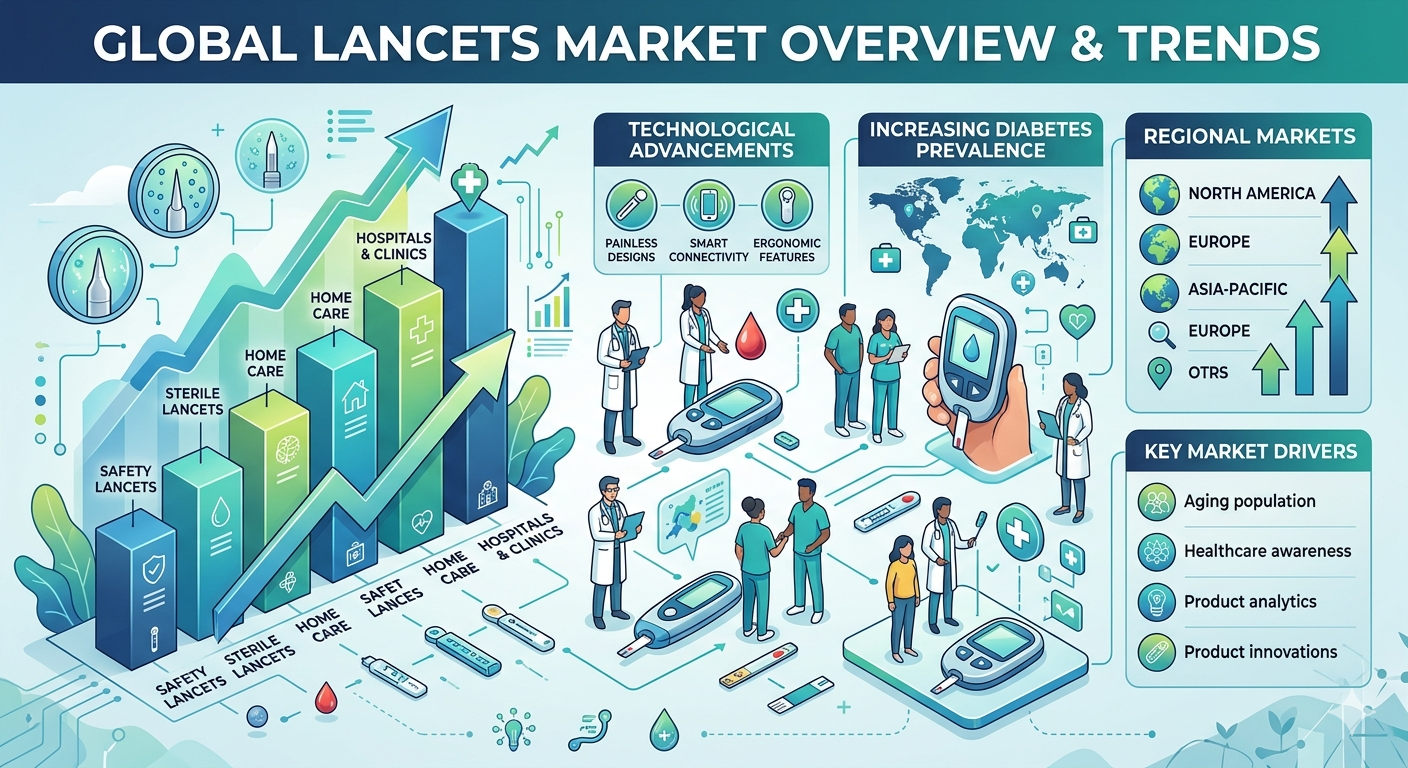
In the world of medical diagnostics, some of the most powerful tools are also the smallest. Lancets—tiny needles used to draw a drop of blood; are quietly becoming central to modern healthcare.
As chronic diseases rise and home-based diagnostics expand, this simple medical device is gaining enormous importance across hospitals, clinics, and households.
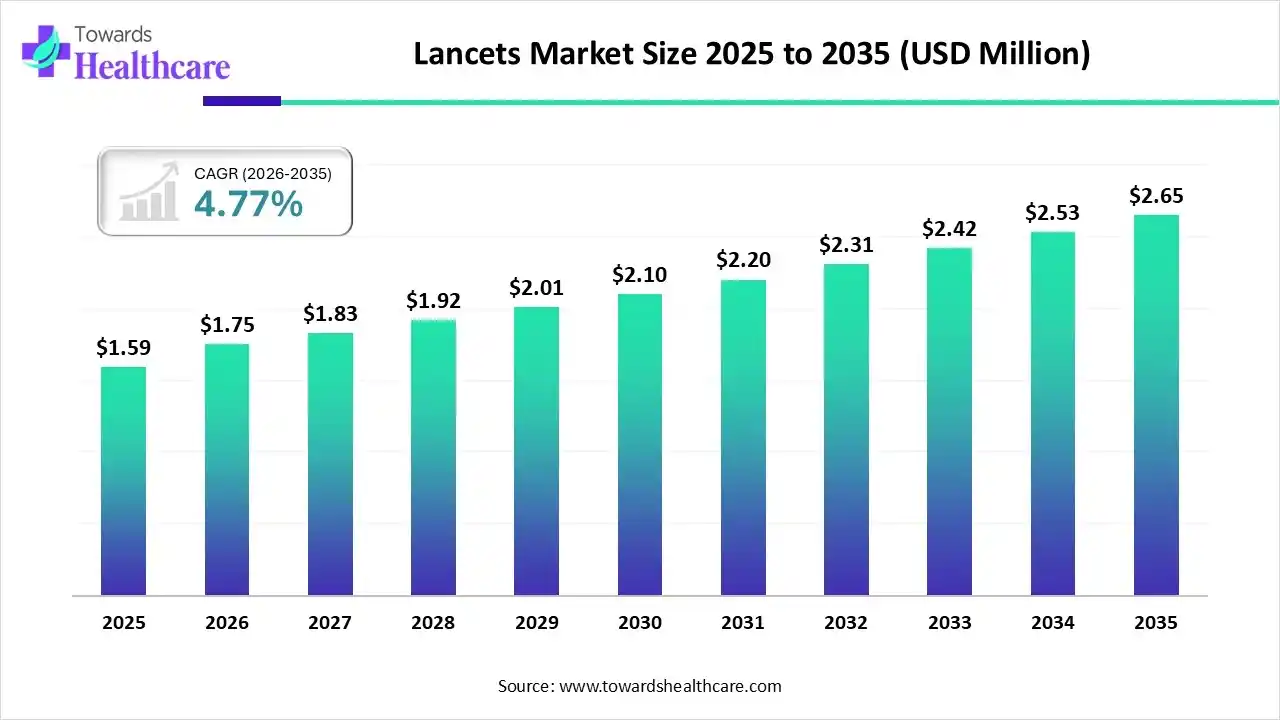
The global lancets market reflects this transformation. The market, valued at about USD 1.59 billion in 2025, is projected to reach USD 2.65 billion by 2035, growing steadily at a 4.77% CAGR. Behind these numbers lies a much larger story: the shift toward faster testing, patient comfort, and decentralized healthcare.
Download the free sample and get the complete insights and forecasts report on this market @ https://www.towardshealthcare.com/download-sample/5251
Why a Tiny Needle Matters More Than Ever
Lancets are primarily used to prick the skin and obtain a small blood sample for diagnostic testing. The device plays a critical role in monitoring diabetes, cholesterol, infections, and several metabolic conditions.
For millions of people living with diabetes, this small device forms part of their daily routine. Regular blood glucose monitoring depends on quick, safe, and reliable blood sampling.
The demand for lancets is expanding because testing is no longer limited to laboratories. Today, patients can monitor their health from home using compact devices that require just a tiny drop of blood.
Several trends are pushing this shift forward:
-
The rapid rise in diabetes cases worldwide
-
Growing adoption of at-home diagnostic kits
-
Expanding aging population requiring frequent health monitoring
-
Increasing awareness about preventive healthcare
These changes are transforming lancets from a basic medical accessory into a critical diagnostic enabler.
Diabetes: The Largest Growth Catalyst
One of the strongest drivers behind the lancets market is the global diabetes burden. Around 422 million people worldwide currently live with diabetes, and the number continues to rise.
For these patients, blood glucose monitoring is not optional—it is essential for managing the condition. Frequent testing helps prevent complications such as cardiovascular disease, kidney damage, and nerve disorders.
Every test requires a blood sample, and every sample typically requires a lancet.
As healthcare systems encourage self-monitoring to reduce hospital visits, the demand for reliable and easy-to-use lancets continues to grow.
The Rise of At-Home Health Testing
Healthcare is steadily moving out of hospitals and into homes. Remote diagnostics, wearable health technology, and self-testing kits are becoming increasingly common.
Lancets sit at the center of this transformation. A single drop of blood can now reveal a wide range of health indicators—from cholesterol and uric acid levels to infectious diseases and metabolic markers.
Consumers increasingly prefer tests that are fast, private, and convenient. As a result, companies are designing lancets that work seamlessly with home-testing kits.
Key areas where lancets support at-home diagnostics include:
-
Diabetes glucose monitoring
-
Cholesterol and metabolic testing
-
Allergy detection
-
STI screening
-
HbA1c and hemoglobin testing
This growing ecosystem of home diagnostics is expected to significantly expand the role of lancets in everyday healthcare.
Innovation Is Redefining the Lancet Experience
Traditionally, lancets were simple needles designed for single use. While effective, they often caused discomfort and anxiety for patients.
Modern technology is rapidly changing that experience.
Manufacturers are introducing safety lancets, retractable needles, adjustable depth mechanisms, and ultra-thin designs to improve both safety and comfort. Many new devices now hide the needle completely until activation, reducing patient fear.
Some of the most exciting innovations include nano-scale lancet technologies designed to minimize pain while maintaining reliable blood collection.
Researchers are also exploring devices that integrate sensors capable of transmitting real-time health data. These technologies could eventually transform blood sampling into a connected digital health experience.
The next generation of lancets will likely focus on three goals: comfort, automation, and data integration.
Safety Is Becoming a Core Design Priority
Despite their simplicity, lancets must meet strict safety standards. Improper use or accidental pricks can lead to needlestick injuries and potential exposure to blood-borne infections.
Healthcare providers increasingly prefer safety-engineered lancets that automatically retract after use. These designs significantly reduce the risk of accidental injuries for both patients and healthcare professionals.
New safety-focused features include:
-
Automatic needle retraction after use
-
Pre-sterilized single-use packaging
-
Adjustable penetration depth
-
Tamper-evident safety seals
These innovations are encouraging healthcare facilities to replace traditional lancets with safer alternatives.
Hospitals Lead Today, But Outpatient Centers Are Catching Up
Hospitals currently represent the largest end-use segment in the lancets market. Medical professionals in hospital settings conduct a high volume of diagnostic tests daily, ensuring steady demand for these devices.
Strict infection-control protocols and trained healthcare staff also make hospitals the safest environment for blood sampling.
However, another healthcare segment is quickly expanding: ambulatory surgery centers (ASCs).
These modern facilities provide same-day diagnostic and surgical procedures. Their growing popularity means more routine tests are taking place outside large hospitals.
As outpatient healthcare continues to grow, lancets will play a larger role in these facilities as well.
Regional Trends Are Shaping Global Growth
Different regions are experiencing the lancets market expansion in unique ways.
North America currently dominates the global market, accounting for roughly 42% of total revenue. High rates of chronic diseases, advanced healthcare infrastructure, and strong adoption of home testing contribute to this leadership.
Meanwhile, Asia-Pacific is emerging as the fastest-growing region. Several factors are accelerating demand in this region:
-
Rapidly aging populations
-
Rising diabetes prevalence
-
Expanding healthcare infrastructure
-
Increased government health programs
Countries such as India and China are witnessing significant growth as awareness of chronic disease management increases.
India’s lancets market, for example, is projected to grow dramatically from about USD 120 million in 2024 to over USD 414 million by 2034.
Industry Collaboration Is Accelerating Innovation
Another important trend shaping the market is collaboration between healthcare technology companies.
Strategic partnerships, acquisitions, and research collaborations are helping companies expand product capabilities and global reach.
Recent collaborations aim to develop painless blood sampling technologies and needle-free alternatives that could dramatically change how blood testing is performed.
These partnerships are also enabling manufacturers to scale production, enter new markets, and integrate advanced technologies into everyday diagnostic tools.
Looking Ahead: A Future Beyond Traditional Blood Sampling
The future of lancets may look very different from today’s devices.
Researchers are exploring needle-free sampling technologies, micro-fluidic systems, and sensor-enabled diagnostic tools. These innovations could reduce the need for traditional finger-prick testing altogether.
At the same time, digital health platforms are beginning to integrate diagnostic devices with mobile applications, cloud analytics, and real-time health monitoring.
If these trends continue, lancets could evolve from simple disposable tools into key components of connected healthcare ecosystems.
A Small Tool Driving Big Healthcare Change
Lancets may appear insignificant compared with large medical machines or advanced diagnostic systems. Yet their role in global healthcare is undeniable.
From diabetes monitoring to at-home diagnostics, this tiny device supports millions of medical decisions every day.
As healthcare becomes more personalized, accessible, and technology-driven, the lancets market will continue to evolve. New innovations will focus on safety, comfort, and seamless integration with modern diagnostic platforms.
In the end, the future of healthcare may still depend on something surprisingly small—a single drop of blood.
Access our exclusive, data-rich dashboard dedicated to the medical devices industry – built specifically for decision-makers, strategists, and industry leaders. The dashboard features comprehensive statistical data, segment-wise market breakdowns, regional performance shares, detailed company profiles, annual updates, and much more. From market sizing to competitive intelligence, this powerful tool is one-stop solution to your gateway.
Access the Dashboard: https://www.towardshealthcare.com/access-dashboard
Checkout the Market Report Now at: https://www.towardshealthcare.com/checkout/5251
You can place an order or ask any questions, please feel free to contact us at sales@towardshealthcare.com
Europe Region – +44 778 256 0738
North America Region – +1 8044 4193 44
APAC Region: +91 9356 9282 04
Visit Our Website: https://www.towardshealthcare.com
Find us on social platforms: LinkedIn | Twitter | Instagram | Medium
About the Author