
Introduction: A Market Under Growing Pressure
The global oncology market is undergoing a fundamental shift. Cancer is no longer viewed as a rare or isolated health condition; it has become one of the most critical public health challenges of this generation. With rising incidence rates, evolving treatment expectations, and rapid scientific progress, oncology has emerged as one of the most dynamic and demanding segments within healthcare.
From the perspective of someone who has observed this market for over a decade, the change is clear. Oncology is no longer driven only by drug launches. It is shaped by epidemiology, healthcare access, affordability, innovation speed, and patient awareness. Each of these forces plays a role in defining how the market grows, where it struggles, and where it finds new opportunities.
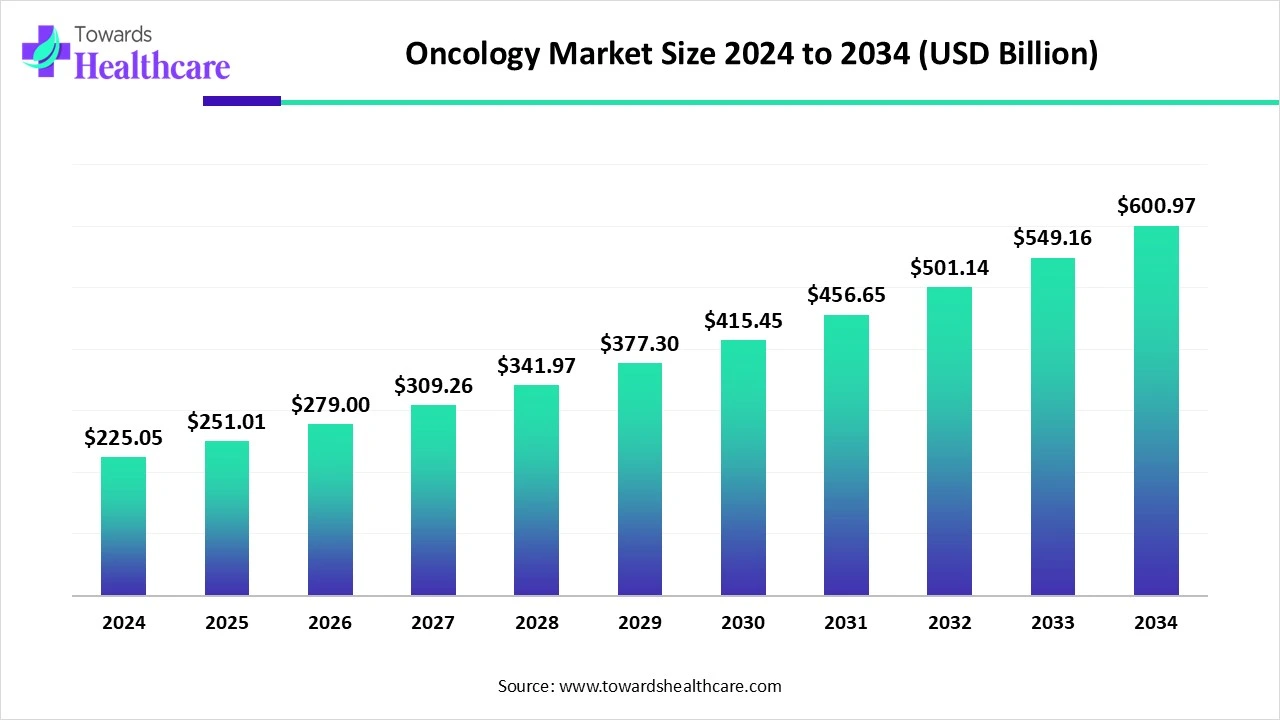
The global oncology market size is calculated at US$ 279.98 billion in 2026, grew to US$ 251.01 billion in 2025, and is projected to reach around US$ 748.17 billion by 2035. The market is expanding at a CAGR of 11.54% between 2026 and 2035.
𝐃𝐨𝐰𝐧𝐥𝐨𝐚𝐝 𝐅𝐫𝐞𝐞 𝐒𝐚𝐦𝐩𝐥𝐞:
https://www.towardshealthcare.com/download-sample/5920
Rising Cancer Incidence: The Primary Growth Driver
The increasing occurrence of cancer remains the strongest driver of oncology market growth. Globally, cancer cases are rising due to multiple factors, including aging populations, lifestyle changes, environmental exposure, and improved diagnostic capabilities. More people are being diagnosed today not only because cancer rates are increasing, but also because detection has become more accurate and widespread.
In India, this trend is especially visible. Estimates for 2025 indicate a significant rise in cancer cases across both urban and rural regions. This growing burden directly increases demand for diagnostic services, treatment options, and long-term care solutions. As more patients enter the healthcare system, the oncology market naturally expands across pharmaceuticals, diagnostics, imaging, and supportive care.
Impact of Awareness and Early Diagnosis
Awareness around cancer has improved considerably over the past few years. Public health campaigns, education initiatives, and screening programs have encouraged individuals to seek medical help earlier. Early diagnosis has become a critical focus area, as it improves survival rates and reduces long-term treatment complexity.
This shift has a direct impact on the oncology market. Screening programs increase the use of diagnostic tools, laboratory testing, and imaging technologies. Once cancer is detected, patients require timely access to treatment, which further drives demand for oncology drugs and therapies. Awareness, therefore, does not only save lives but also reshapes how the market grows.
Expansion of Research and Development Activities
Rising cancer incidence has pushed research and development to the center of the oncology market. Pharmaceutical and biotechnology companies are investing heavily in developing new drugs, biosimilars, and diagnostic tools. Traditional chemotherapy is gradually being complemented, and in some cases replaced, by more advanced treatment approaches.
R&D efforts now focus on understanding cancer at a molecular and genetic level. This has led to the development of targeted therapies, immunotherapies, and combination treatments. While these innovations offer better outcomes, they also increase development complexity, timelines, and costs.
Estimated Cancer Burden in India: A Market Catalyst
The estimated cancer burden in India for 2025 highlights a clear upward trend in case numbers. This projected rise signals a growing need for better diagnostic infrastructure, advanced treatment options, and supportive care services. For the oncology market, this acts as a strong catalyst for growth.
An increasing patient pool encourages investment in healthcare facilities, clinical research, and localized drug development. At the same time, it places pressure on the system to deliver affordable and accessible care. The balance between demand and capacity will play a defining role in shaping market outcomes.
High Treatment Costs: A Major Market Restraint
Despite strong growth drivers, the oncology market faces serious challenges. One of the most significant restraints is the high cost associated with cancer treatment. Advanced therapies, long development cycles, and complex manufacturing processes contribute to high pricing.
For many patients, especially in developing economies, affordability remains a major barrier. Even when effective treatments are available, high out-of-pocket expenses reduce patient acceptance and limit treatment adherence. This gap between innovation and access continues to slow the full potential of market growth.
Complex and Time-Consuming Development Processes
Oncology drug development is inherently complex. Clinical trials are lengthy, patient recruitment is challenging, and regulatory requirements are stringent. These factors often delay product approvals and increase development risk.
Additionally, limited infrastructure in certain regions further complicates clinical research. A lack of specialized centers, trained professionals, and trial-ready facilities can slow progress. These challenges not only affect manufacturers but also delay patient access to new therapies.
Reimbursement and Infrastructure Limitations
Improper or inconsistent reimbursement policies also restrict oncology market growth. When insurance coverage is limited, advanced treatments remain out of reach for a large segment of patients. This discourages widespread adoption, even when therapies show strong clinical benefits.
Infrastructure gaps compound the problem. Advanced oncology treatments require specialized equipment and skilled healthcare professionals. In regions where such infrastructure is lacking, market penetration remains uneven.
Precision Medicine: A Defining Market Opportunity
One of the most promising opportunities in the oncology market is the growing use of precision medicine. Unlike conventional treatments, precision therapies target specific genetic mutations or molecular pathways responsible for cancer growth.
This approach improves treatment effectiveness while reducing unnecessary side effects. Precision medicine also enables better patient selection, ensuring that therapies are given to those most likely to benefit. As a result, outcomes improve, and treatment efficiency increases.
Role of Advanced Diagnostics and Biomarkers
Precision medicine relies heavily on advanced diagnostic tools. Biomarker identification, genomic testing, and molecular profiling have become essential components of modern oncology care. These tools help clinicians design personalized treatment plans based on individual tumor characteristics.
The increasing use of such diagnostics has created a more integrated oncology ecosystem. Drugs and diagnostics now evolve together, strengthening the overall value chain and opening new market segments.
Case Example: Targeted Therapies in India
The planned launch of Zanubrutinib in India reflects the growing focus on targeted oncology treatments. As a Bruton’s tyrosine kinase inhibitor, it is designed to treat multiple B-cell malignancies by targeting specific molecular pathways.
Such developments demonstrate how precision medicine is expanding beyond niche applications. They also highlight the increasing role of India as a key market for advanced oncology therapies, driven by rising demand and improving healthcare capabilities.
Growing Importance of Supportive Cancer Care
Cancer treatment extends beyond tumor control. Managing side effects, improving quality of life, and supporting mental and emotional health are now recognized as essential aspects of oncology care.
This has expanded the market to include supportive therapies, nutritional products, pain management solutions, and digital health tools. While often less visible, these segments play a critical role in comprehensive cancer management.
Digital Technologies Reshaping Oncology
Digital innovation is gradually transforming oncology care. Artificial intelligence, real-world data analysis, and predictive tools are improving diagnostic accuracy and treatment planning. These technologies help clinicians make faster, more informed decisions.
As digital solutions become more integrated into healthcare systems, they are expected to enhance efficiency and outcomes across the oncology market.
Future Outlook: Balancing Innovation and Access
The oncology market is poised for continued growth, driven by rising cancer incidence and ongoing innovation. However, long-term success will depend on addressing cost, access, and infrastructure challenges.
Precision medicine, improved diagnostics, and supportive care solutions offer strong growth opportunities. At the same time, policymakers, industry leaders, and healthcare providers must work together to ensure that innovation translates into real-world patient benefits.
Conclusion: A Market at a Turning Point
The oncology market stands at a decisive moment. Demand is rising, science is advancing, and expectations are evolving. While challenges remain, particularly around affordability and development complexity, the opportunities are substantial.
The true progress of this market will be measured not only by new drug approvals but by its ability to deliver effective, accessible, and patient-centered cancer care. As cancer continues to shape global healthcare priorities, oncology will remain one of the most influential and closely watched markets in the years ahead.
Access our exclusive, data-rich dashboard dedicated to the life sciences industry – built specifically for decision-makers, strategists, and industry leaders. The dashboard features comprehensive statistical data, segment-wise market breakdowns, regional performance shares, detailed company profiles, annual updates, and much more. From market sizing to competitive intelligence, this powerful tool is one-stop solution to your gateway.
Access the Dashboard: https://www.towardshealthcare.com/access-dashboard
Checkout Oncology Market Report Now at: https://www.towardshealthcare.com/checkout/5920
Become a valued research partner with us – https://www.towardshealthcare.com/schedule-meeting
You can place an order or ask any questions, please feel free to contact us at sales@towardshealthcare.com
Powering Healthcare Leaders with Real-Time Insights: https://www.towardshealthcare.com/healthcare-intelligence-platform
Europe Region – +44 778 256 0738
North America Region – +1 8044 4193 44
APAC Region: +91 9356 9282 04
Visit Our Website: https://www.towardshealthcare.com
Find us on social platforms: LinkedIn | Twitter | Instagram | Medium | Pinterest
About the Author