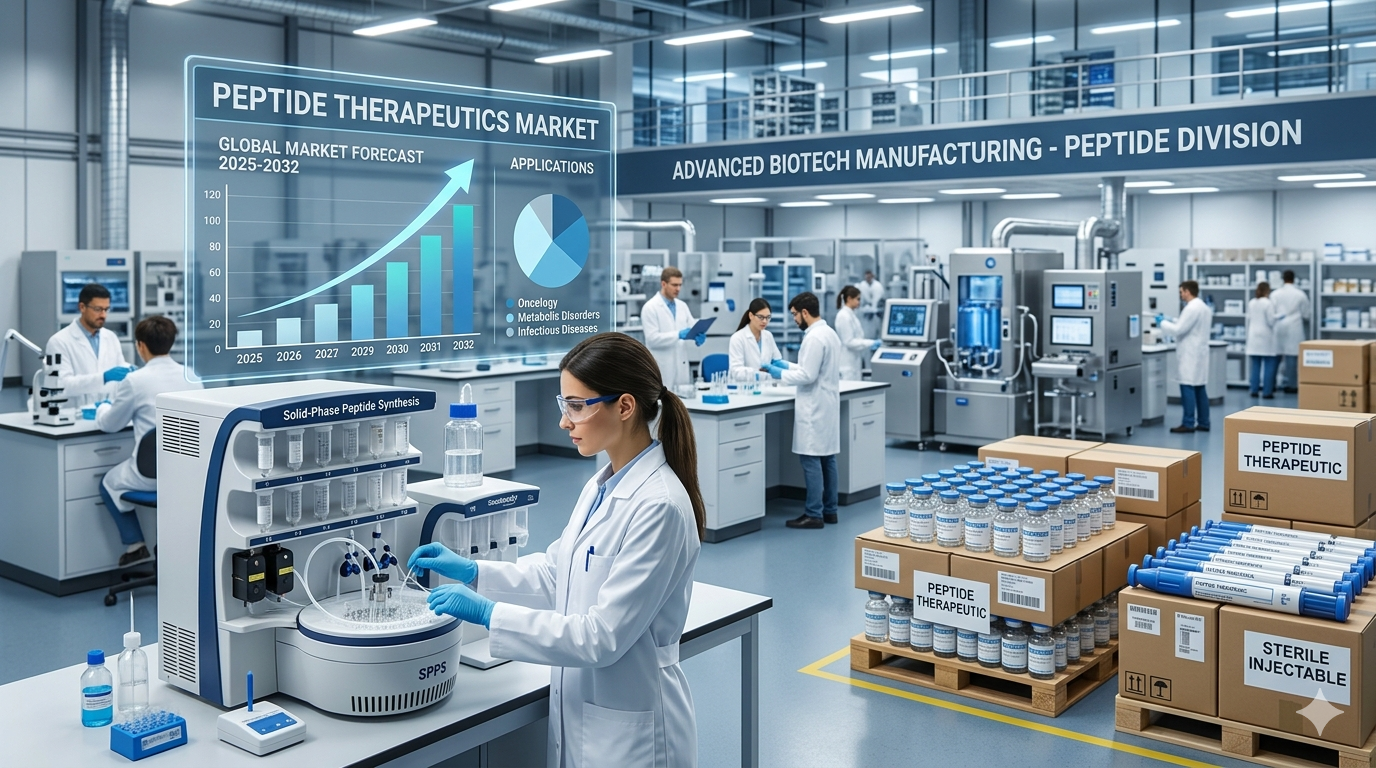
The global peptide therapeutics market is experiencing steady growth driven by advances in drug delivery technologies, rising chronic disease prevalence, and growing investments in targeted biologics.
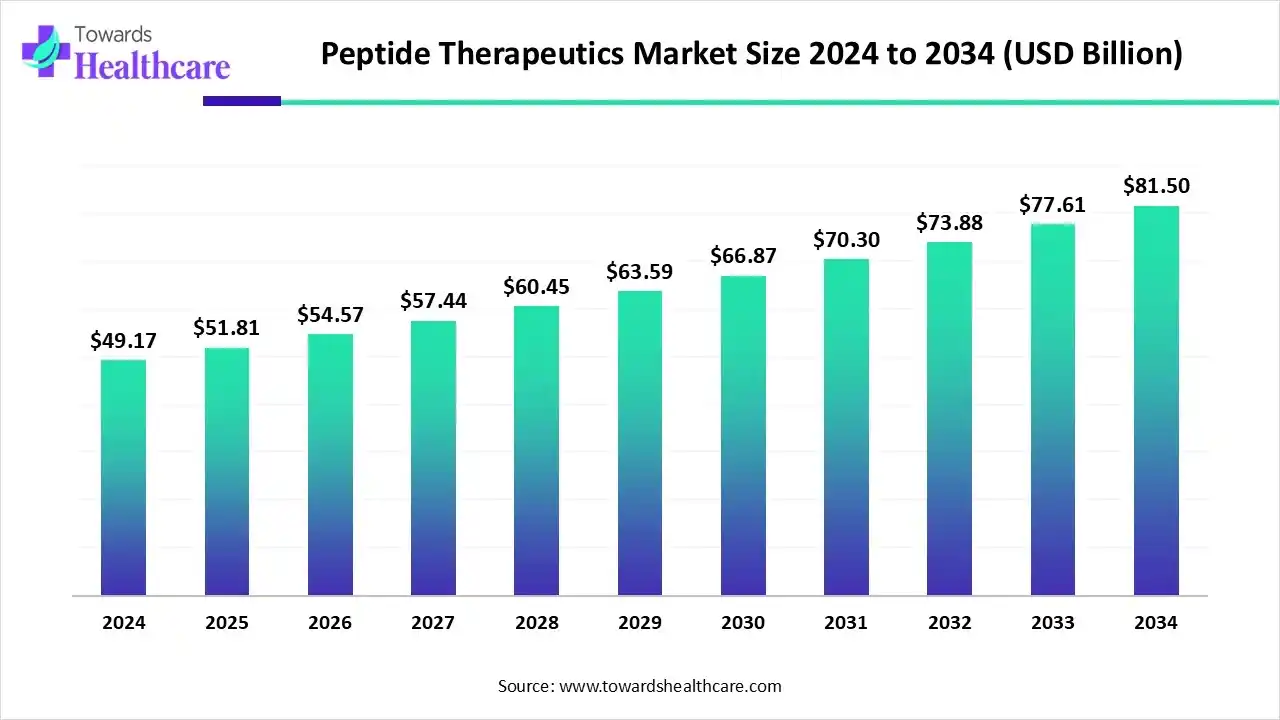
The market size is estimated at USD 54.57 billion in 2026, growing from USD 51.8 billion in 2025, and is projected to reach USD 87.23 billion by 2035, expanding at a CAGR of 5.35% between 2026 and 2035.
Peptide-based drugs are increasingly used in oncology, metabolic disorders, cardiovascular diseases, and infectious diseases, due to their high specificity, lower toxicity, and ability to mimic natural biological processes.
Download the free sample and get the complete insights and forecasts report on this market @ https://www.towardshealthcare.com/download-sample/6244
Key Market Highlights
-
Market value reached USD 54.57 billion in 2026
-
Expected to reach USD 87.23 billion by 2035
-
Growth rate projected at 5.35% CAGR (2026–2035)
-
North America dominated the market with ~40% share in 2025
-
Asia Pacific expected to grow at the fastest rate
-
Branded peptide drugs accounted for ~70% of the market
-
Parenteral administration held ~85% share
-
Oncology remained the largest therapeutic segment (~35%)
Major Market Trends
1. Rising Demand for Targeted and Personalized Therapies
Peptide therapeutics are gaining popularity because they provide highly targeted treatment with fewer side effects compared to traditional drugs. This is particularly important in treating cancer, diabetes, and metabolic diseases, where precision medicine is becoming a major focus.
2. Advancements in Peptide Drug Delivery Systems
Innovations in oral, injectable, and transdermal delivery technologies are improving peptide stability and bioavailability. These improvements are helping pharmaceutical companies expand peptide drug applications beyond injectable treatments.
3. Increasing Investments in Peptide Drug Development
Major pharmaceutical companies and biotech startups are increasing investments in peptide therapeutics due to their strong clinical potential.
For example, in May 2025, biotechnology company ProteinQure Inc. raised $11 million in Series A funding to advance its AI-designed peptide drug candidate into clinical trials.
4. Artificial Intelligence Accelerating Peptide Discovery
Artificial intelligence is transforming peptide drug development by enabling faster discovery and optimization.
AI tools such as machine learning, deep learning, and data mining help researchers analyze large biological datasets to design new peptide molecules with improved efficacy and stability.
5. Growth of Peptide Therapeutics Startups
Several biotech startups are developing innovative peptide therapies targeting rare diseases, cancer, autoimmune disorders, and metabolic conditions.
Notable emerging companies include:
-
Maxion Therapeutics
-
Strand Therapeutics
-
Obsidian Therapeutics
-
Nuritas
These companies are using AI-driven discovery platforms and advanced delivery technologies to accelerate therapeutic development.
Segment Insights
By Drug Type
-
Branded peptide drugs dominated the market with ~70% share in 2025
-
Generic peptide drugs expected to grow fastest due to patent expirations and increasing demand for affordable therapies
By Route of Administration
-
Parenteral administration dominated with ~85% market share
-
Oral peptide drugs expected to grow rapidly due to improved delivery technologies and better patient compliance
By Therapeutic Application
| Application | Market Share (2025) |
|---|---|
| Oncology | 35% |
| Metabolic Disorders | 22% |
| Cardiovascular Diseases | 14% |
| Infectious Diseases | 10% |
| Neurological Disorders | 9% |
| Others | 10% |
Oncology remains the largest application due to the high selectivity and low toxicity of peptide-based cancer therapies.
By Synthesis Technology
-
Solid Phase Peptide Synthesis (SPPS) dominated with ~65% share
-
Hybrid synthesis technology expected to grow fastest because it combines SPPS and liquid phase synthesis (LPPS) for improved manufacturing efficiency.
By Distribution Channel
-
Hospital pharmacies accounted for about 50% of the market
-
Online pharmacies are expected to grow fastest due to increasing adoption of digital healthcare services and telemedicine.
Regional Insights
North America
North America remains the leading region due to strong pharmaceutical R&D infrastructure and the presence of major companies like:
-
Amgen Inc.
-
Eli Lilly and Company
-
Novo Nordisk A/S
Asia Pacific
Asia Pacific is expected to witness the fastest growth due to:
-
Large patient population
-
Increasing healthcare spending
-
Growing pharmaceutical manufacturing capabilities
Access our exclusive, data-rich dashboard dedicated to the therapeutics area sector – built specifically for decision-makers, strategists, and industry leaders. The dashboard features comprehensive statistical data, segment-wise market breakdowns, regional performance shares, detailed company profiles, annual updates, and much more. From market sizing to competitive intelligence, this powerful tool is one-stop solution to your gateway.
Access the Dashboard: https://www.towardshealthcare.com/access-dashboard
Checkout the Market Report Now at: https://www.towardshealthcare.com/checkout/6244
You can place an order or ask any questions, please feel free to contact us at sales@towardshealthcare.com
Europe Region – +44 778 256 0738
North America Region – +1 8044 4193 44
APAC Region: +91 9356 9282 04
Visit Our Website: https://www.towardshealthcare.com
Find us on social platforms: LinkedIn | Twitter | Instagram | Medium
About the Author