
Healthcare is evolving at a speed that was unimaginable just a decade ago. Among the most transformative developments, personalized medicine stands out as a force that is redefining how we prevent, diagnose, and treat diseases. Far beyond the conventional one-size-fits-all approach, personalized medicine leverages genetic, molecular, and lifestyle data to design highly specific healthcare solutions for each individual. As we step into this era of precision care, the question is not just whether personalized medicine will change healthcare, it already is.
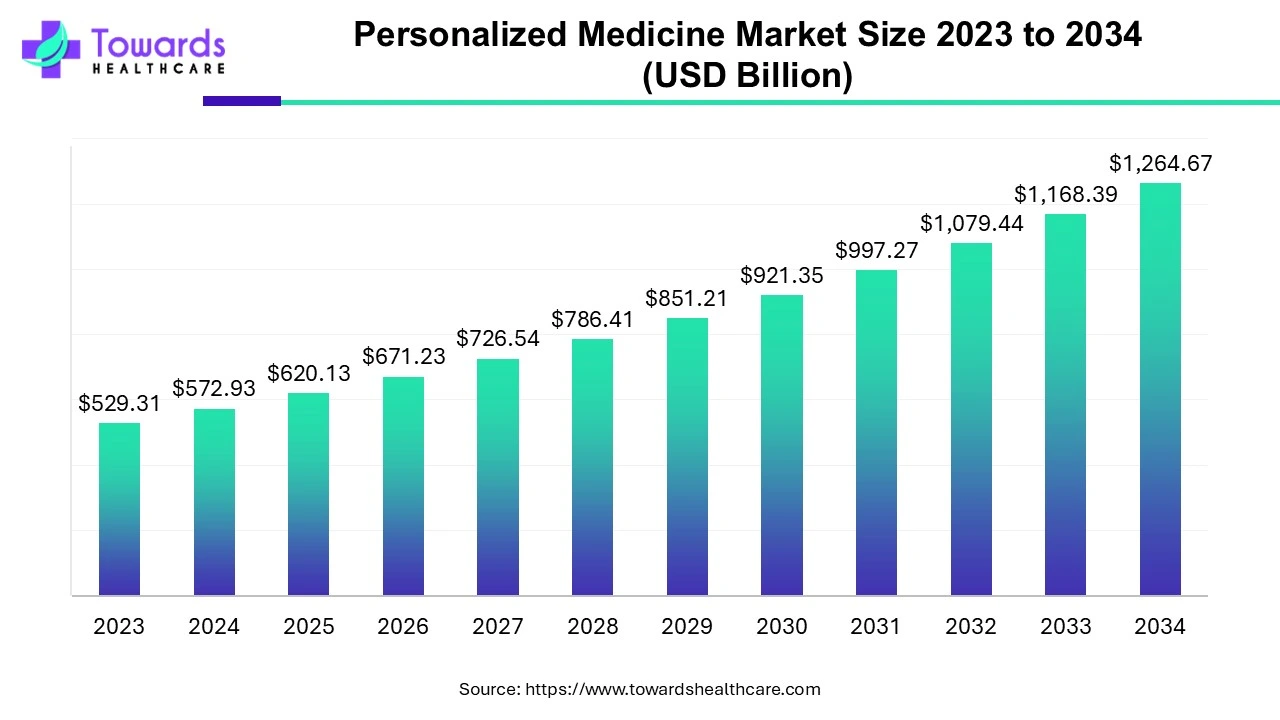
The personalized medicine market has been expanding rapidly and is projected to continue its upward trajectory. In 2024, the global market was evaluated at approximately USD 572.93 billion. By 2034, it is expected to reach around USD 1,264.67 billion, growing at a compound annual growth rate (CAGR) of 8.24% from 2024 to 2034. This impressive growth reflects not only technological advancements but also the increasing adoption of personalized approaches in hospitals, clinics, and research institutions worldwide.
Download Free Sample Now and Get the Complete Report Easily at: https://www.towardshealthcare.com/download-sample/5382
Decoding Personalized Medicine: More Than Just Genetics
At its core, personalized medicine seeks to treat patients as individuals rather than statistical averages. While genetics and genomics form the foundation, modern personalized medicine goes beyond DNA sequences. It incorporates environmental factors, lifestyle choices, and even digital health data to create a holistic view of a patient. Imagine a world where your treatment plan is not determined by what works for most people but by what works for you. From preventive measures to tailored therapies, this is the promise of precision medicine.
The advancements in next-generation sequencing technology have played a pivotal role in bringing this vision to life. Ten years ago, sequencing a human genome was prohibitively expensive and time-consuming. Today, it is faster, more accurate, and increasingly accessible. This progress has opened doors for personalized nutrition, targeted therapeutics, and predictive diagnostics, all of which empower clinicians to make smarter decisions that improve patient outcomes.
North America Leads, But the Globe Is Catching Up
North America has long been at the forefront of personalized medicine, driven by robust healthcare infrastructure, strong research investment, and a high prevalence of chronic diseases like cancer, diabetes, and cardiovascular disorders. Hospitals and research centers across the U.S. and Canada have adopted advanced sequencing technologies and precision diagnostics, enabling physicians to provide highly customized treatments. The region’s dominance is not just a reflection of technological capacity, it is a response to patient demand for more effective, less invasive, and safer healthcare options.
However, the momentum is shifting globally. Asia Pacific, in particular, is emerging as a hotbed for personalized medicine. Rising investments in clinical trials, expanding healthcare infrastructure, and increasing awareness about genetic disorders are fueling this growth. Countries like China, Japan, and India are leading research in genomic medicine, while innovative healthcare systems in South Korea and Thailand are rapidly adopting precision therapies. Even Europe is showing remarkable growth, with strategic partnerships and government-backed initiatives accelerating the development of tailored healthcare solutions.
The Driving Forces Behind Market Growth
Several factors converge to fuel the rapid expansion of personalized medicine. Genetic testing has become more sophisticated, offering insights that were previously inconceivable. Molecular diagnostics now allow clinicians to detect diseases at earlier stages, often before symptoms appear, which dramatically improves the chances of successful treatment. Moreover, advances in pharmacogenomics are enabling drugs to be matched to patients’ genetic profiles, reducing side effects and improving efficacy.
Another transformative driver is artificial intelligence. AI algorithms can process vast amounts of genomic and clinical data, identifying patterns and predicting outcomes that would take human analysts years to uncover. This integration allows healthcare providers to anticipate disease risks, customize interventions, and even monitor treatment responses in real time. The synergy of AI and personalized medicine is creating a feedback loop of continuous learning, where every patient interaction refines future therapies.
Challenges and Complexities: It’s Not All Smooth Sailing
Despite its tremendous potential, personalized medicine faces significant hurdles. The complexity of human genetics poses a formidable challenge. Each genome contains millions of variations, and not all of them correlate with disease risk or treatment response. Adding to the complexity are differences caused by geography, ethnicity, and lifestyle, which require multidisciplinary expertise to interpret accurately. Data integration remains a major obstacle, as healthcare systems struggle to consolidate genomic information with electronic health records and lifestyle data.
Ethical considerations also loom large. Privacy concerns regarding genetic information, the fairness of access to personalized treatments, and the regulatory oversight of new therapies all demand careful attention. Without addressing these issues, the promise of personalized medicine risks being limited to a select few rather than benefiting the broader population.
Personalized Nutrition and Wellness: Where Health Meets Individuality
One of the most fascinating developments in the field is personalized nutrition. By analyzing genetic markers, metabolic profiles, and lifestyle factors, nutritionists can recommend dietary patterns that maximize health benefits for an individual. Unlike generalized dietary advice, personalized nutrition adapts to the patient’s unique biology, making it easier to maintain healthy habits and prevent disease. This approach is particularly valuable in managing chronic conditions, optimizing wellness, and improving public health outcomes on a larger scale.
Therapeutics That Are Tailored to You
In therapeutics, the focus is on delivering treatments that precisely match a patient’s molecular and genetic profile. This includes custom-designed drugs, targeted biologics, and even gene-editing therapies such as CRISPR. Unlike traditional medications, which often require trial-and-error to find the right dose, personalized therapeutics optimize efficacy while minimizing adverse effects. Patients no longer have to endure months of ineffective treatments; instead, their therapies are designed with a high probability of success from the outset.
Hospitals as Hubs of Precision Medicine
Hospitals remain at the epicenter of personalized medicine. They integrate diagnostic labs, clinical research, and treatment centers to provide comprehensive care tailored to individual patients. From oncology wards applying precision-targeted therapies to cardiac units using genetic risk profiles to anticipate complications, hospitals are leveraging personalized medicine to improve patient outcomes. This approach also facilitates equity in healthcare by ensuring that interventions are specific, effective, and accessible to those who need them most.
Artificial Intelligence and the Future of Personalized Care
AI continues to redefine what is possible in personalized medicine. Its ability to analyze and interpret enormous datasets enables early disease detection, predictive modeling, and dynamic treatment planning. For example, AI can identify individuals at high risk of developing certain cancers or cardiovascular diseases based on genetic predispositions and lifestyle data. Physicians can then implement preventive measures, monitor responses, and adjust treatments in real time, effectively creating a healthcare model that is adaptive and continuously learning.
Generative AI is now being explored to design new drugs, simulate clinical trials, and even optimize genetic therapies. This is not just about speeding up research, it is about making medicine smarter and more precise. The combination of AI, genomics, and clinical insight promises a future where treatments are no longer reactive but proactive, preventing illness before it manifests and tailoring interventions to maximize patient well-being.
Global Collaboration Fuels Innovation
Personalized medicine is inherently collaborative. Governments, research institutions, hospitals, and private enterprises are working together to push boundaries and accelerate innovation. Initiatives like the European Partnership for Personalized Medicine and strategic collaborations between tech companies and healthcare providers illustrate the power of cross-sector collaboration. By pooling resources, expertise, and data, these partnerships are enabling the rapid translation of research discoveries into practical treatments.
Real-World Applications: Transforming Lives
Recent breakthroughs highlight the tangible impact of personalized medicine. From successful CRISPR gene-editing therapies for rare genetic disorders to AI-driven predictive diagnostics, patients are experiencing unprecedented outcomes. Personalized medicine is not just theoretical, it is saving lives and improving the quality of care for millions. Each success story reinforces the potential of this approach to revolutionize healthcare on a global scale.
Looking Ahead: A Future of Tailored Health
The future of personalized medicine is poised for remarkable growth. With global market estimates projecting a rise from approximately $573 billion in 2024 to over $1.26 trillion by 2034, the field is not just expanding, it is accelerating. Advances in diagnostics, therapeutics, AI, and patient engagement are converging to make personalized medicine accessible, effective, and transformative. As awareness grows and healthcare systems adapt, personalized medicine will likely become the standard rather than the exception.
Yet, the journey is far from complete. Challenges in data interpretation, ethical concerns, and equitable access must be addressed to ensure that the benefits of personalized care reach all populations. Continued investment in technology, research, and cross-disciplinary collaboration will be essential to fully realize the promise of individualized healthcare.
Conclusion: The Personalized Medicine Revolution Is Here
We are entering an era where medicine is no longer generic, reactive, or impersonal. Personalized medicine is transforming the healthcare landscape, providing clinicians with powerful tools to tailor interventions to each patient’s unique biology. From hospitals to homes, from diagnostics to therapeutics, the integration of genomics, AI, and patient-centered care is driving a revolution that promises to enhance outcomes, improve efficiency, and reduce healthcare costs. For patients and providers alike, this is more than a trend—it is the future of medicine.
Access our exclusive, data-rich dashboard dedicated to the therapeutic area sector – built specifically for decision-makers, strategists, and industry leaders. The dashboard features comprehensive statistical data, segment-wise market breakdowns, regional performance shares, detailed company profiles, annual updates, and much more. From market sizing to competitive intelligence, this powerful tool is one-stop solution to your gateway.
Quick Links:
Access the Dashboard: https://www.towardshealthcare.com/access-dashboard
Checkout Personalized Medicine Market Report Now at: https://www.towardshealthcare.com/checkout/5382
Become a valued research partner with us – https://www.towardshealthcare.com/schedule-meeting
You can place an order or ask any questions, please feel free to contact us at sales@towardshealthcare.com
Powering Healthcare Leaders with Real-Time Insights: https://www.towardshealthcare.com/healthcare-intelligence-platform
Europe Region – +44 778 256 0738
North America Region – +1 8044 4193 44
APAC Region: +91 9356 9282 04
Visit Our Website: https://www.towardshealthcare.com
Find us on social platforms: LinkedIn | Twitter | Instagram | Medium | Pinterest
About the Author