Primary Cell Culture Market Top Players, Growth and Forecast 2025-2034
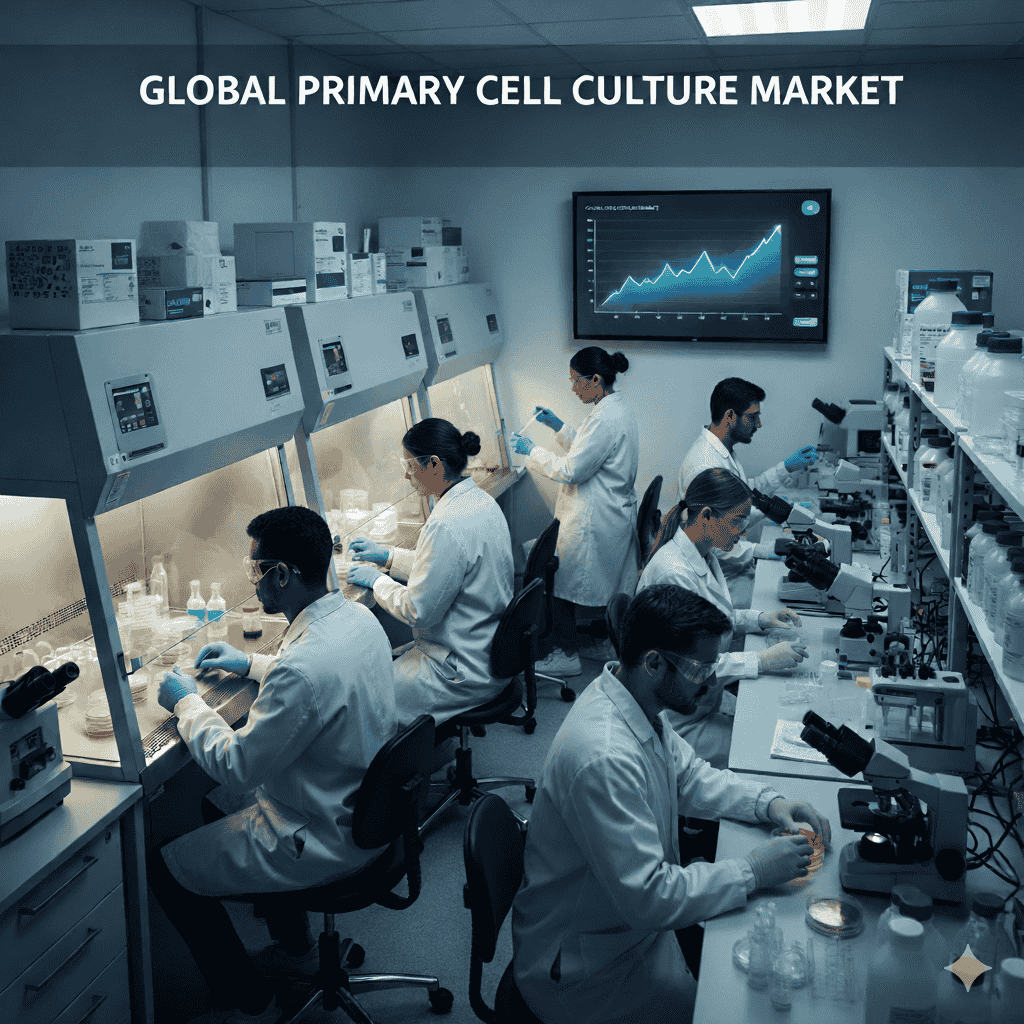
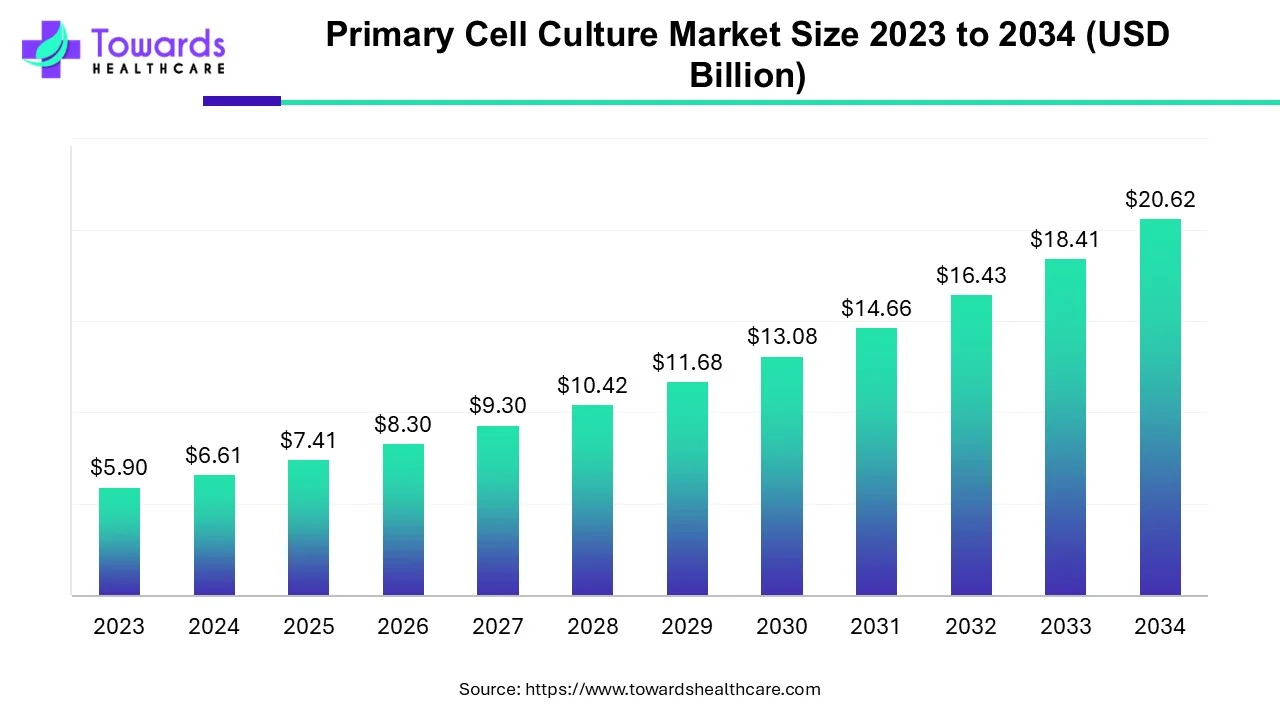
The global primary cell culture market is anticipated to grow significantly from USD 7.41 billion in 2025 to USD 20.62 billion by 2034, registering a robust compound annual growth rate (CAGR) of 12.05% during the forecast period. This market is expanding primarily due to the rising demand for advanced research and development, especially in cancer research, virology, drug screening, vaccine production, and gene therapy development. The increased prevalence of chronic diseases, advancements in AI technology, and growing investments in life sciences are further fueling market growth.
Download Free Sample of Primary Cell Culture Market Now and Get the Complete Report Easily at: https://www.towardshealthcare.com/download-sample/5195
Table of Contents
ToggleMarket Size:
Market Size in 2023:
The market was valued at USD 6.61 billion in 2024 and is expected to grow to USD 20.62 billion by 2034.
CAGR:
The global primary cell culture market is expected to grow at a CAGR of 12.05% from 2025 to 2034.
Key Market Segmentation:
Products: Reagents and supplements, primary cells, media, etc.
Separation Methods: Enzymatic degradation, mechanical separation.
Cell Types: Animal cells, human cells.
Regions: North America, Europe, Asia Pacific, Latin America, MEA.
Key Players in the Market: Companies like Thermo Fisher Scientific, Merck, Lonza, Bioserve India, and others dominate the market space, contributing to significant market expansion.
Market Trends:
Research and Development Growth:
Research into cancer treatment, cell & gene therapies, and vaccine production is pushing the demand for primary cell culture.
Technological Advancements:
The integration of AI-driven automation in the culturing process is enhancing the efficiency and repeatability of procedures, making them more cost-effective and accurate.
3D Cell Culture Models:
There is increasing interest in 3D cell culture models that provide more accurate simulations of in vivo conditions, leading to more reliable data in drug discovery and disease modeling.
Growing Chronic Diseases:
The rising prevalence of cancer, cardiovascular diseases, and other chronic conditions is boosting the demand for primary cell cultures for therapeutic and diagnostic research.
Government Investments:
Governments, particularly in North America and Asia Pacific, are investing heavily in life sciences research, including cell culture technologies, to address healthcare challenges.
Demand for Personalized Medicine:
The focus on gene therapies, personalized medicine, and regenerative medicine is driving growth, especially for cells used in gene editing and therapy applications.
Cancer Research and Treatment:
With cancer research continuing to expand, primary cell culture plays a critical role in drug screening and cancer therapeutics.
AI Integration:
AI in cell culture enhances process automation and standardization, improving results in applications like cell analysis and genetic modification.
Cell-Based Therapies:
Increasing demand for cell-based therapies such as CAR-T cell therapies is driving growth in primary cell culture, particularly for therapeutic purposes.
Market Expansion in Asia Pacific:
The Asia Pacific region is poised to experience the fastest market growth due to increased research activities and rising demand for biopharmaceuticals.
AI Impact on the Primary Cell Culture Market:
AI-Driven Automation:
AI-based automation systems reduce human error, enhance reproducibility, and streamline workflows in cell culture processes, especially in large-scale productions.
Cell Imaging and Analysis:
AI-powered imaging techniques improve cell analysis, helping researchers track cell growth and behavior with high precision in both 2D and 3D cultures.
Predictive Modeling:
AI can predict cell behavior and optimize conditions for growth, which is essential for improving culture conditions and yields.
AI in Genetic Engineering:
AI enhances gene-editing precision by predicting the outcomes of CRISPR and other genetic manipulation techniques on cultured cells.
Data Analysis and Decision Support:
AI helps in analyzing large datasets generated from cell cultures, providing decision-making support in drug development, cancer research, and toxicology.
Optimization of Cell Culture Media:
AI algorithms analyze and optimize cell culture media formulations, improving the quality and consistency of the culturing environment.
Automated Cell Sorting and Isolation:
AI facilitates automated cell sorting based on properties like size, shape, or fluorescence, improving accuracy and efficiency in separating specific cell types.
Personalized Cell Culture:
AI models can analyze patient-specific data to generate personalized cell cultures for gene therapies and regenerative medicine.
Minimizing Contamination:
AI systems can detect and alert for contamination, reducing the risk of cell culture failures due to microbial contamination.
AI-Powered Drug Screening:
AI accelerates the drug discovery process by automating cell culture experiments, enabling faster testing of drug efficacy and toxicity.
Regional Insights:
North America (2023):
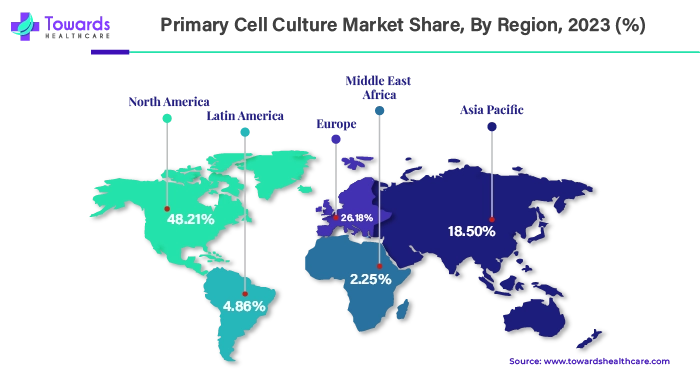
Leading Region: North America holds the largest market share (48.21% in 2023).
Key Drivers: High healthcare costs, an aging population, and government support for research.
Government Support: The NIH is investing USD 30 million in primary care research.
Asia Pacific (Fastest Growth):
Growth Drivers: Rising biopharmaceutical demand, increased funding for life sciences, and advancements in healthcare infrastructure.
Key Development: Opening of DBT-BUILDER Primary Cell Culture Lab Facility in India.
Prominent Players: Bioserve India, Toyo Seikan, and others are enhancing regional growth.
Europe:
Growth Factors: Growing research funding, aging population, and cancer prevalence.
Key Countries: Germany, UK, and France are key contributors to the market.
Latin America:
Market Growth: Due to advancements in healthcare infrastructure and increasing disease prevalence.
Middle East & Africa (MEA):
Emerging Market: Expanding healthcare sector and research infrastructure.
Market Dynamics:
Cancer Research:
The rising incidence of cancer globally is a key driver. Primary cell cultures are used extensively in cancer research to develop therapeutic strategies, screen drugs, and create vaccines.
Limited Availability of Primary Cells:
Primary cells are expensive, scarce, and have a limited lifespan, making them challenging to work with in large-scale research.
Technological Advancements in AI:
The use of AI in automating and optimizing primary cell culture processes is transforming the market by improving reproducibility, reducing costs, and enhancing research outcomes.
Ethical Concerns:
Ethical concerns related to the use of animal and human cells in research can restrict the availability and growth of the market.
Regulatory Challenges:
Tight regulatory control over primary cell research, particularly in human-derived cells, impacts the ease of access to cells for research purposes.
3D Cell Culture:
The transition to 3D cell cultures is set to significantly alter the market dynamics as these models provide more accurate representations of in vivo conditions.
Demand for Personalized Medicine:
The focus on personalized medicine and gene therapies is driving the demand for tailored cell cultures to test individual responses to treatments.
Increase in Biopharmaceuticals Production:
As the demand for biopharmaceuticals rises, particularly in cell & gene therapies, the primary cell culture market is expected to grow in parallel.
Government and Industry Investments:
Significant investments from governments and the private sector in life sciences are boosting the primary cell culture market.
Healthcare Infrastructure:
Advancements in healthcare infrastructure, especially in emerging economies, are promoting market growth by enabling better access to cell culture facilities.
Top 10 Companies in the Primary Cell Culture Market:
Thermo Fisher Scientific:
Overview: Leading provider of laboratory products, including cell culture reagents and supplements.
Strength: Robust product portfolio and global presence.
Bioserve India:
Overview: Major supplier of stem cell products in India.
Strength: Focus on regenerative medicine and therapeutics.
Recent Development: Launch of advanced stem cell products in India.
Lonza:
Overview: Global leader in cell and gene therapy production.
Strength: Expertise in cell-based therapies and robust scientific platform.
PromoCell GmbH:
Overview: Specializes in primary cell culture media and reagents.
Strength: Focus on clinical research applications.
Corning Incorporated:
Overview: Leading producer of laboratory equipment and cell culture media.
Strength: Strong manufacturing capabilities and market presence.
FUJIFILM Irvine Scientific, Inc.:
Overview: Innovator in cell culture technologies, specializing in stem cell culture.
Strength: High-quality cell culture media for advanced therapeutics.
Mattek:
Overview: Specializes in 3D cell culture products.
Strength: Expertise in providing solutions for toxicology and cancer research.
ATCC:
Overview: Known for its cell line services and reagents.
Strength: Strong scientific and research capabilities.
Danaher Corporation:
Overview: Provides laboratory solutions for primary cell cultures.
Strength: Focus on scientific innovation and process optimization.
Merck:
Overview: Global leader in life sciences products, including cell culture reagents.
Strength: Strong market presence and R&D focus on advanced cell therapies.
Segments Covered
1. Primary Cells
Primary cells are the foundational component of cell culture in research and therapeutic applications. They are isolated directly from tissues and closely resemble the natural cells found in living organisms, unlike cell lines, which are immortalized and derived from a single cell type.
Animal Cells:
These cells are commonly used in biomedical research, particularly for studying human diseases and developing vaccines. They play a crucial role in the production of vaccines, virus propagation, and gene therapy.
Animal cells are also used to study gene expression, drug development, and the effect of new therapeutic agents on living cells.
Examples include CHO (Chinese Hamster Ovary) cells and Vero cells.
Blood Cells:
Blood cells, especially T-cells, are critical for immunology research, drug development, and cancer immunotherapy studies. Blood cells are used for testing treatments targeting blood diseases like leukemia, lymphomas, and other hematological disorders.
Hematopoietic stem cells (HSCs) and blood cell cultures are used in the development of gene therapies for blood-related diseases.
Nerve Cells:
Nerve cells, or neurons, are essential for research on neurological diseases, brain function, and neurodegenerative diseases like Alzheimer’s, Parkinson’s, and multiple sclerosis.
These cells are also used to investigate the effects of drugs on neuronal behavior, neuron regeneration, and potential treatments for neurodegenerative disorders.
Bone Cells:
Bone cells are crucial in osteology and bone-related diseases, including osteoporosis, bone cancer, and fracture healing.
They are also utilized in studies involving bone regeneration and the development of bone grafts or implants.
Endothelial Cells:
Endothelial cells line the blood vessels and are vital in studies focused on vascular biology, including blood flow, endothelial dysfunction, and vascular diseases like atherosclerosis and thrombosis.
These cells are used to understand cardiovascular diseases and as models to study inflammation and angiogenesis.
Muscle Cells:
Muscle cells, including skeletal and cardiac muscle cells, are pivotal for studying muscle regeneration, contractile function, and muscular dystrophies.
These cells are also applied in studies of metabolic disorders, drug testing, and genetic muscle diseases.
Stem Cells:
Stem cells are pluripotent cells with the ability to differentiate into a variety of specialized cell types. They are a critical part of regenerative medicine, gene therapy, and cell replacement therapies.
These cells are used in treating diseases like Parkinson’s, diabetes, spinal cord injuries, and heart failure.
2. Reagents & Supplements
Reagents and supplements are essential components used to support the growth, maintenance, and manipulation of cells in culture. They include various chemicals and media that facilitate cell growth and sustain cellular activities under controlled conditions.
Attachment Solutions:
These solutions facilitate the attachment of cells to culture surfaces, which is crucial for cell spreading and proliferation. They typically contain extracellular matrix proteins or peptides that mimic the conditions of the natural environment, allowing cells to attach and grow effectively.
Growth Factors:
Growth factors are signaling proteins that stimulate cell growth, proliferation, and differentiation. They are essential for the successful cultivation of primary cells and are often required to support the culture of stem cells or specific tissue types.
Examples include Epidermal Growth Factor (EGF), Fibroblast Growth Factor (FGF), and Insulin-like Growth Factor (IGF).
Cytokines:
Cytokines are small proteins that play a role in cell signaling and modulate immune responses. In cell cultures, cytokines can influence immune cells, promoting differentiation, proliferation, and immune responses in vitro.
These are particularly important in immunology and gene therapy research.
Freezing Media:
Freezing media are used to preserve cells at ultra-low temperatures, allowing them to be stored and transported without significant damage. These media often contain cryoprotectants that prevent ice crystal formation during freezing, which could otherwise damage cell structure.
3. Separation Methods
Separation methods are critical in primary cell culture to isolate specific cell types from a heterogeneous sample. The techniques used depend on the cell types and the applications for which they are intended.
Enzymatic Degradation:
This method uses enzymes to break down tissues and release individual cells. Enzymes like trypsin, collagenase, and hyaluronidase are frequently employed in this process to dissociate cells from tissues or cell clumps.
Enzymatic degradation is commonly used for isolating adherent cells from tissue samples or for enzymatic dissociation of cells from tissue culture plates.
Mechanical Separation:
Mechanical separation involves physically breaking down tissue through methods such as grinding, crushing, or scraping. This is often used for more delicate tissues or when enzymatic methods are not as effective.
It is less complex than enzymatic separation but may result in more damage to cells. This method is used for softer tissues or when a quick and simple separation is required.
4. Applications
Cell & Gene Therapy Development:
Primary cell cultures are essential for developing cell and gene therapies. They are used to test the effects of genetic modifications and therapeutic strategies on cell behavior.
Primary cells, particularly stem cells, are modified and used to treat various genetic disorders, cancers, and immune diseases.
For example, CAR-T cell therapies use primary T-cells from a patient, which are then genetically engineered and reintroduced to fight cancers.
Vaccine Production:
Primary cells, especially animal and human cell cultures, are used in the production of vaccines, particularly those for influenza, polio, and more recently, COVID-19. These cells are used to culture viruses for vaccine production.
The use of primary cells allows for a more accurate representation of how the virus behaves in the human body, which improves vaccine efficacy.
Virology Studies:
Primary cell cultures are key to virology research, where they are used to study viral behavior, replication, and the effects of antiviral treatments.
They are used to culture viruses, identify their mechanisms of infection, and test the effectiveness of antiviral drugs and vaccines.
5. Regions
North America:
Market Leadership: North America is the leading region in the primary cell culture market, accounting for over 48% of the market share in 2023.
Key Factors: High demand for advanced biopharmaceuticals, government funding in life sciences research, and a strong healthcare system drive the market in this region.
Government Initiatives: The National Institutes of Health (NIH) and other U.S. agencies are investing in life sciences research, contributing to market growth.
Asia Pacific:
Fastest Growing Region: Asia Pacific is expected to exhibit the highest growth rate during the forecast period.
Key Drivers: Rapid advancements in healthcare infrastructure, increased research funding, and the rising demand for biopharmaceuticals in countries like India, China, and Japan.
Key Developments: Emerging research centers like the DBT-BUILDER Primary Cell Culture Lab Facility in India are boosting growth in the region.
Europe:
Research and Innovation Hub: Europe is home to numerous research institutions and pharmaceutical companies that contribute to the primary cell culture market.
Growing Focus on Regenerative Medicine: Increasing investment in regenerative medicine and stem cell research is fueling growth in the region.
Latin America:
Emerging Market: Growth in healthcare infrastructure and increasing investments in biopharmaceutical production and research are expected to drive market growth in Latin America.
Middle East & Africa (MEA):
Expanding Healthcare Sector: With growing healthcare demand and research infrastructure in countries like the UAE, Saudi Arabia, and South Africa, MEA is becoming a more significant player in the primary cell culture market.
Top 5 FAQs:
1 What are primary cell cultures used for?
Primary cell cultures are used in research areas like cancer studies, vaccine development, gene therapy, and drug testing.
2 Why is AI important in cell culture?
AI improves the efficiency, reproducibility, and consistency of cell culture processes by automating tasks and analyzing large datasets.
3 What is the role of primary cells in drug development?
Primary cells are critical for testing drug efficacy and toxicity before clinical trials, ensuring safer and more effective treatments.
4 What are the main challenges in the primary cell culture market?
The main challenges include limited availability of primary cells, ethical concerns, and regulatory hurdles.
5 Which region dominates the primary cell culture market?
North America holds the largest share of the market, driven by strong healthcare infrastructure and research investments.
Access our exclusive, data-rich dashboard dedicated to the diagnostics sector – built specifically for decision-makers, strategists, and industry leaders. The dashboard features comprehensive statistical data, segment-wise market breakdowns, regional performance shares, detailed company profiles, annual updates, and much more. From market sizing to competitive intelligence, this powerful tool is one-stop solution to your gateway.
Access the Dashboard: https://www.towardshealthcare.com/access-dashboard
Checkout Primary Cell Culture Market Report Now at: https://www.towardshealthcare.com/checkout/5195
Become a valued research partner with us – https://www.towardshealthcare.com/schedule-meeting
You can place an order or ask any questions, please feel free to contact us at sales@towardshealthcare.com
Powering Healthcare Leaders with Real-Time Insights: https://www.towardshealthcare.com/healthcare-intelligence-platform
Europe Region – +44 778 256 0738
North America Region – +1 8044 4193 44
APAC Region: +91 9356 9282 04
Visit Our Website: https://www.towardshealthcare.com
Find us on social platforms: LinkedIn | Twitter | Instagram | Medium | Pinterest
About the Author