Radiotherapy Market Growth, Shares and Industry Reports 2034

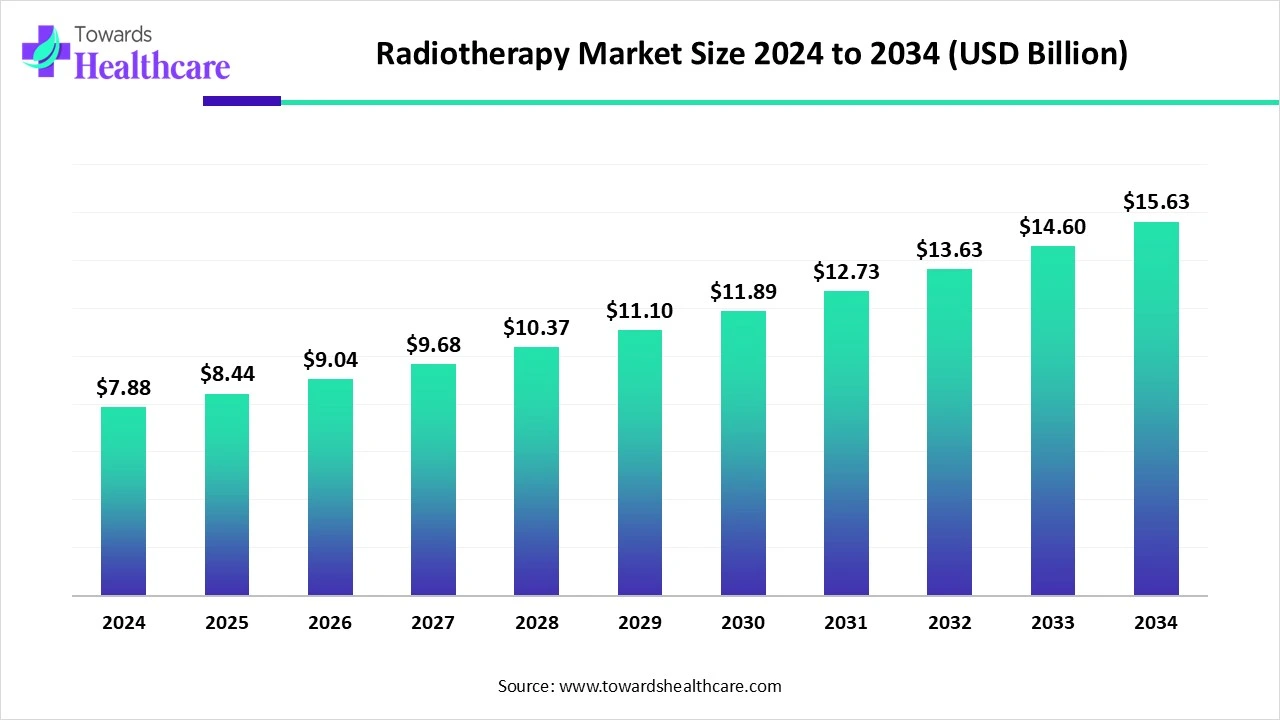
The global radiotherapy market is valued at USD 7.88 billion in 2024 and is projected to grow to USD 8.44 billion in 2025, reaching USD 15.63 billion by 2034, with a steady CAGR of 7.09% from 2025 to 2034. The market’s expansion is driven by rising cancer prevalence, advancements in radiation technology (including proton therapy and image-guided radiotherapy), increasing healthcare spending, and the integration of AI for personalized treatment.
Download the free sample and get the complete insights and forecasts report on this market @ https://www.towardshealthcare.com/download-sample/5925
Table of Contents
ToggleMarket Size and Growth Projections
▶2024 Market Size: USD 7.88 billion
▶2025 Market Size: USD 8.44 billion
▶2034 Projected Market Size: USD 15.63 billion
▶CAGR (2025–2034): 7.09%
Key Insights:
▶North America: Dominates the market with a share of approximately 40% in 2024, driven by advanced healthcare infrastructure and a strong presence of key players.
▶Asia Pacific: Expected to grow at the fastest CAGR due to rising cancer incidences and expanding healthcare infrastructure.
▶Prostate Cancer: Holds the largest market share of around 23% in 2024 due to the high incidence and successful response to radiotherapy.
Market Trends
▶Proton Beam Therapy: Expected to grow rapidly due to its precision in treating tumors with minimal exposure to healthy tissue.
▶Software & Services: Increased adoption of treatment planning systems and AI-powered software to optimize radiotherapy outcomes.
▶Integration of AI: Enhancing tumor detection, treatment planning, and personalized care, significantly improving clinical outcomes.
▶AI-Powered Systems: With advancements like Elekta’s Evo* linear accelerator, AI helps improve imaging accuracy and adaptive radiotherapy capabilities.
▶Adaptive Radiotherapy: Expected to grow at the fastest CAGR due to its personalized and dynamic treatment planning capabilities.
▶External Beam Radiation Therapy: Continues to dominate due to its non-invasive nature and advancements in image-guided radiotherapy.
▶Radiotherapy Centers: Growing rapidly as specialized centers provide faster treatment options with less infrastructure overhead compared to hospitals.
▶Lung Cancer: The segment expected to grow fastest due to rising cases and advancements in radiation techniques like SBRT (Stereotactic Body Radiation Therapy).
▶Technological Advancements: The use of AI, machine learning, and automated radiotherapy planning tools will streamline workflows and reduce errors.
▶Cost Considerations: Rising costs of advanced radiotherapy equipment and treatment procedures remain a challenge, particularly in low-income regions.
10 AI Impacts on the Radiotherapy Market
▶Tumor Detection: AI enhances the ability to detect and classify tumors at earlier stages, improving treatment planning accuracy.
▶Personalized Treatment: AI tailors radiotherapy protocols to individual patient profiles, optimizing dose delivery and minimizing side effects.
▶Adaptive Radiotherapy: AI allows for real-time adjustments in treatment based on changes in tumor size and patient anatomy.
▶Automation of Contouring: AI automates the process of tumor delineation, reducing human error and time required for treatment planning.
▶Precision Radiation Delivery: AI optimizes radiation beam delivery, ensuring that healthy tissue is spared, especially in complex cases like brain or spinal cancers.
▶Decision Support: AI provides clinicians with evidence-based decision support, offering insights on the best course of action based on patient data.
▶Predictive Modeling: AI can predict treatment outcomes by analyzing historical data, enabling better planning and intervention.
▶Radiotherapy Optimization: AI can identify the most effective radiation schedules and dosages, improving clinical outcomes.
▶Reduction of Radiation Exposure: AI minimizes unnecessary radiation exposure, lowering the risk of secondary cancers from excess radiation.
▶Clinical Workflow Enhancement: AI helps optimize clinic workflows, reducing delays and enhancing the efficiency of treatment processes.
Regional Insights: Deep Market Analysis
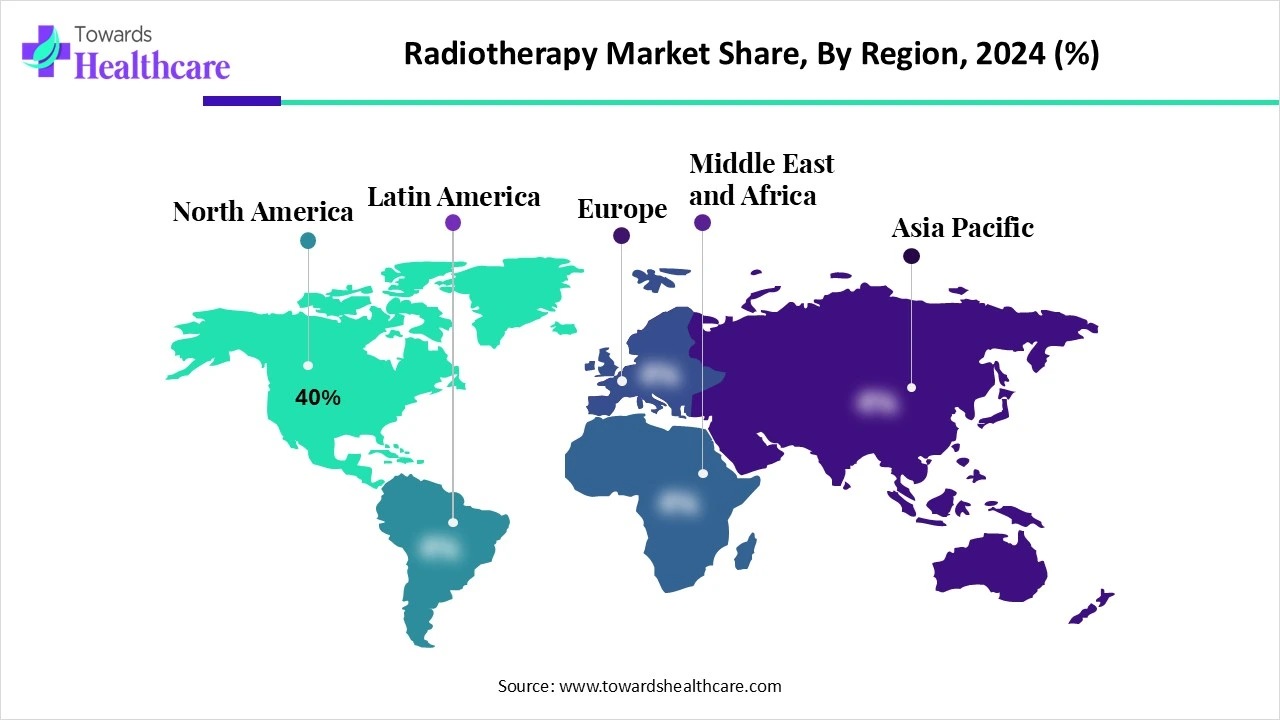
1. North America
Market Share (2024): 40%
▶Key Drivers: Advanced healthcare infrastructure, high adoption of cutting-edge technologies, strong presence of industry leaders like Varian and Elekta.
▶Trends: The U.S. healthcare sector shows rising adoption of advanced radiotherapy technologies, such as AI-enhanced imaging and proton therapy.
2. Asia Pacific
▶Fastest Growing Region: Significant rise in cancer cases, aging populations, and improving healthcare infrastructure.
▶China: Major investments in healthcare, AI-powered solutions, and government support for cancer treatment advancements.
▶India: Rising demand for affordable cancer care, supported by initiatives like Ayushman Bharat and private-public partnerships.
3. Europe
▶Market Growth: Advanced radiotherapy technologies like IMRT, SBRT, and proton therapy are being widely adopted.
▶UK: Government funding and investments in radiotherapy equipment are enhancing access and reducing treatment delays.
▶Germany: Strong focus on precision medicine and AI-based planning systems to improve treatment outcomes.
4. Latin America
▶Growing Demand: Rising cancer burden and improved access to oncology care are driving market expansion.
▶Brazil: Increasing healthcare investments and efforts to improve access to advanced radiotherapy technologies.
5. Middle East & Africa
▶Healthcare Expansion: Growth in the healthcare sector, particularly in countries like Saudi Arabia and South Africa, is leading to greater adoption of advanced radiotherapy technologies.
▶Government Support: Several countries are investing in expanding cancer care infrastructure and radiotherapy services.
Market Dynamics
Driver
▶Increasing Global Cancer Burden: The rising number of cancer cases globally is the primary driver, leading to increased demand for effective and precise treatment options like radiotherapy.
Restraint
▶High Cost of Equipment and Treatment: The high initial cost of radiotherapy devices, along with operational and maintenance costs, limits accessibility, especially in low-income regions.
Opportunity
▶AI and Machine Learning Integration: The increasing role of AI and machine learning in improving treatment planning, precision, and adaptive therapy presents a significant opportunity to enhance radiotherapy services globally.
10 Top Companies in the Radiotherapy Market
Varian Medical Systems (Siemens Healthineers)
▶Overview: A leading provider of radiotherapy equipment and solutions, specializing in linear accelerators and proton therapy systems.
▶Strengths: Market leader with cutting-edge technology and a wide range of radiation therapy solutions.
Elekta AB
▶Overview: Known for its advanced radiation oncology solutions, including radiation therapy planning systems and linear accelerators.
▶Strengths: Strong presence in AI-driven imaging and treatment planning.
Accuray Incorporated
▶Overview: Offers high-precision radiotherapy systems, including the CyberKnife and TomoTherapy systems.
▶Strengths: Focuses on personalized and highly accurate radiotherapy solutions.
ViewRay Inc.
▶Overview: Manufacturer of the MRIdian system, which integrates MRI and radiotherapy for superior tumor targeting.
▶Strengths: Innovations in MRI-guided radiation therapy.
IBA (Ion Beam Applications)
▶Overview: A leader in proton therapy systems, offering state-of-the-art technology for targeted cancer treatment.
▶Strengths: Focus on precision proton therapy solutions for complex cancer cases.
GE HealthCare
▶Overview: Offers imaging technologies integrated with radiation therapy, enhancing treatment accuracy.
▶Strengths: Strong portfolio of diagnostic imaging products that support radiotherapy.
Brainlab AG
▶Overview: Specializes in digital surgery, radiotherapy, and image-guided treatment solutions.
▶Strengths: Known for innovative navigation and software solutions in radiotherapy.
Philips Healthcare
▶Overview: Provides advanced imaging systems used in radiotherapy planning and delivery.
▶Strengths: Strong presence in diagnostic imaging, improving radiotherapy outcomes.
Panacea Medical Technologies Pvt. Ltd.
▶Overview: Focuses on radiation therapy systems and services for hospitals and healthcare centers.
▶Strengths: Offers cost-effective solutions with a focus on underserved markets.
C-RAD AB
▶Overview: A specialist in surface imaging and monitoring systems for precise radiation therapy.
▶Strengths: Strong in motion management and real-time patient monitoring.
Latest Announcements and Developments
▶Aster DM Healthcare: Introduced Intra-Operative Electron Radiation Therapy (IOeRT) in India for precision oncology.
▶Siemens Healthineers: Announced a 25% increase in revenue from its radiotherapy segment in Q2 2025, driven by high demand in the U.S.
▶Accuray: Received CE Mark approval for the Accuray Helix system, aimed at improving access to radiotherapy in underserved regions.
Recent Developments
▶Elekta: Launched Evo*, an AI-powered linear accelerator system that enhances image-guided radiation therapy.
▶Siemens Healthineers: Recorded a 13% increase in orders for Varian radiation therapy systems in the U.S.
Segments Covered in the Radiotherapy Market
By Therapy Type
External Beam Radiation Therapy (EBRT)
▶Overview: This is the most commonly used form of radiotherapy. It delivers high doses of radiation from outside the body, precisely targeting the tumor while sparing surrounding healthy tissue. EBRT is primarily used for treating cancers such as breast, prostate, and lung cancers.
Key Technologies:
▶Intensity-Modulated Radiation Therapy (IMRT): Uses computer-controlled linear accelerators to deliver precise radiation doses, adapting the intensity of the beams.
▶Image-Guided Radiation Therapy (IGRT): Combines imaging technologies like CT scans or X-rays with radiotherapy to guide the treatment more accurately.
▶Volumetric Modulated Arc Therapy (VMAT): A form of IMRT that delivers radiation in a continuous rotation, optimizing the precision of dose delivery.
Proton Beam Therapy
▶Overview: Proton beam therapy is a cutting-edge radiation treatment using protons instead of x-rays. The advantage of protons is that they can be controlled to deliver maximum radiation directly to the tumor while sparing the surrounding healthy tissue. This therapy is especially beneficial for pediatric cases and tumors located near vital organs (e.g., brain, spine).
Key Benefits:
▶More precise targeting of tumors.
▶Less radiation exposure to surrounding healthy tissues.
▶Ideal for treating tumors in pediatric patients or those in difficult-to-reach areas.
Internal Radiation Therapy (Brachytherapy)
▶Overview: Brachytherapy involves placing radioactive sources directly inside or very close to the tumor. This technique is commonly used for treating cancers of the prostate, cervix, breast, and skin.
Types:
▶High-Dose Rate (HDR): Delivers a high dose of radiation over a short period of time.
▶Low-Dose Rate (LDR): Radiation is delivered over a longer period, typically used for prostate cancer.
▶Pulsed-Dose Rate (PDR): Similar to HDR but with intermittent radiation bursts.
Systemic Radiotherapy
▶Overview: This type of therapy involves the administration of radioactive substances (radiopharmaceuticals) that are either injected into the bloodstream or taken orally. The radioactive substances travel through the body and target cancer cells specifically. It is commonly used in treating thyroid cancer, bone cancer, and prostate cancer.
Common Radiopharmaceuticals:
▶Iodine-131: Commonly used for thyroid cancer treatment.
▶Lutetium-177: Used for certain types of neuroendocrine tumors.
▶Radium-223: Primarily used for prostate cancer with bone metastasis.
By Component
Radiotherapy Devices
▶Overview: These are the physical machines used to deliver radiation to the patient. The devices used in radiotherapy must be highly accurate and capable of delivering varying doses depending on the type and location of the cancer.
Key Devices:
▶Linear Accelerators (LINAC): These are the most widely used machines for delivering external beam radiation. They accelerate electrons to high energies and can be adjusted to treat various types of cancer.
▶Proton Therapy Systems: These devices use proton beams to treat tumors. They are more precise than traditional radiation methods, particularly in treating tumors near critical structures or in pediatric patients.
▶Brachytherapy Devices: These devices allow the placement of radioactive sources inside or near tumors. They are used for both low and high-dose radiation delivery.
Software & Services
▶Overview: Software plays a crucial role in radiotherapy, supporting planning, imaging, and simulation. The growing reliance on AI and digital tools is reshaping how treatments are planned and delivered.
Key Software and Services:
▶Treatment Planning Systems (TPS): Used to plan the precise dose of radiation based on tumor size, shape, and location. These systems are integrated with imaging tools to visualize the tumor and healthy tissue.
▶Simulation & Imaging Software: Helps clinicians visualize tumors and healthy tissue before and during treatment. It supports the alignment of radiation beams to the tumor’s exact position.
▶Oncology Information Systems (OIS): These systems manage patient data, treatment records, and workflow integration in oncology departments.
▶Quality Assurance Software: Ensures the consistency and safety of radiation delivery, verifying that doses are administered correctly.
By End User
Hospitals
▶Overview: Hospitals dominate the radiotherapy market because they provide comprehensive treatment options, including radiotherapy, surgery, and chemotherapy. They are the primary centers for advanced cancer care, particularly in developed regions.
Key Factors Driving Growth:
▶Integration of various cancer treatments within one facility.
▶Availability of multidisciplinary care teams for cancer patients.
▶Continuous investments in upgrading radiotherapy technology.
Radiotherapy Centers
▶Overview: Radiotherapy centers are specialized facilities focusing on providing radiotherapy treatments. These centers are typically smaller and more specialized than hospitals, often offering faster treatment and more personalized care.
Key Advantages:
▶Cost-Effective: Lower operational costs compared to hospitals, leading to more affordable treatments.
▶Quicker Access: Shorter wait times for treatment, especially for patients requiring routine radiation therapy.
▶Specialized Care: Focused expertise in radiotherapy, leading to better outcomes for patients.
By Technology
Conventional Radiotherapy
▶Overview: Conventional radiotherapy techniques, such as traditional external beam radiation therapy, have been the standard for decades. While they are highly effective, their ability to adapt to changes in tumor size and location is limited.
▶Market Dominance: In 2024, conventional radiotherapy still holds a significant share of the market, especially in low- and middle-income countries where advanced technologies are less accessible.
Advanced Radiotherapy (AI-powered systems)
▶Overview: This technology integrates AI and machine learning into radiotherapy planning and delivery, enabling personalized treatment based on real-time data from patients.
Key Advancements:
▶Adaptive Radiotherapy: Adjusts the radiation treatment plan based on changes in the tumor or patient’s anatomy over time.
▶AI-Enhanced Imaging: Improves the precision of radiation delivery by optimizing imaging and tumor targeting.
▶Real-Time Treatment Adjustments: AI algorithms can adjust radiation doses during treatment, improving accuracy and reducing side effects.
Top 5 FAQs
1 What is the projected growth rate for the radiotherapy market?
▶The market is expected to grow at a CAGR of 7.09% between 2025 and 2034.
2 Which region leads the radiotherapy market in 2024?
▶North America holds the largest share, contributing around 40% of the market.
3 What is the fastest-growing segment in the radiotherapy market?
▶Proton beam therapy is expected to grow at the fastest rate due to its precision and minimal side effects.
4 What is the role of AI in radiotherapy?
▶AI enhances treatment planning, tumor detection, and adaptive radiotherapy, significantly improving treatment precision and patient outcomes.
5 Which companies are leading the radiotherapy market?
▶Key players include Varian Medical Systems (Siemens Healthineers), Elekta AB, Accuray, and GE Healthcare.
Access our exclusive, data-rich dashboard dedicated to the therapeutic area sector – built specifically for decision-makers, strategists, and industry leaders. The dashboard features comprehensive statistical data, segment-wise market breakdowns, regional performance shares, detailed company profiles, annual updates, and much more. From market sizing to competitive intelligence, this powerful tool is one-stop solution to your gateway.
Access the Dashboard: https://www.towardshealthcare.com/access-dashboard
Immediate Delivery Available | Checkout this Premium Research Report @ https://www.towardshealthcare.com/checkout/5925
Become a valued research partner with us – https://www.towardshealthcare.com/schedule-meeting
You can place an order or ask any questions, please feel free to contact us at sales@towardshealthcare.com
Powering Healthcare Leaders with Real-Time Insights: https://www.towardshealthcare.com/healthcare-intelligence-platform
Europe Region – +44 778 256 0738
North America Region – +1 8044 4193 44
APAC Region: +91 9356 9282 04
Web: https://www.towardshealthcare.com
Find us on social platforms: LinkedIn | Twitter | Instagram | Medium | Pinterest
About the Author