Is Skincare No Longer Just Beauty, but a Global Lifestyle Shift by 2034?

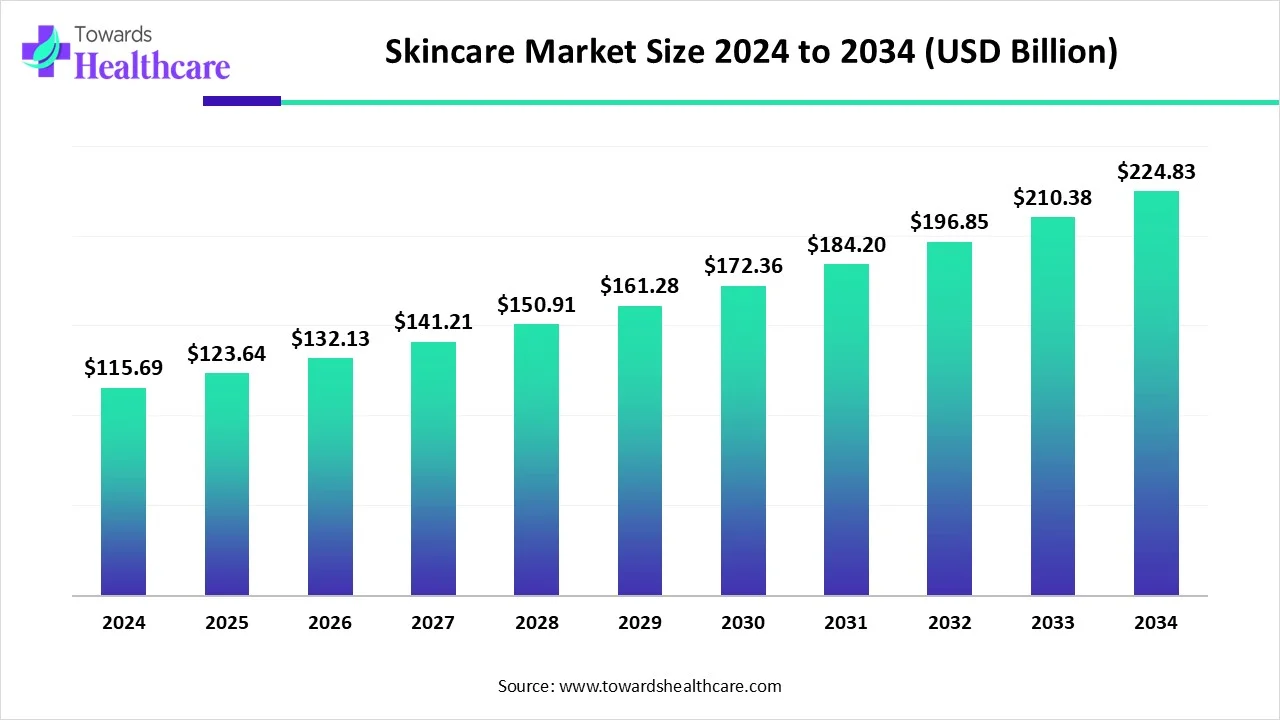
Skincare has quietly moved from the margins of personal grooming into the center of daily life. What was once considered optional or cosmetic is now treated as essential, preventive, and deeply personal. The global skincare market’s growth from USD 115.69 billion in 2024 to a projected USD 224.83 billion by 2034 is not simply a financial story; it is a reflection of how societies across regions are redefining health, self-care, identity, and confidence.
Download Free Sample Now and Get the Complete Report Easily at: https://www.towardshealthcare.com/download-sample/5610
Over more than a decade of observing this industry, one pattern stands out clearly. Skincare evolves fastest when consumer psychology changes. Today’s consumers are not buying products alone; they are buying reassurance, science, safety, personalization, and values. They want to understand what they apply to their skin, why it works, and how it aligns with their lifestyle. This shift explains why skincare has become one of the most resilient and adaptive segments within the broader personal care industry.
Table of Contents
ToggleFrom Routine to Ritual: How Skincare Became Non-Negotiable
Skincare is no longer confined to morning and night routines. It has become a ritual tied to wellness, mental health, and self-expression. Urbanization, pollution, climate stress, and digital exposure have made skin protection and repair everyday concerns rather than occasional indulgences. Consumers now associate skincare with prevention rather than correction, which has fundamentally changed purchasing behavior.
This mindset shift has expanded the market beyond traditional users. Younger consumers begin skincare earlier, while older demographics adopt advanced formulations to maintain skin health rather than chase unrealistic ideals. The result is a market driven by long-term usage rather than seasonal demand, providing stability and sustained growth.
Asia Pacific Sets the Pace for Global Skincare
Asia Pacific’s dominance in the skincare market is no coincidence. The region combines a large population base, fast urbanization, rising disposable income, and a deeply rooted cultural emphasis on skincare. Countries such as China, South Korea, Japan, and India have normalized multi-step skincare routines across generations, creating a mature yet innovation-hungry consumer base.
South Korea continues to influence global skincare through formulation innovation, ingredient transparency, and aesthetic packaging. Its digitally connected population accelerates trends at a pace few markets can match. Meanwhile, China’s skincare consumers are becoming increasingly educated, demanding clinically supported claims and ingredient-level transparency. India represents a different but equally powerful growth engine, where affordability, dermatology-backed products, and localized formulations are expanding skincare access beyond metropolitan cities.
North America’s Growth Is Powered by Conscious Consumption
While Asia Pacific leads in scale, North America is shaping the narrative around clean, ethical, and premium skincare. Consumers in the U.S. and Canada actively seek products that are free from harmful chemicals, responsibly sourced, and aligned with sustainability goals. This region demonstrates a willingness to pay more for products that promise safety, performance, and transparency.
E-commerce plays a central role here. Skincare discovery increasingly happens online, driven by reviews, social media education, and influencer-led storytelling. Consumers rarely purchase blindly; they research, compare, and validate before committing. This behavior pushes brands to invest heavily in formulation credibility and digital communication rather than traditional advertising.
Europe Redefines Skincare Through Regulation and Refinement
Europe’s skincare market stands at the intersection of regulation, tradition, and innovation. Stringent cosmetic regulations have created an environment where safety and dermatological testing are not marketing tools but baseline expectations. This regulatory discipline has strengthened consumer trust and elevated product quality across the region.
European consumers often gravitate toward minimalist routines, preferring fewer products with higher efficacy. The growing interest in biotech ingredients, probiotics, and fermented actives reflects a desire for science-backed skincare that works in harmony with the skin barrier. Countries like France and Germany continue to influence global standards in pharmaceutical-grade skincare, while the UK leads innovation in microbiome-focused formulations.
Latin America Emerges as a Skincare Powerhouse
Latin America’s skincare growth story is driven by awareness, aspiration, and accessibility. Rising disposable incomes, social media penetration, and government-led health awareness initiatives are expanding the consumer base rapidly. Skincare is increasingly viewed as part of preventive healthcare rather than luxury.
Brazil’s leadership in aesthetic procedures and Mexico’s role as a hub for cosmetic treatments highlight how professional skincare influences retail demand. Consumers in this region favor products that address lifestyle-related concerns such as sun exposure, pollution, and early aging, reinforcing the demand for multifunctional formulations.
Creams Dominate Because Trust Still Matters
Creams continue to dominate the skincare product landscape for a simple reason: trust. Cream-based formulations are familiar, versatile, and effective across skin types and age groups. Their pharmaceutical roots add credibility, particularly in markets where consumers rely on dermatologist recommendations.
Advancements in formulation science have transformed creams into sophisticated delivery systems capable of targeting hydration, aging, pigmentation, and barrier repair simultaneously. Their ease of application and adaptability ensure they remain central to skincare routines worldwide.
Powders Signal the Future of Sustainable Skincare
The rapid growth of powder-based skincare products highlights how sustainability is influencing innovation. Powders reduce the need for preservatives, lower transportation emissions, and extend shelf life. Consumers increasingly recognize these benefits, particularly those seeking eco-conscious alternatives without compromising performance.
Powdered cleansers, masks, and actives appeal to minimalist consumers who value functionality and environmental responsibility. This segment’s growth reflects a broader industry trend toward reducing waste while maintaining efficacy.
Packaging Evolves From Convenience to Protection
Packaging is no longer an afterthought in skincare. Tubes dominate because they balance cost-efficiency, hygiene, and ingredient protection. Consumers appreciate controlled dispensing and portability, especially for daily-use products.
At the same time, bottles, particularly glass, are gaining momentum for premium and active-rich formulations. Glass conveys safety, stability, and luxury, reinforcing trust in products containing sensitive ingredients such as antioxidants and anti-aging compounds. Packaging choices now directly influence brand perception and purchasing decisions.
Women Lead, but Men Are Redefining the Market
Women continue to represent the largest share of skincare consumption, supported by economic empowerment and long-standing engagement with beauty routines. Increased workforce participation and disposable income, particularly in Asia Pacific, further strengthen this segment.
However, the fastest transformation is happening in men’s skincare. Changing social norms and digital influence have normalized male self-care. Men now seek products that address specific concerns such as oil control, aging, and environmental damage. This shift is expanding the market rather than redistributing it, creating new opportunities for innovation and targeted communication.
Online Channels Rewrite the Rules of Skincare Retail
Physical cosmetic stores still dominate because professional guidance remains invaluable, especially for first-time buyers or complex skin concerns. However, online channels are redefining convenience, choice, and accessibility.
Digital platforms allow consumers to explore global brands, compare formulations, and read peer reviews without geographical limitations. This transparency raises expectations and forces brands to compete on substance rather than shelf presence alone. The rapid growth of online skincare sales reflects a fundamental change in how trust is built in the digital age.
AI Brings Precision to Personal Care
Artificial intelligence represents one of the most transformative forces in skincare today. AI-driven diagnostics, recommendation engines, and predictive analytics allow brands to move beyond generic solutions toward personalized skincare experiences.
By analyzing skin types, environmental exposure, and lifestyle factors, AI enables formulations that align more closely with individual needs. This not only improves efficacy but also strengthens consumer loyalty. As personalization becomes an expectation rather than a novelty, AI integration will define competitive advantage in the coming decade.
Natural and Organic Demand Reshapes Innovation
The growing preference for natural and organic skincare is driven by awareness rather than trendiness. Consumers are increasingly cautious about synthetic ingredients and their long-term impact on health and the environment. This has pushed brands to reformulate products, invest in clean-label alternatives, and communicate ingredient sourcing transparently.
This demand fuels innovation rather than limiting it. Brands that successfully balance natural ingredients with scientific validation are gaining credibility and market share, particularly among environmentally conscious consumers.
Regulation Challenges and Strengthens the Industry
Regulatory complexity remains one of the most significant challenges in skincare. Evolving standards across regions require constant adaptation, increasing compliance costs and slowing time to market. However, regulation also acts as a quality filter, strengthening consumer trust and eliminating unsafe practices.
Markets with strict regulations often produce globally respected brands because compliance becomes a competitive advantage rather than a burden. Over time, regulation contributes to long-term industry stability.
The Road Ahead for Skincare
The skincare market’s future will be shaped by personalization, sustainability, digital engagement, and scientific credibility. Growth will not come from louder marketing but from deeper understanding of skin health and consumer values.
Skincare is no longer about perfection. It is about protection, resilience, and confidence in an increasingly demanding world. Brands that recognize skin as both a biological and emotional asset will lead the next phase of this market’s evolution.
As the industry moves toward USD 224.83 billion by 2034, one truth remains clear. Skincare has outgrown its cosmetic origins. It now sits at the intersection of health, technology, culture, and lifestyle, and its story is only beginning.
Access the Dashboard: https://www.towardshealthcare.com/access-dashboard
Checkout Skincare Market Report Now at: https://www.towardshealthcare.com/checkout/5610
Become a valued research partner with us - https://www.towardshealthcare.com/schedule-meeting
You can place an order or ask any questions, please feel free to contact us at sales@towardshealthcare.com
Powering Healthcare Leaders with Real-Time Insights: https://www.towardshealthcare.com/healthcare-intelligence-platform
Europe Region – +44 778 256 0738
North America Region – +1 8044 4193 44
APAC Region: +91 9356 9282 04
Visit Our Website: https://www.towardshealthcare.com
Find us on social platforms: LinkedIn | Twitter | Instagram | Medium | Pinterest
About the Author