Sleep never used to be a “topic.” It was just something people did at night.
But today, poor sleep has quietly become one of the biggest lifestyle issues. Stress, screen time, and fast-paced routines have pushed sleep quality to the edge.
Now people don’t just want sleep; they want better sleep. And that shift is powering the rapid rise of the sleep trackers market.
From Alarm Clocks to Smart Sleep Intelligence
Sleep tracking has evolved far beyond basic alarms and bedtime reminders.
Modern devices now measure heart rate, breathing, oxygen levels, and even sleep stages. They don’t just track sleep; they interpret it.
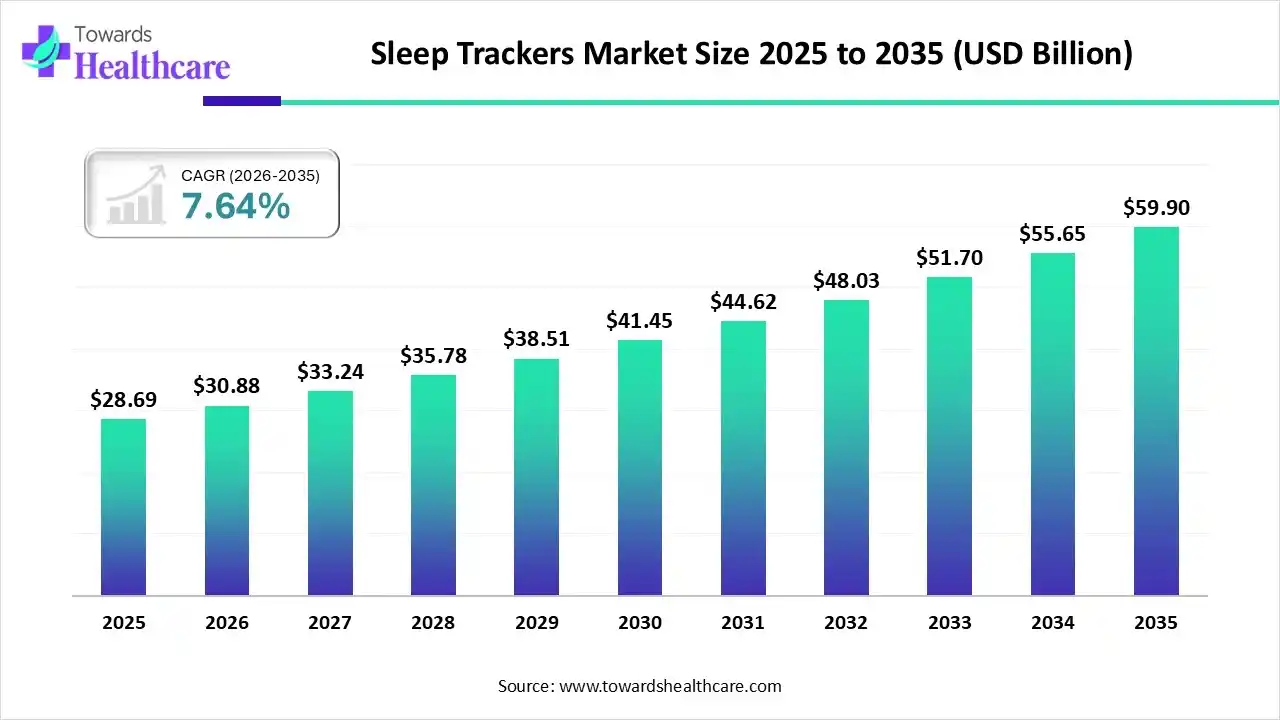
This is why the global sleep trackers market, valued at $28.69 billion in 2025, is expected to reach $59.90 billion by 2035, growing at a steady pace.
Download Free Sample: https://www.towardshealthcare.com/download-sample/6535
People are no longer guessing how they slept. They are seeing it, analyzing it, and trying to improve it.
Why Everyone Suddenly Cares About Sleep
The demand didn’t grow randomly. It came from real problems people face daily.
Lifestyle diseases, anxiety, irregular work hours, and digital overload have made quality sleep harder to achieve.
At the same time, awareness has increased. People now understand that poor sleep affects productivity, mood, immunity, and even long-term health.
Here’s what’s driving this shift:
- Rising awareness of sleep disorders like insomnia and sleep apnea
- Increased use of smartwatches and fitness bands
- Growing interest in preventive healthcare
- Easy access to health data through mobile apps
Sleep has moved from being ignored to being actively managed.
Wearables Are Leading the Sleep Revolution
Smartwatches and fitness bands dominate the market—and for a good reason.
They are easy to use, always accessible, and combine multiple features in one device. Users don’t need separate tools for fitness and sleep anymore.
These devices track sleep passively. You wear them, sleep, and wake up to detailed insights.
At the same time, smart rings are emerging as the fastest-growing segment. They are small, comfortable, and less intrusive, making them ideal for overnight use.
People prefer solutions that don’t disturb their natural sleep—and rings fit that need perfectly.
AI Is Changing How We Understand Sleep
Artificial intelligence is the real game changer here.
Sleep trackers no longer just collect data. They now analyze patterns and provide actionable insights.
For example, instead of saying “You slept 6 hours,” devices now say:
“You had poor deep sleep due to late caffeine intake.”
That level of personalization keeps users engaged and coming back daily.
AI also helps in detecting early signs of sleep disorders, which makes these devices useful not just for consumers but also for healthcare professionals.
From Bedrooms to Hospitals: A Bigger Role Emerging
Sleep trackers are no longer limited to personal use.
Healthcare providers are increasingly adopting them for monitoring patients remotely. Doctors can now track sleep patterns without requiring patients to stay overnight in labs.
This shift is especially important for conditions like sleep apnea.
The integration with telemedicine and remote care systems is opening new opportunities in the clinical space.
At the same time, businesses are also adopting these devices for employee wellness programs, making sleep tracking part of corporate health strategies.
Technology Is Getting Smarter—and More Accurate
Early sleep trackers relied mainly on motion detection. That limited their accuracy.
Today’s devices combine multiple signals like heart rate variability, respiration, and oxygen levels. This improves reliability significantly.
However, challenges still exist.
Consumer devices can track overall sleep trends well, but they sometimes struggle with accurately identifying sleep stages.
That’s why ongoing research focuses on bridging the gap between consumer wearables and clinical-grade systems.
Regional Growth: Where the Market Is Heading
North America currently leads the market. High awareness, strong healthcare infrastructure, and early adoption of technology support this dominance.
Europe, however, is emerging as the fastest-growing region. Government support for digital health and rising awareness are driving adoption.
Asia-Pacific is becoming a major growth engine. Countries like India and China are seeing rapid adoption due to:
- Increasing smartphone penetration
- Growing middle-class population
- Rising interest in affordable wearable devices
- Expanding digital health ecosystem
India, in particular, shows strong potential as awareness around sleep health continues to grow.
The Future: A Fully Connected Sleep Ecosystem
Sleep tracking is moving beyond individual devices.
The future lies in connected ecosystems where sleep trackers interact with smart beds, lighting systems, and home automation tools.
Imagine your room adjusting temperature, lighting, and sound automatically based on your sleep cycle.
This level of integration will transform how people experience sleep.
At the same time, personalized sleep coaching and long-term health insights will become standard features, not premium ones.
Opportunities and Challenges Ahead
The market is full of potential, but it is not without obstacles.
On one side, growing demand for home-based health monitoring and preventive care creates massive opportunities.
On the other side, concerns around data privacy, accuracy, and regulatory approvals remain critical challenges.
Here’s a quick snapshot:
- Opportunities:
- Expansion in emerging markets
- Integration with healthcare systems
- Growth in AI-based insights
- Challenges:
- Data privacy concerns
- Accuracy limitations
- Intense competition among brands
Companies that solve these issues will lead the next phase of growth.
Sleep Is No Longer Passive—It’s Measured, Managed, and Optimized
The biggest shift is not technological—it’s behavioral.
People are no longer treating sleep as a passive activity. They are actively trying to improve it.
Sleep trackers have turned something invisible into something measurable.
And once people can measure something, they try to optimize it.
That mindset is what will keep this market growing steadily in the coming years.
Access our exclusive, data-rich dashboard dedicated to the medical devices sector – built specifically for decision-makers, strategists, and industry leaders. The dashboard features comprehensive statistical data, segment-wise market breakdowns, regional performance shares, detailed company profiles, annual updates, and much more. From market sizing to competitive intelligence, this powerful tool is one-stop solution to your gateway.
Access the Dashboard: https://www.towardshealthcare.com/access-dashboard
Checkout the Market Report Now at: https://www.towardshealthcare.com/checkout/6535
You can place an order or ask any questions, please feel free to contact us at sales@towardshealthcare.com
Europe Region – +44 778 256 0738
North America Region – +1 8044 4193 44
APAC Region: +91 9356 9282 04
Visit Our Website: https://www.towardshealthcare.com
Find us on social platforms: LinkedIn | Twitter | Instagram | Medium
About the Author