
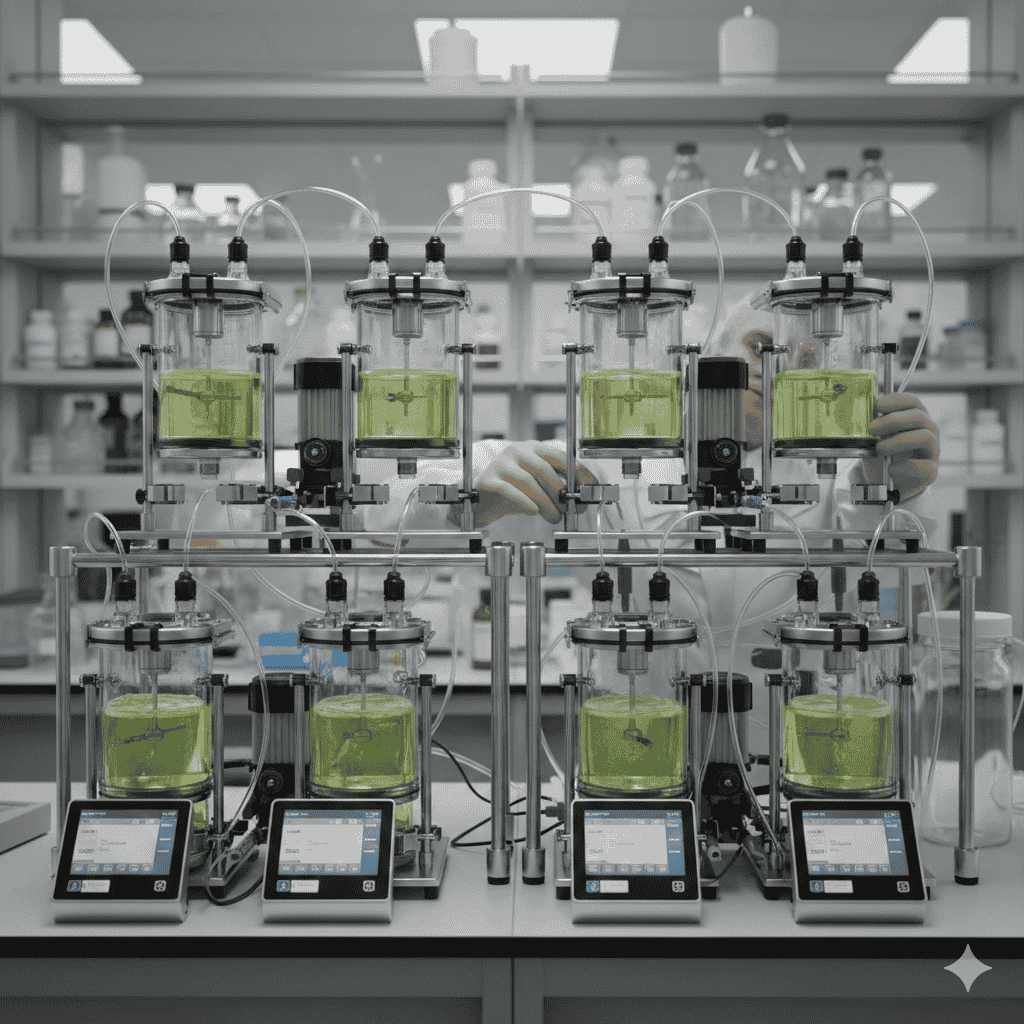
For decades, bioreactors were viewed largely as industrial workhorses, large, complex systems hidden deep inside manufacturing facilities, accessible only to seasoned engineers and process scientists. That perception is changing rapidly. Today, small-scale bioreactors are no longer peripheral tools reserved for early experimentation. They have become strategic assets that influence how biologics are discovered, optimized, validated, and ultimately scaled to commercial production.
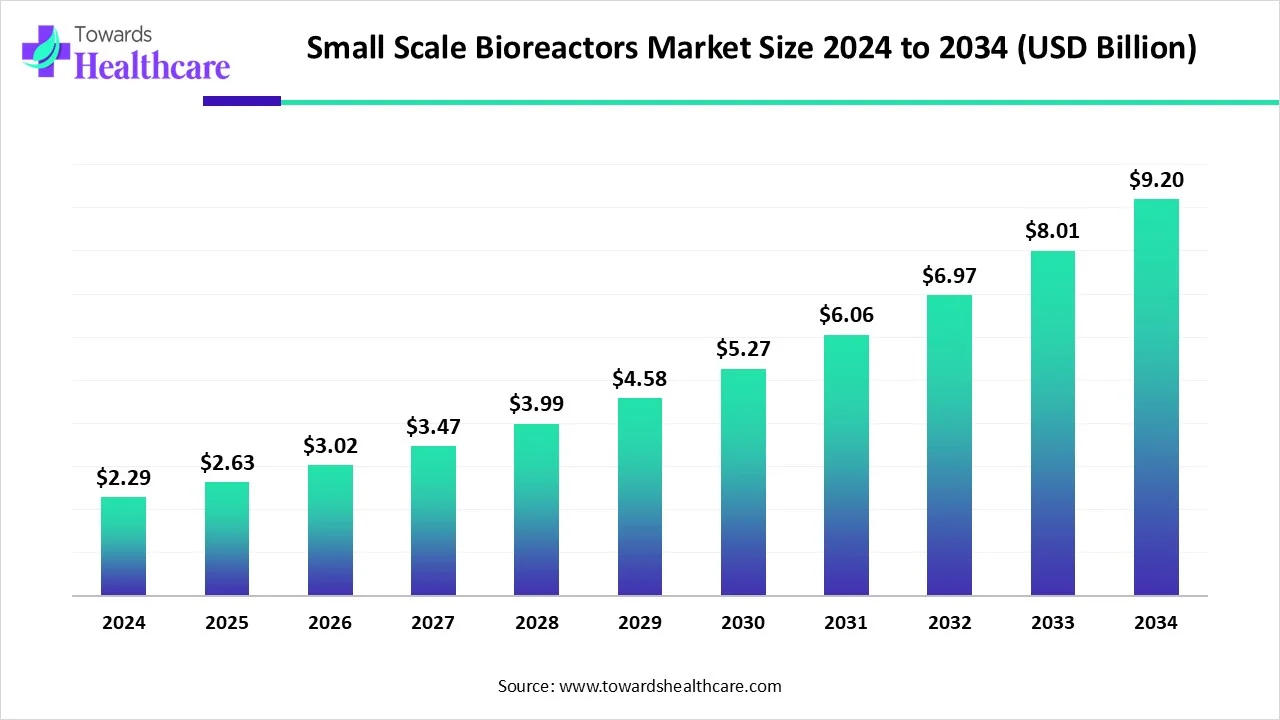
The global small-scale bioreactors market, valued at USD 2.29 billion in 2024 and expected to reach USD 9.2 billion by 2034, reflects more than numerical growth. It signals a structural shift in how the biopharmaceutical and biotechnology ecosystem approaches innovation. A nearly 15 percent compound annual growth rate over the next decade indicates sustained demand driven by scientific complexity, regulatory rigor, and the industry’s need for speed without compromising quality.
Download Free Sample Now and Get the Complete Report Easily at: https://www.towardshealthcare.com/download-sample/5686
From Simple Vessels to Intelligent Systems
At their core, bioreactors are controlled environments where cells or microorganisms are cultivated to produce biologically active substances. Small-scale bioreactors, typically operating at volumes ranging from a few milliliters to a few liters, were once regarded as simplified versions of larger systems. That assumption no longer holds true.
Modern small-scale bioreactors integrate advanced sensors, automation software, and real-time analytics that mirror industrial-scale performance. Researchers now expect bench-top systems to deliver reproducibility, data integrity, and scalability that align seamlessly with later manufacturing stages. This expectation has pushed manufacturers to design systems that are not only compact but also highly sophisticated.
These systems allow scientists to simulate real-world production conditions early in development. As a result, costly surprises during scale-up are reduced, timelines are compressed, and the probability of regulatory success improves significantly.
Why Demand Is Rising Faster Than Ever
The surge in demand for small-scale bioreactors is closely tied to the explosion of biologics, including monoclonal antibodies, cell and gene therapies, vaccines, and recombinant proteins. Unlike traditional small-molecule drugs, biologics require living systems for production. Even minor changes in process conditions can alter yield, quality, or efficacy.
Small-scale bioreactors enable researchers to explore these variables efficiently. They support parallel experimentation, rapid iteration, and precise control of parameters such as pH, temperature, dissolved oxygen, and nutrient flow. As clinical pipelines expand and diversify, the need for flexible and reliable development platforms grows accordingly.
The rising number of clinical trials worldwide reinforces this trend. With thousands of trials underway in cell therapy, gene therapy, and antibody-based treatments, development teams must generate robust process data quickly. Small-scale bioreactors serve as the foundation for that data, ensuring that experimental insights translate into scalable manufacturing strategies.
Innovation Thrives Where Cost Meets Constraint
While growth prospects are strong, the market faces a persistent challenge: cost. Advanced bioreactor systems require significant upfront investment, particularly in regions with limited funding or infrastructure. However, this constraint has also become a catalyst for innovation.
Manufacturers are increasingly exploring alternative materials, modular designs, and novel fabrication methods to reduce cost without sacrificing performance. The emergence of 3D-printed bioreactors and systems built from lower-cost, high-performance polymers illustrates how necessity drives creativity. These innovations expand access, especially for academic institutions, startups, and emerging biotech hubs.
At the same time, the growing popularity of single-use technologies reflects a broader industry shift toward efficiency and risk reduction. Disposable systems eliminate cleaning and sterilization steps, reduce cross-contamination risks, and shorten turnaround times between experiments. For many users, these advantages outweigh concerns about consumable costs or waste management.
Reusable Versus Single-Use: A Market in Transition
Reusable bioreactors dominated the market in 2024, and their position remains strong. Built primarily from stainless steel or glass, these systems are valued for their durability, long-term cost efficiency, and extensive operational history. Many organizations rely on reusable bioreactors because they align with established workflows and regulatory familiarity.
However, momentum is clearly shifting. Single-use bioreactors are gaining traction at a faster pace, particularly in research-driven and fast-moving environments. Their appeal lies in operational simplicity. By eliminating cleaning validation and reducing downtime, single-use systems allow teams to focus on experimentation rather than maintenance.
This transition does not represent a replacement but a rebalancing. Organizations increasingly adopt hybrid strategies, selecting reusable or single-use systems based on application, scale, and risk tolerance. The result is a more nuanced market where flexibility matters more than tradition.
Capacity Matters More Than Size Suggests
Among capacity segments, bioreactors in the 1 to 3 liter range emerged as clear leaders. Their dominance reflects a practical reality in bioprocess development. This volume range offers an optimal balance between experimental relevance and operational convenience.
Bioreactors at this scale allow researchers to conduct pilot studies that closely mimic larger systems while remaining manageable and cost-effective. They support parameter optimization, media development, and early validation without the logistical burden of larger equipment. Their portability and ease of handling further enhance their appeal, particularly in collaborative or multi-site research environments.
Larger small-scale systems, such as those in the 3 to 5 liter range, are also gaining attention. These systems bridge the gap between benchtop experimentation and full-scale production, offering additional confidence during scale-up. As bioprocesses grow more complex, demand for these intermediate capacities is expected to rise steadily.
CROs and CMOs Redefine the Competitive Landscape
Contract research organizations and contract manufacturing organizations have emerged as the most influential end-users in the small-scale bioreactors market. Their dominance reflects a fundamental shift in how biopharmaceutical innovation is structured.
Rather than building extensive in-house capabilities, many biotech and pharmaceutical companies now outsource development and early manufacturing to specialized partners. CROs and CMOs provide infrastructure, expertise, and scalability that would be difficult or inefficient to replicate internally.
Small-scale bioreactors are central to this model. They allow service providers to manage diverse client portfolios, adapt quickly to different processes, and maintain high standards of quality and compliance. As venture funding fuels the growth of biotech startups, reliance on external partners is expected to deepen, reinforcing demand for versatile small-scale systems.
Academic Research Continues to Shape the Future
Academic and research institutions may not command the same market share as commercial entities, but their influence is profound. Universities and research centers are often the birthplace of novel biologics and breakthrough therapies.
Government funding, collaborative initiatives, and public-private partnerships have strengthened research infrastructure worldwide. Small-scale bioreactors play a pivotal role in these settings, enabling scientists to explore new biological pathways, develop proof-of-concept processes, and train the next generation of bioprocess engineers.
As translational research accelerates, the boundary between academic discovery and commercial development continues to blur. This convergence ensures that innovations originating in research labs quickly find relevance in industrial applications.
North America’s Leadership Reflects Ecosystem Strength
North America’s leading position in the small-scale bioreactors market is no coincidence. The region benefits from a dense concentration of pharmaceutical and biotechnology companies, advanced research institutions, and supportive regulatory frameworks.
High R&D spending, robust clinical pipelines, and a strong culture of innovation sustain demand for cutting-edge bioprocessing tools. The prevalence of chronic and genetic diseases further amplifies the need for biologics, reinforcing the importance of efficient development platforms.
Regulatory agencies in the region also emphasize data integrity and process understanding, both of which are enhanced by advanced small-scale bioreactor systems. This alignment between regulatory expectations and technological capability strengthens market stability.
Asia-Pacific Emerges as the Growth Engine
While North America leads in scale, Asia-Pacific leads in momentum. Rapid expansion of the biotech sector, increasing government support, and a growing talent pool position the region as the fastest-growing market for small-scale bioreactors.
Countries such as China and Japan are investing heavily in biotechnology infrastructure and innovation. Rising patent activity, increased research output, and ambitious national strategies underscore a long-term commitment to biopharmaceutical development.
For global suppliers, Asia-Pacific represents both an opportunity and a challenge. Success requires adapting products to local needs, price sensitivities, and regulatory environments while maintaining performance standards.
Europe Balances Regulation with Innovation
Europe’s market growth reflects a careful balance between regulatory rigor and scientific ambition. Strong public funding, cross-border collaboration, and a focus on sustainable innovation define the region’s approach.
European manufacturers and research institutions emphasize quality, compliance, and environmental responsibility. This perspective aligns well with trends such as single-use technologies designed to reduce water and energy consumption.
Ongoing investments in research centers and biomanufacturing capabilities ensure that Europe remains a significant contributor to global bioprocess innovation.
Latin America and Emerging Regions Gain Strategic Importance
Latin America’s growing role in vaccine manufacturing and biologics development highlights the expanding geographic footprint of the market. Government initiatives aimed at strengthening local production capabilities create demand for flexible and scalable development tools.
As healthcare priorities shift toward self-sufficiency and resilience, small-scale bioreactors become essential components of national strategies. Similar dynamics are emerging in parts of the Middle East and Africa, where investment in healthcare infrastructure is accelerating.
Artificial Intelligence Changes the Rules of Bioprocessing
Perhaps the most transformative force shaping the future of small-scale bioreactors is artificial intelligence. AI and machine learning technologies are redefining how data is generated, interpreted, and applied.
AI-enabled bioreactors can monitor complex biological processes in real time, identify patterns invisible to human operators, and recommend adjustments that optimize yield and consistency. This capability reduces variability, enhances reproducibility, and accelerates decision-making.
For experienced professionals, AI does not replace expertise; it amplifies it. By handling data-intensive tasks, AI allows scientists to focus on strategy, interpretation, and innovation. Over time, this synergy is expected to redefine best practices in bioprocess development.
Access our exclusive, data-rich dashboard dedicated to the biotechnology industry – built specifically for decision-makers, strategists, and industry leaders. The dashboard features comprehensive statistical data, segment-wise market breakdowns, regional performance shares, detailed company profiles, annual updates, and much more. From market sizing to competitive intelligence, this powerful tool is one-stop solution to your gateway.
Access the Dashboard: https://www.towardshealthcare.com/access-dashboard
Checkout Small-scale Bioreactors Market Report Now at: https://www.towardshealthcare.com/checkout/5686
Become a valued research partner with us - https://www.towardshealthcare.com/schedule-meeting
You can place an order or ask any questions, please feel free to contact us at sales@towardshealthcare.com
Powering Healthcare Leaders with Real-Time Insights: https://www.towardshealthcare.com/healthcare-intelligence-platform
Europe Region – +44 778 256 0738
North America Region – +1 8044 4193 44
APAC Region: +91 9356 9282 04
Visit Our Website: https://www.towardshealthcare.com
Find us on social platforms: LinkedIn | Twitter | Instagram | Medium | Pinterest
About the Author