Tag: Biotechnology Market

  • Biotechnology Sales Explode: Korea Hits 4.5B USD, Poland Booms 34% CAGR!

    Biotechnology is no longer a niche market. Across the globe, dedicated biotech firms are seeing their sales surge, driven by innovation, government support, and the growing demand for medical and healthcare solutions. Recent data highlights impressive growth patterns in Canada, Korea, Germany, and Poland, reflecting both stability and rapid expansion in the sector.

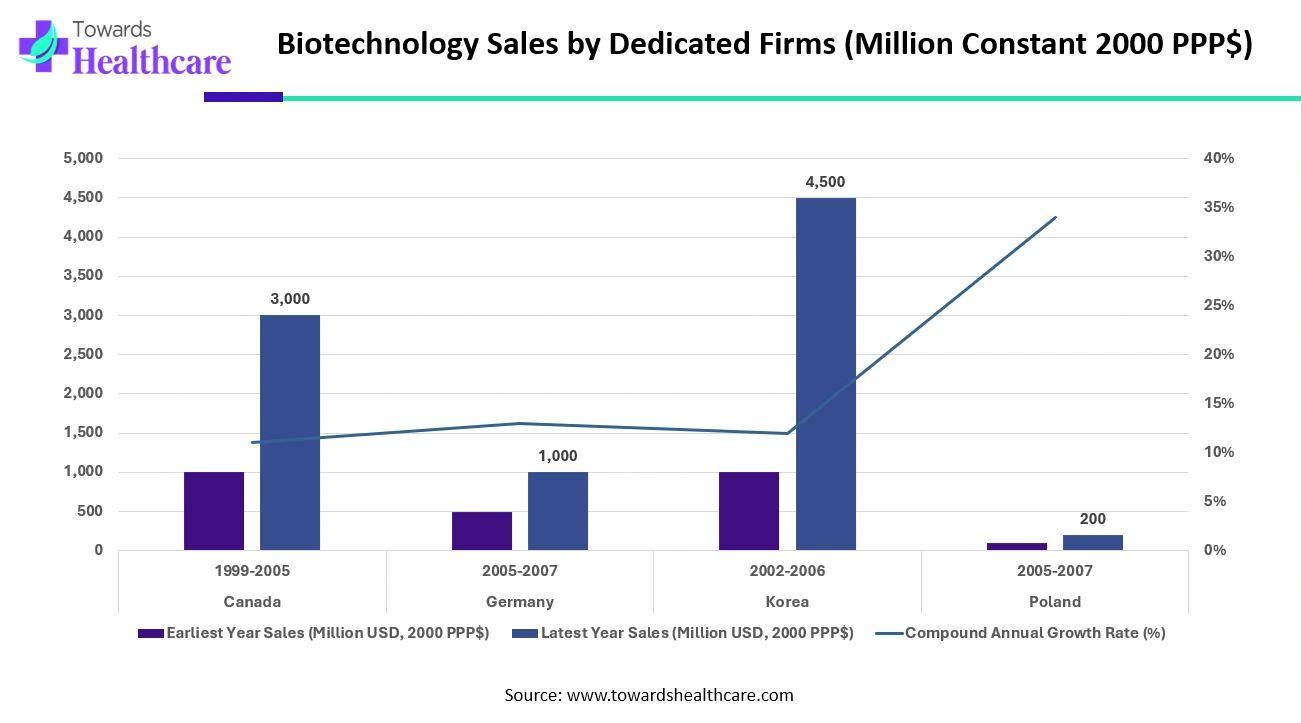
    Biotechnology Sales by Dedicated Firms (Million Constant 2000 PPP$)

    Download Free Sample: https://www.towardshealthcare.com/download-sample/5034

    Canada Leads With Steady Growth

    Between 1999 and 2005, Canadian biotech firms transformed their market presence.

    • Earliest sales: 1 billion USD

    • Latest sales: 3 billion USD

    • CAGR: 11%

    This steady 11% compound annual growth rate shows that Canada’s biotech sector is robust and consistent. Firms have leveraged research breakthroughs and growing healthcare demands to expand their footprint, ensuring that innovation translates into tangible sales growth.

    Germany Shows Moderate Momentum

    Germany, often hailed as Europe’s innovation hub, saw its dedicated biotech sales double between 2005 and 2007.

    • Earliest sales: 500 million USD

    • Latest sales: 1 billion USD

    • CAGR: 13%

    The 13% growth reflects moderate yet promising momentum. German firms are strategically scaling operations, investing in research, and exploring niche biotech applications that appeal to both domestic and international markets.

    Korea Surges With Massive Gains

    South Korea presents one of the most impressive growth stories in biotechnology. From 2002 to 2006, the country’s biotech firms experienced phenomenal expansion.

    • Earliest sales: 1 billion USD

    • Latest sales: 4.5 billion USD

    • CAGR: 12%

    The 12% CAGR might seem modest compared to Poland, but in absolute terms, the increase of 3.5 billion USD signals massive industry development. Korea’s focus on high-value biotech solutions and strategic partnerships with global players has fueled this explosive growth.

    Poland: A Rapidly Emerging Force

    Poland, though a smaller market, is making waves with exceptional growth.

    • Earliest sales: 100 million USD

    • Latest sales: 200 million USD

    • CAGR: 34%

    This remarkable 34% annual growth demonstrates that even emerging biotech markets can expand rapidly with the right strategies and investments. Polish firms are capitalizing on innovation and supportive policy frameworks to accelerate their sales trajectory.

    Global Patterns in Biotechnology Sales

    Across these four countries, some interesting patterns emerge:

    • Steady Growth Leaders: Canada and Germany showcase stable growth, which indicates mature and strategically managed biotech markets.

    • Rapid Expansion Markets: Korea and Poland are scaling quickly, reflecting the impact of targeted investments and high demand for biotech solutions.

    Despite differences in market size, each country demonstrates that biotechnology is a sector with massive potential, combining scientific innovation with commercial strategy.

    Why These Growth Trends Matter

    The rising sales figures are more than just numbers—they signal a global shift in healthcare and medical technology. Biotechnology isn’t just a research field anymore; it is becoming a powerful economic driver. Here’s why these trends are critical:

    • Economic Impact: Multi-billion-dollar sales in Korea and Canada alone indicate significant job creation and investment potential.

    • Innovation: Rapidly growing markets like Poland are incubating the next generation of biotech solutions.

    • Global Healthcare Solutions: The spread of biotech expertise ensures that innovative treatments reach more patients worldwide.

    The Numbers Speak for Themselves

    When we look at the data collectively:

    • Canadian firms increased sales from 1B to 3B USD (11% CAGR)

    • German firms doubled from 500M to 1B USD (13% CAGR)

    • Korean firms jumped from 1B to 4.5B USD (12% CAGR)

    • Polish firms doubled in a short span from 100M to 200M USD (34% CAGR)

    These numbers highlight how both mature and emerging markets are redefining the global biotech landscape.

    Biotechnology is clearly moving from research labs to real-world impact, translating innovation into tangible economic growth. Countries like Canada and Germany provide stability, while Korea and Poland demonstrate the power of rapid market expansion.

    As governments, investors, and innovators continue to prioritize healthcare solutions, the next decade promises even greater breakthroughs. The data clearly shows: the biotech revolution is not just coming—it’s already here.

    Access our exclusive, data-rich dashboard dedicated to the biotechnology sector – built specifically for decision-makers, strategists, and industry leaders. The dashboard features comprehensive statistical data, segment-wise market breakdowns, regional performance shares, detailed company profiles, annual updates, and much more. From market sizing to competitive intelligence, this powerful tool is one-stop solution to your gateway.

    Access the Dashboard: https://www.towardshealthcare.com/access-dashboard

    Checkout the Market Report Now at: https://www.towardshealthcare.com/checkout/5034

    You can place an order or ask any questions, please feel free to contact us at sales@towardshealthcare.com

    Europe Region – +44 778 256 0738

    North America Region – +1 8044 4193 44

    APAC Region: +91 9356 9282 04

    Visit Our Website: https://www.towardshealthcare.com

    Find us on social platforms: LinkedInTwitterInstagram | Medium

  • Biotechnology Market Top Key Players, Trends, Growth and Latest Insights 2025

    Biotechnology Market Top Key Players, Trends, Growth and Latest Insights 2025

    The global biotechnology market is projected to grow from USD 1,744.83 billion in 2025 to USD 5,036.46 billion by 2034  a CAGR of 12.5% (2025–2034) — driven by rapid advances in DNA sequencing, biopharma innovation, nanobiotechnology, rising VC funding (≈$26B in 2024), large CDMO expansion (e.g., Lonza H1 2025 results) and accelerating government and regulatory programs worldwide.
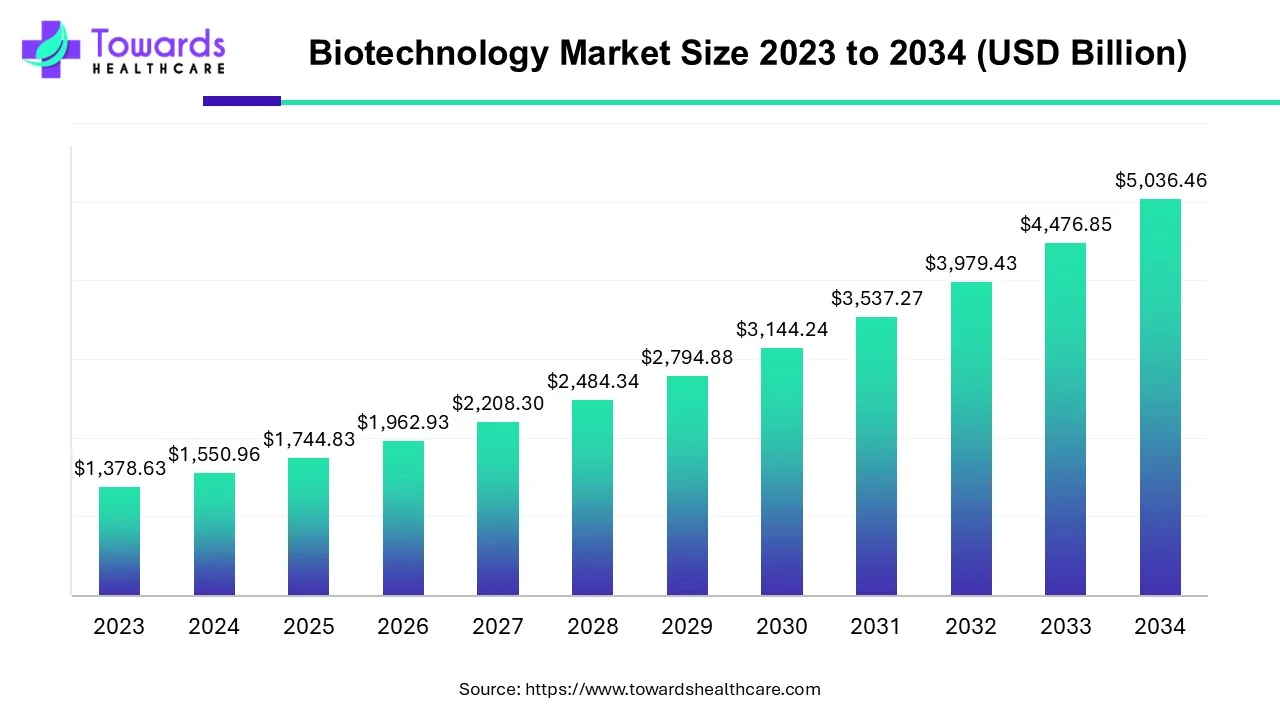
    Biotechnology Market Size 2023 - 2034

    Download the free sample and get the complete insights and forecasts report on this market @ https://www.towardshealthcare.com/download-sample/5034

    Market size

    ◉Headline projection (2025 → 2034): USD 1,744.83B5,036.46B; CAGR 12.5% (2025–2034). This is the principal market scaffold used throughout strategies and valuations.

    ◉Intermediate growth trajectory (illustrative milestones): the market more than doubles between 2025 and 2029–2030 and roughly triples by 2034 versus 2025, reflecting compounding R&D investment and commercialization of biologics, sequencing and platform technologies.

    ◉Capital flows supporting size: VC financing rose from $23.3B (2023) to ≈$26B (2024) (fewer rounds but larger deals), indicating concentration of capital in higher-value platform companies and later-stage scaleups — a funding dynamic that underpins the rising market totals.

    ◉Industrial scale indicator — CDMO growth: Lonza H1 2025 sales and margins (CHF figures cited) show manufacturing/contract services are scaling in parallel with therapeutics demand — this vertical (CDMO) materially contributes to the overall market size.

    ◉Revenue concentration by region (2024 baseline / direction): North America was the largest region in 2024 (37.76% share historically); Asia-Pacific is the fastest growing region and is projected to close the regional gap through the forecast period — regional expansion feeds the absolute market size.

    ◉Technology uplift multiplier: technologies such as DNA sequencing, PCR, chromatography, nanobiotech and automation amplify productivity — each technology’s adoption raises addressable market by enabling faster R&D, larger pipelines and new therapeutic classes.

    ◉Funding → commercialization loop: increased IPOs, late-stage private raises (e.g., Element Biosciences Series D, Spear Bio Series A) accelerate conversion of R&D into marketable products, enlarging near-term market value.

    ◉Services and infrastructure growth: growth in bio-services (research services, CROs, LLM-powered lab assistants) and bio-industries (biomanufacturing, CDMO) increases serviceable market and recurring revenue components.

    ◉Regulatory and policy tailwinds: new regulatory tools (e.g., joint USDA/EPA/FDA web tool) and national strategy reports (NSCEB in the U.S.; Nigeria GMO policy steps) reduce time-to-market friction in key subsegments, indirectly increasing realized market size.

    ◉Macro tail risks: talent shortages, regulatory pushback on certain GMO/biotech areas, geopolitical competition may slow growth in specific subsegments but are not expected to reverse the overall upward trajectory given current investment momentum.

    Market trends

    ◉Funding concentration and larger rounds (2024–2025): 2024 saw $26B VC invested with fewer rounds than 2023 — trend toward larger, later-stage checks (Element Biosciences $277M Series D; Spear Bio $45M Series A). Result: deeper pockets for platform scaling and commercialization.

    ◉Personalized and neoantigen therapies advancing manufacturing partnerships: August 2024 NEC Bio Therapeutics × AGC Biologics collaboration to scale production of a DNA neoantigen vaccine (NECVAX-NEO1) highlights a trend: personalized oncology pushes partnerships between innovators and CDMOs.

    ◉CDMO expansion and outsized profitability: Lonza H1 2025 results (strong CHF sales and high CORE EBITDA margins) indicate outsourcing and large-scale biologics manufacturing are major revenue engines.

    ◉National strategic initiatives and competition for biotech leadership: NSCEB final report (April 2025) and country-level policy moves (Nigeria GMO policies; India stem-cell support) reveal governments aligning policy & funding to secure biotech competitiveness, affecting global R&D location decisions.

    ◉Convergence of biotech + AI/ML: investments in platforms (Element, Scientist.com’s LLM assistant Elisa) indicate AI is being embedded across research workflows from discovery to lab execution.

    ◉Platform commercialization (DNA sequencing & multi-omics): large equity injections (Element Biosciences) and sustained sequencing segment leadership (DNA sequencing led in 2024) point to sequencing & multi-omics platforms as core growth engines.

    ◉Nanobiotechnology & targeted delivery gaining traction: forecasts highlight nanobiotech as a fast-growing technology due to its role in targeted drug delivery, diagnostics and point-of-care devices.

    ◉Regulatory modernization to accelerate microbial biotech: USDA/EPA/FDA web tool (Oct 2024) streamlines approvals for microbial biotech, indicating regulators moving toward faster, clearer paths for novel products.

    ◉Infrastructure innovation (organ-on-chip, biochips): Boston Micro Fabrication’s April 2024 BMF Biotechnology initiative underscores growth in in-vitro tissue platforms accelerating translational research.

    ◉Talent gap & workforce upskilling imperative: the ‘talent dilemma’ is a persistent structural constraint; companies and academia are responding with targeted training, cross-disciplinary programs and hiring premiums, which will shape time-to-scale for many firms.

    AI impacts / roles in the biotechnology market

    ◉Accelerated target discovery (genomics → validated targets): AI/ML models ingest vast sequencing and multi-omics datasets to prioritize causal genes and pathways, reducing months of wet-lab cycles to weeks for candidate identification. This increases pipeline throughput and lowers discovery cost per target.

    ◉Smart experimental design and automation orchestration: AI designs experiments (optimizing reagents, conditions) and integrates with lab automation platforms to run high-throughput cycles autonomously, improving ◉reproducibility and shrinking iteration times.

    ◉Sequence analysis & variant interpretation at scale: advanced models automate interpretation of sequencing runs (variant calling, clinical annotation), enabling DNA sequencing platforms to deliver clinically actionable reports faster and making population-scale genomics commercially viable.

    ◉Predictive protein engineering: generative and predictive models (structure & function) design proteins, antibodies and enzymes with desired properties — shortening lead optimization timelines and enabling novel biologics classes.

    ◉AI-driven biomarker & patient stratification for personalized medicine: models analyze multi-modal clinical and molecular data to segment patients for trials and therapies (e.g., neoantigen vaccine selection), increasing trial success probabilities and enabling higher-value precision therapeutics.

    ◉Clinical trial optimization and synthetic control arms: AI improves site selection, recruitment prediction and outcome modeling; synthetic control arms derived from real-world data reduce sample sizes and costs, speeding regulatory paths.

    ◉Manufacturing optimization and predictive maintenance for CDMOs: ML models optimize cell culture parameters, yields and predict equipment failure — resulting in higher throughput, better margins (contributing to companies like Lonza) and lower batch failure rates.

    ◉Regulatory dossier automation and evidence synthesis: AI curates literature, preclinical/clinical data and generates draft regulatory narratives and submission packages — reducing administrative friction and time to filing.

    ◉Drug repurposing and combinatorial prediction: AI mines existing drug and omics datasets to predict new indications and synergistic combinations, enabling faster entry into new markets with de-risked assets.

    ◉Workforce augmentation, training and knowledge management: LLMs and specialized assistants (e.g., Elisa-type research assistants) capture tacit lab knowledge, provide protocol recommendations and upskill new hires — partially mitigating the talent shortage and scaling institutional knowledge.

    Regional insights

    A. North America (lead market)

    ◉Market position & numbers: Largest contributor in 2024 and holds ~37.76% historical regional share; U.S. alone 47% of North America in 2022.

    ◉Ecosystem strengths: deep VC pools, mature regulatory agencies, world-class research institutions and dense biopharma clusters that drive rapid commercialization.

    ◉Policy & infrastructure: national strategies (e.g., NSCEB) and cross-agency tools (USDA/EPA/FDA web tool) reduce regulatory friction and spur microbial and biomanufacturing innovation.

    ◉Commercialization axis: strong CDMO presence (Lonza and others’ activity) enables North America to scale biologics manufacturing domestically, supporting large market value capture.

    B. Asia-Pacific (fastest growth)

    ◉Growth drivers: large population, rising healthcare expenditure, increasing R&D investment and government allocation (example: India DBT budget allocation).

    ◉Country nuances: China and India leading scale and clinical trial volume; Japan, South Korea and Australia contribute advanced R&D and manufacturing capabilities.

    ◉Opportunity axis: lower cost of clinical studies, expanding academic ecosystems and targeted government incentives accelerate adoption of sequencing, biopharma and regenerative medicine.

    C. Europe

    ◉Technological depth & regulation: strong academic-industry partnerships; countries like Germany and UK are innovation hubs.

    ◉Market drivers: supportive government programs, collaborative R&D networks (e.g., partnerships like Flagship/CUHP), and a focus on safety and regulatory robustness.

    ◉Commercial strengths: established pharma and biotech companies with global reach enable European players to capture high-value pipelines.

    D. Latin America

    ◉Emerging demand: rising healthcare needs and growing adoption of biotech solutions in agriculture and industrial biotech.

    ◉Market constraints/opportunities: infrastructure gaps but growing investment in clinical trials and manufacturing; potential to become cost-effective trial and manufacturing base.

    E. Middle East & Africa (MEA)

    ◉Growth initiation: government investment in R&D, targeted biotech hubs (Saudi Arabia, UAE).

    ◉Regional dynamics: early stage but accelerating due to rising disease burden and government support; biotech for agriculture and diagnostics is a high-value entry path.

    ◉Numbers caveat: some volatility in regional projections (table shows year-to-year swings) — indicates project-level investments and policy shifts strongly influence outcomes.

    Market dynamics

    Primary growth drivers

    ◉Technological innovation: DNA sequencing leadership (2024), nanobiotech growth, CRISPR/gene therapy advances.

    ◉Rising demand for personalized medicine & biopharma: bio-pharmacy dominance (USD 608.2B in 2024 and strong projected growth to 1,729.5B by 2034 in the provided application table).

    ◉Capital availability: VC growth (≈$26B in 2024) and large series rounds.

    CDMO & manufacturing scale: Lonza H1 2025 performance validates high-margin manufacturing expansion.

    Key restraints

    ◉Talent shortage: skills gap across R&D, regulatory and manufacturing slows scaling and increases labor costs.

    ◉Regulatory complexity & geopolitical risk: inconsistent global frameworks and strategic competition (e.g., U.S. policy push vs. other nations) can delay cross-border projects.

    ◉Capital concentration risk: fewer rounds but larger checks can reduce diversity of funded ideas and limit early-stage experimentation.

    Major opportunities

    ◉AI/ML integration across the value chain (see AI section) — high leverage to cut time and cost.

    ◉Platform monetization (sequencing, multi-omics, organ-on-chip) — platform companies can generate recurring revenue and service models.

    ◉Regional manufacturing relocation & reshoring supported by policy (US & other governments) to secure supply chains.

    Threats & risk factors

    ◉Ethical & social pushback on certain biotechnologies (GMO, gene editing) could tighten regulation in key markets.

    ◉Supply chain fragility for specialized reagents and equipment.

    ◉Competitive geopolitical strategies — nationalistic R&D policies may fragment collaboration and increase costs.

    ◉Structural market interplay (how components interact)

    ◉Funding → Platform scale → Manufacturing demand: larger rounds fund platform R&D → successful platforms need scaling via CDMOs → manufacturing scale produces revenue that inflates market size (observed in Lonza & CDMO data).

    ◉Regulation ↔ Commercialization speed: modernized regulatory tooling (USDA/EPA/FDA web tool) shortens time to market for microbial biotech, increasing realized market capture.

    Top 10 companiesBiotechnology Market Companies
    Lonza

    Product / core activity: Large CDMO services for biologics, cell & gene therapy manufacturing.

    Overview: Reported strong H1 2025 sales (CHF figures) with high CORE EBITDA margins; CDMO business significant contributor.

    Strengths: World-class manufacturing scale, attractive margins, trusted partner for personalized/complex biologics — key to commercial scale-up pipelines.

    AstraZeneca

    Product / core activity: Global biopharma with therapeutics across oncology, rare disease, CVRM, V&I etc.

    Overview: FY 2024 showed strong product sales growth; FY guidance points to continued revenue and EPS expansion (data above).

    Strengths: Broad therapeutic portfolio, partnership/royalty revenue streams, strong commercial execution.

    Pfizer Inc.

    Product / core activity: Large diversified biopharma (vaccines, biologics, small molecules).

    Overview: Listed as a strategic company in the biotechnology market — contributes substantially to region and global revenue.

    Strengths: Global commercialization network, deep R&D and vaccine capabilities.

    Gilead Sciences Inc.

    Product / core activity: Biopharma with emphasis on antiviral, oncology and cell therapy areas.

    Overview: Listed among strategic companies — plays a pivotal role in therapeutic innovation.

    Strengths: Strong therapeutic franchises, experience in fast-moving infectious disease therapeutics and oncology pipelines.

    F. Hoffmann-La Roche Ltd. (Roche)

    Product / core activity: Diagnostics and therapeutics; heavy presence in oncology and diagnostics platforms.

    Overview: Strategic biotech player — diagnostics capability aligns with market’s sequencing/diagnostic growth.

    Strengths: Integrated diagnostics + therapeutics model; strong R&D pipeline and diagnostic market leadership.

    Biogen

    Product / core activity: Neurology and biotech therapeutics.

    Overview: Identified as a strategic company in the field.

    Strengths: Specialized R&D focus in neurological disease — high clinical value potential.

    CELGENE Corporation

    Product / core activity: Biopharma focused on oncology and immunology (included in list).

    Overview: Historically a major oncology biotech; listed among strategic companies.

    Strengths: Deep oncology expertise and product legacy that supports biotech market value.

    Sanofi

    Product / core activity: Multi-therapeutic global biopharma with vaccine and rare disease activities.

    Overview: Named as a strategic company contributing to market growth.

    Strengths: Global manufacturing footprint and diverse product portfolio.

    Abbott

    Product / core activity: Diagnostics, devices and nutrition as part of broader biotech/healthcare ecosystem.

    Overview: Strategic company whose diagnostic and device capabilities complement biotech market expansion.

    Strengths: Diagnostic platforms, wide commercial reach, strong presence in point-of-care testing.

    Novartis AG

    Product / core activity: Large pharma/biotech with varied pipelines and focus areas.

    Overview: Included among strategic companies driving market growth.

    Strengths: Strong R&D, global commercialization, capability to partner/scaffold emerging biotech assets.

    Latest announcements

    Lonza (H1 2025 results, July 2025): strong sales (CHF 3.6B reported with 19% growth CER1) and robust CORE EBITDA (CHF 1.1B) with CDMO sales growth and margins (CDMO: CHF 3.1B sales with 23.1% CER growth; 30.2% CORE EBITDA margin). Implication: CDMO economics are excellent and underpin market monetization for biologics scale.

    AstraZeneca FY 2024 results (Feb 2025): 19% product sales rise; total revenue $54,073m; growth across oncology (24%), Rare Disease (16%), CVRM (20%) and R&I (25%). Implication: large biopharma is continuing to expand revenue and drive value capture in biopharma segments.

    Flagship Pioneering partnership (Jan 2025): Flagship partnered with Cambridge University Health Partners and Milner Therapeutics Institute to deepen UK research collaboration. Implication: academic-industry partnerships accelerate translational research and regional innovation clusters.

    NSCEB final report and action plan (April 2025): U.S. push to mobilize national innovation for biotech leadership — includes consultations and policy recommendations to strengthen U.S. competitiveness vs. other nations. Implication: potential legislative/actionable funding & policy changes to accelerate biotech commercialization.

    India stem cell sector expansion (April 2025): government support plus private investment and growing clinical trials reported by Cryoviva Life Sciences. Implication: India emerges as a significant growth node for regenerative and personalized therapies.

    Nigeria GMO policy pledge (April 2025): federal commitment to safe GMO transfer & regulatory frameworks. Implication: emerging markets formalizing biotech governance to enable adoption.

    USDA/EPA/FDA web tool (Oct 2024): new web-based regulatory tool to streamline microbial biotech regulation. Implication: easier, faster pathways for microbial product developers.

    NEC Bio Therapeutics × AGC Biologics (Aug 2024): collaboration to scale personalized DNA vaccine production. Implication: exemplifies the personalization → manufacturing partnership model.

    Element Biosciences Series D (July 2024): $277M raised to expand sequencing/multi-omics reach. Implication: substantial capital directed at sequencing platforms.

    Spear Bio Series A (July 2024): $45M to accelerate protein research and diagnostics commercialization.

    Scientist.com’s LLM assistant (Elisa, June 2024): LLM-powered R&D assistant to accelerate drug research workflows.

    Boston Micro Fabrication launches BMF Biotechnology (April 2024): organ-on-chip / biochip commercialization push.

    Recent developments

    Funding acceleration to platforms: Element Biosciences ($277M) and Spear Bio ($45M) marks increased investor appetite for platform tech (sequencing, protein research).

    Platform → manufacturing partnerships: NEC Bio × AGC Biologics shows trend where personalized therapeutics require bespoke manufacturing partnerships early.

    AI tools entering the lab: Scientist.com’s Elisa LLM assistant and similar AI initiatives are reducing friction in research translation.

    Regulatory modernization: USDA/EPA/FDA tool and national action plans (NSCEB) reflect regulators prioritizing speed & safety frameworks for new biotech.

    Geographic policy shifts expanding markets: India’s stem cell support and Nigeria’s GMO policy pledge enlarge market opportunity in their regions.

    Advanced in-vitro platforms commercializing: Boston Micro Fabrication’s organ-on-chip push supports de-risking of preclinical pipelines.

    CDMO financial strength validated: Lonza’s H1 2025 shows manufacturing profitability and robust demand from advanced therapy pipelines.

    Large biopharma continued topline growth: AstraZeneca’s FY 2024 performance signals big pharmas continuing to monetize biologics and partner with smaller biotech.

    Investor concentration but elevated capital totals: VC totals increasing while rounds decreased — means bigger bets, more pressure on scale and exits.

    Emerging market regulatory clarity: country-level regulatory moves reduce uncertainty that previously hampered adoption in some regions.

    Segments covered

    1. By Application (listed for completeness & explained)

    Bio-pharmacydominant segment (2024 value in table USD 608.2B) driven by biopharmaceuticals, personalized therapy, monoclonal antibodies, gene & cell therapies. Implication: highest revenue share and fastest growth, attracting most R&D and capital.

    Bio-industries — industrial biotech for chemicals, materials and biofuels; benefits from process fermentation and scaling technologies.

    Bio-services — CROs, research services, sequencing services and lab-as-a-service; high recurring revenue potential.

    Bio-agriculture — GMO crops, precision agriculture biotech; large addressable markets in APAC/Latin America.

    Bio-informatics — computational tools, LLM assistants, data platforms underlying sequencing and precision medicine.

    2. By Technology (major areas listed & deep explanations)

    DNA sequencing / Deoxyribonucleic Acid sequencing — leadership tech for diagnostics, precision medicine; platform business models enable recurring revenue (consumables + instruments + software).

    Polymerase Chain Reaction (PCR) — core diagnostic and lab technique enabling rapid detection and research assays.

    Fermentation — backbone for biologics and industrial biotech; scale economics critical for bio-industries.

    Tissue engineering & regeneration — organoids, stem cells and regenerative therapies addressing chronic disease and surgical repair.

    Nanobiotechnology — targeted delivery, nano-diagnostics and point-of-care innovations with strong growth potential.

    Chromatography & cell-based assays — essential for purification and preclinical/clinical testing workflows.

    Others — supportive lab technologies and consumables that sustain R&D workflows.

    3. By Geography

    Regions and countries listed in your content (North America, Europe, Asia-Pacific, Latin America, Middle East & Africa; plus country sublists) — each has unique policy, funding and infrastructure implications (covered earlier in Regional Insights).

    Top 5 FAQs

    Q1 — What is the projected biotech market size and growth rate?
    A1 — The biotechnology market is forecast to grow from USD 1,744.83 billion in 2025 to USD 5,036.46 billion by 2034, at a CAGR of 12.5% (2025–2034).

    Q2 — Which region led the market in 2024 and which region will grow fastest?
    A2 — North America was the largest contributor in 2024 (historically 37.76% regional share); Asia-Pacific is projected to exhibit the fastest growth through the forecast period.

    Q3 — Which technology and application led the market in 2024?
    A3 — By technology, DNA sequencing led the global market in 2024. By application, bio-pharmacy was dominant in 2024 (bio-pharmacy value: USD 608.2B in 2024 as shown).

    Q4 — How is funding trending for biotech?
    A4 — VC funding increased from $23.3B (2023) to $26B (2024), albeit with fewer rounds (416 rounds in 2024 vs. 462 in 2023), indicating larger, more concentrated investments.

    Q5 — What major policy or regulatory developments could affect the market?
    A5 — Several developments: (i) U.S. NSCEB final report & action plan (April 2025) urging Congressional action to strengthen U.S. biotech leadership; (ii) USDA/EPA/FDA launched a web-based regulatory tool (Oct 2024) to streamline microbial biotech approvals; (iii) national policy moves in India and Nigeria to support stem cell development and safe GMO handling (April 2025) — all reduce friction and open new market opportunities.

    Access our exclusive, data-rich dashboard dedicated to the biotechnology sector – built specifically for decision-makers, strategists, and industry leaders. The dashboard features comprehensive statistical data, segment-wise market breakdowns, regional performance shares, detailed company profiles, annual updates, and much more. From market sizing to competitive intelligence, this powerful tool is one-stop solution to your gateway.

    Access the Dashboard: https://www.towardshealthcare.com/access-dashboard

    Immediate Delivery Available | Buy This Premium Research @ https://www.towardshealthcare.com/price/5034

    Become a valued research partner with us – https://www.towardshealthcare.com/schedule-meeting

    You can place an order or ask any questions, please feel free to contact us at sales@towardshealthcare.com

    Powering Healthcare Leaders with Real-Time Insights: https://www.towardshealthcare.com/healthcare-intelligence-platform

    Europe Region – +44 778 256 0738

    North America Region – +1 8044 4193 44

    APAC Region: +91 9356 9282 04

    Web: https://www.towardshealthcare.com

    Find us on social platforms: LinkedInTwitterInstagram | Medium | Pinterest

  • Biotechnology Market Set for Unprecedented Growth of USD 3,995.22 Billion 2032

    Biotechnology Market Set for Unprecedented Growth of USD 3,995.22 Billion 2032

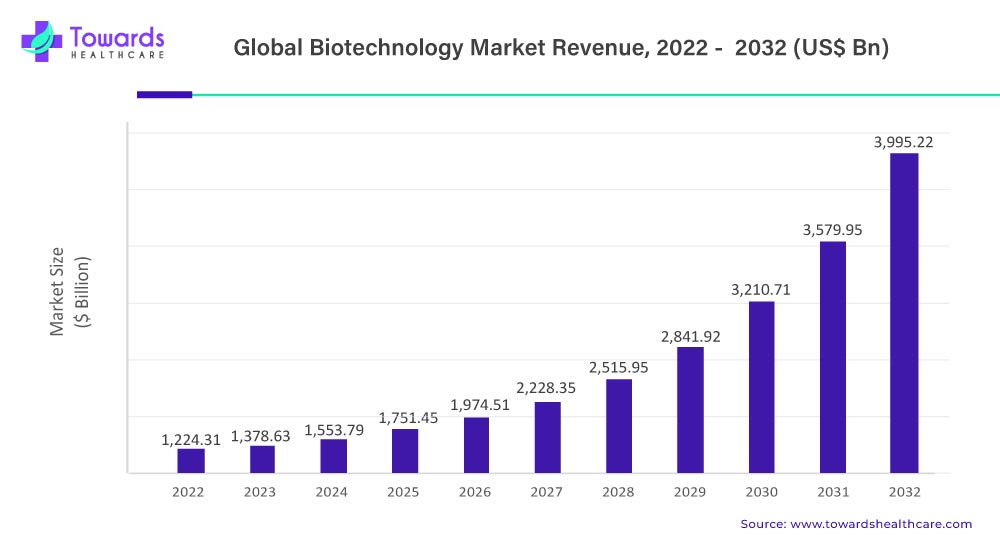
    In the ever-evolving landscape of the biotechnology market, a surge in growth is on the horizon. The global biotechnology market, valued at USD 1,224.31 billion in 2022, is projected to experience a substantial upswing. Anticipated to grow at an impressive 12.5% Compound Annual Growth Rate (CAGR) from 2023 to 2032, the market is poised to reach a staggering USD 3,995.22 billion by the end of the forecast period.

    Biotechnology Market Revenue 2022 To 2032

    Driving Forces: Innovation and Technological Advancements in Biotechnology Market

    The Engine of Growth: Innovation in Biotechnology

    At the core of this remarkable expansion lies a continuous wave of innovation within the biotechnology market. Pioneering research and development initiatives are steering the sector towards unprecedented breakthroughs. Novel approaches to healthcare, agriculture, and industrial processes are propelling the market forward, laying the foundation for its substantial growth.

    Technological Advancements: Catalysts for Transformation

    The relentless pursuit of technological excellence is another key driver fueling the surge in the biotechnology market. Advancements in gene editing, synthetic biology, and precision medicine are reshaping the industry’s landscape. This technological prowess not only enhances the efficiency of biotechnological processes but also opens new frontiers for exploration and application.

    According to Steve Jobs, the most significant advancements of the 21st century would arise from the convergence of biology and technology

    The global biotechnology market refers to the industry that uses living organisms or biological systems to develop new products, services, and technologies for healthcare, agriculture, industrial applications, and other fields. This market encompasses a wide range of sectors, including biopharmaceuticals, biotechnology market research and development, bioprocessing, genomics, proteomics, bioinformatics, and synthetic biology.

    The global biotechnology market has been growing rapidly in recent years, driven by a number of factors such as increasing demand for innovative treatments for chronic diseases, rising investments in research and development, advances in technology, and increasing government support. Biotechnology market research and development often involves genetic engineering, gene editing, and other advanced techniques to modify or manipulate living organisms to produce desired traits or outcomes. Biotechnology market has revolutionized many industries and has the potential to address some of the world’s most pressing challenges, such as disease, hunger, and climate change.

    The biotechnology market is witnessing significant growth due to the increasing demand for food, the rising prevalence of chronic diseases, advancements in technology, and growing government initiatives to support biotechnology research. The market is expected to witness further growth during the forecast period, driven by the biopharmaceuticals segment, DNA sequencing technology, and increasing investments in biotechnology market research and development.

    Unleashing the Potential of Bio-pharmacy Applications

    Biopharmaceuticals are drugs that are produced using biotechnology methods such as genetic engineering, fermentation, and cell culture. These drugs are developed using living cells, and they are designed to target specific proteins, cells, and genetic pathways. Biopharmaceuticals are used to treat a wide range of diseases, including cancer, autoimmune disorders, infectious diseases, and rare genetic disorders. The use of biopharma applications in biotechnology has had a significant impact on the development of new drugs and therapies.

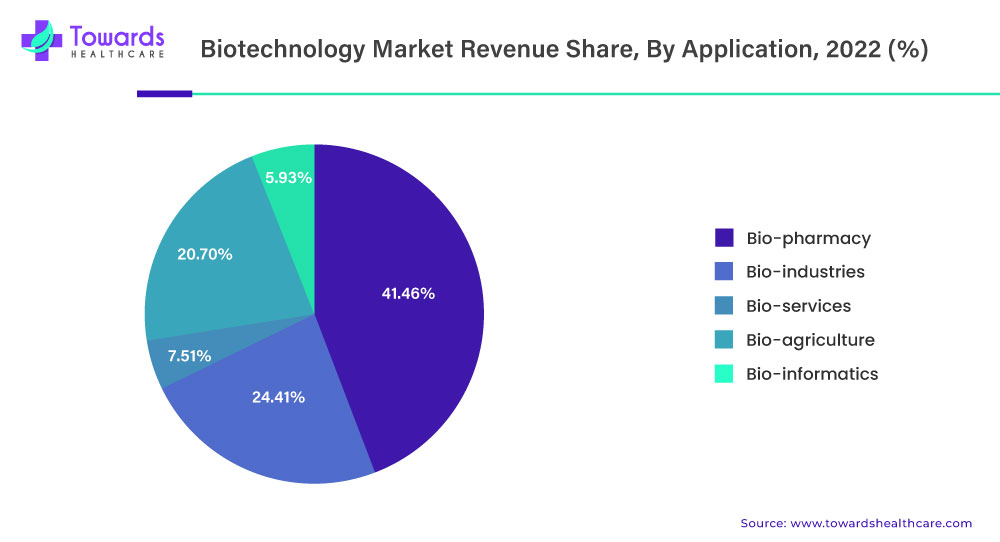
    Biotechnology Market Revenue Share, By Application, 2022 (%)

    In 2022, bio-pharmacy applications held around 41.46% revenue share in the global biotechnology market and are further projected to account for the fastest growth over the upcoming years.

    Biopharmaceuticals have several advantages over traditional chemical drugs. They have high specificity and potency, which means they can target specific disease-causing cells or proteins more effectively. They also have fewer side effects and are less toxic to the body than traditional chemical drugs. Biopharmaceuticals can be produced in large quantities using cell culture techniques, which makes them easier to manufacture than traditional chemical drugs. Additionally, biopharmaceuticals have a lower risk of contamination and are more stable than traditional chemical drugs.

    The use of biopharma applications in biotechnology has led to the development of several successful drugs and therapies. One example is the use of monoclonal antibodies to treat cancer. Monoclonal antibodies are produced using biotechnology methods and are designed to target specific proteins on cancer cells. They have been successful in treating several types of cancer, including breast cancer, lymphoma, and leukemia.

    Another example is the use of recombinant DNA technology to produce insulin for the treatment of diabetes. Recombinant DNA technology involves inserting a human gene for insulin production into a bacterial or yeast cell. The cell is then grown in large quantities, and the insulin is extracted and purified. This method of insulin production has revolutionized the treatment of diabetes and has made insulin more widely available and affordable.

    Biopharmaceuticals are also being developed to treat rare genetic disorders, such as cystic fibrosis and hemophilia. These drugs are designed to replace or supplement a missing or defective protein in the body. The use of biotechnology methods to develop these drugs has led to significant advances in the treatment of rare genetic disorders.

    The use of biopharma applications in biotechnology has had a significant impact on the development of new drugs and therapies. Biopharmaceuticals offer several advantages over traditional chemical drugs, including high specificity and potency, fewer side effects, and easier manufacturing. The success of biopharmaceuticals in treating a wide range of diseases has led to increased investment in biotechnology research and development.

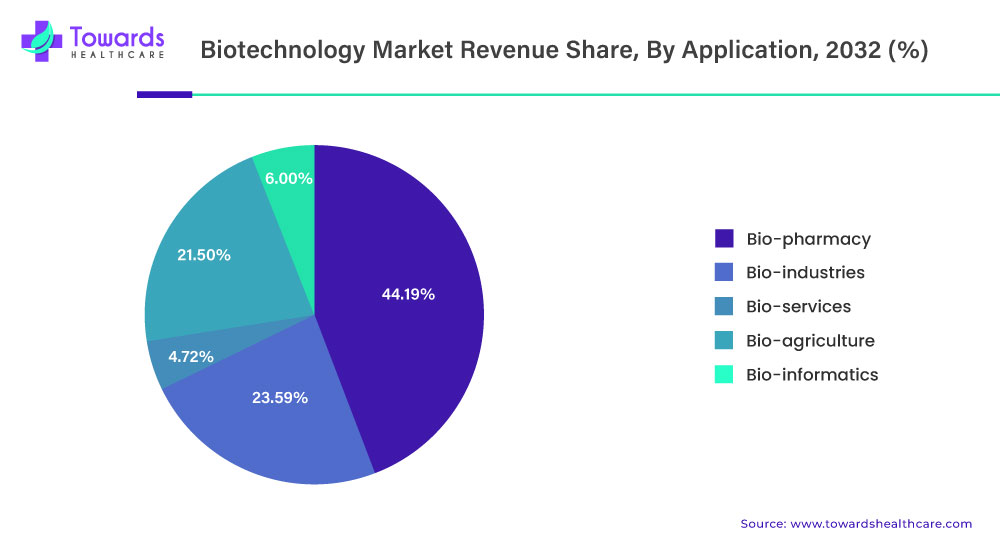
    Biotechnology Market Revenue Share, By Application, 2032 (%)

    Pharmaceutical products’ use in personalized medical therapy is probably going to open up profitable business opportunities for market participants. In the upcoming years, it is anticipated that the prevalence of chronic diseases will rise, the biopharmaceutical industry will expand quickly, and healthcare spending will rise. A rich pipeline of innovative therapeutic substances and increased technology breakthroughs in the treatment of chronic diseases are also expected to boost the global market.

    In addition, Research on stem cells, one of the revolutionary bio-pharmaceutical uses, is proceeding at an accelerated rate. Its main goal is to create highly customized treatments from the patient’s own cells. Similarly, genetic engineering entails changing a patient’s genetic makeup to identify specific regions of interest. The development of personalized medical care is being investigated, with biotechnology being incorporated. Businesses in the biotechnology industry now possess a competitive advantage attributable to the implications of cloud computing, artificial intelligence, and increased concentration on R&D. Furthermore, gene therapy, pharmacogenomics, genetic testing, and the development of biopharmaceuticals are the different applications of bio-pharmacy.

    North America Dominated the Market while Asia Pacific is Projected to Register Fostering Growth in the Upcoming Years

    North America was the largest contributor to the global biotechnology market, with a 37.76% market share in 2022. However, the Asia Pacific will exhibit the fastest growth over the upcoming years. North America is a significant market for biotechnology, with the United States being the largest contributor to the region’s growth. The North American biotechnology market is driven by the presence of a large number of pharmaceutical and biotech companies, as well as government support for research and development activities.

    Additionally, the region’s move toward manual mechanization in the biotechnology, pharmaceutical, and related industries is driving demand for faster, easier-to-use equipment.  Furthermore, Amgen Inc., CSL Ltd., Novo Nordisk A/S, Bristol-Myers Squibb Co., Merck & Co., Johnson & Johnson Services Inc., AstraZeneca PLC, and Pfizer Inc. are among the businesses that are helping North American biotechnology market growth.

    The United States dominates the North American biotechnology market due to the presence of major players, a well-established regulatory framework, and a large patient pool. In 2022, the United States held a market share of around 47% in the North American biotechnology market. The growth of the biotechnology industry in the US is supported by increasing investment in research and development, favorable government policies, and the presence of leading academic and research institutions.

    Biotechnology Market Revenue Share, by Region 2022 (%)

    Region Revenue Share in 2022 (%)
    North America 37.76%
    Asia Pacific 23.80%
    Europe 28.77%
    LAMEA 9.66%

    On the other hand, the Asia Pacific region is one of the fastest-growing markets in the global biotechnology industry with around a projected 22% of the market share in 2032. The region is witnessing an increasing demand for biotechnology products and services, owing to the growing prevalence of chronic diseases, increasing investments in R&D, and government initiatives to promote the biotechnology sector.

    Countries such as China, Japan, India, South Korea, and Australia are the major players in the Asia-Pacific biotechnology market. China and India are expected to drive the growth of the market due to the presence of a large population base, increasing healthcare expenditure, and rising prevalence of chronic diseases. For instance, the Indian government allocated US$ 162.7 million to the Department of Biotechnology (DBT) in the Union Budget 2023-24 to support the advancement of research and development.

    In recent years, the Asia Pacific biotechnology industry has witnessed significant developments, such as the establishment of biotechnology parks, partnerships, and collaborations between companies, and an increasing number of clinical trials. For instance, in September 2022, the Chinese biotech company CanSino Biologics Inc. received approval from the Chinese government for their COVID-19 vaccine as an emergency use booster.

    Technological Innovations are Uplifting the Market Growth

    With the rapid development of new technologies, such as CRISPR/Cas9 gene editing, synthetic biology, and gene therapy, the biotechnology market is rapidly evolving and expanding. These technologies have enabled the development of new and innovative products, such as biopharmaceuticals and genetically modified organisms, that have the potential to revolutionize the healthcare and agriculture industries.

    Advances in biotechnology have led to the development of new and innovative products, such as biopharmaceuticals and genetically modified organisms. These products have revolutionized the healthcare and agricultural sectors, providing more efficient and effective solutions to longstanding problems.

    In addition, technological advancements have improved the speed and accuracy of research and development in biotechnology market. Tools such as genome sequencing and gene editing have allowed for more precise and targeted research, leading to the discovery of new treatments and therapies. For instance, one of the significant advancements is in genome sequencing and gene editing, which has allowed for more precise and targeted research. With the ability to decode the genetic makeup of organisms, scientists can identify genes responsible for various diseases and develop targeted treatments to combat them.

    Furthermore, advancements in bioinformatics and data analytics have also contributed to the growth of the biotechnology market. With large amounts of data being generated from various sources, it is crucial to have tools and software to manage and analyze the data efficiently. Bioinformatics has made it possible to store, analyze, and interpret large amounts of biological data, allowing researchers to identify patterns and relationships that were previously impossible to detect.

    The ability to decode genetic makeup and use the information to develop targeted treatments has revolutionized the healthcare industry, providing personalized and more efficient treatments to patients. The use of automation and high-throughput screening has also accelerated the drug development process, enabling faster identification of potential drug candidates. As technology continues to evolve, the biotechnology market is expected to grow and innovate further, providing solutions to address some of the most pressing challenges in healthcare, agriculture, and other industries.

    Moreover, technological advancements in high-throughput screening and automation have revolutionized drug discovery and development. With automated systems, researchers can process vast amounts of data and test potential drug candidates quickly and accurately, accelerating the drug development process.

    The Talent Dilemma: Addressing the Shortage of Skilled Professionals in Biotech

    The biotech industry has been facing a talent dilemma for several years now. As the industry continues to grow and expand, the demand for skilled professionals in various fields, such as research and development, manufacturing, quality control, and regulatory affairs, has also increased significantly. However, there is a shortage of skilled professionals to meet this demand, leading to a talent gap in the industry.

    One of the reasons for the talent shortage in biotech is the lack of exposure to biotech education and training in schools and universities. Biotech is a relatively new field, and many educational institutions have not yet incorporated it into their curriculum. As a result, there is a shortage of graduates with the necessary skills and knowledge to work in the biotech industry.

    Another reason for the talent shortage is the high demand for skilled professionals in other industries, such as technology and finance. These industries offer competitive salaries and benefits, making it difficult for biotech companies to attract and retain top talent. In addition, the biotech industry is highly regulated, which can deter some professionals from entering the field due to the perceived complexity and uncertainty of the regulatory environment.

    In addition, the talent shortage in biotech has significant implications for the industry. It can lead to delays in the development of new treatments and therapies, as well as increased costs due to the need to outsource work to other countries or hire temporary staff. In addition, it can limit the growth potential of biotech companies, as they may not have the necessary resources to expand their operations or pursue new projects.

    To address the talent dilemma in biotech, industry leaders and educators are taking steps to promote biotech education and training at all levels. This includes developing specialized courses and programs in biotech, as well as partnering with industry leaders to provide hands-on training and mentorship opportunities. In addition, biotech companies are offering competitive salaries and benefits to attract and retain top talent, as well as providing opportunities for career advancement and professional development.

    Thus, the shortage of skilled professionals in biotech is a significant challenge for the industry. However, with concerted efforts from industry leaders, educators, and policymakers, it is possible to address this talent dilemma and ensure the continued growth and success of the biotech industry.

    Personalized Treatment Options: Creating Exquisite Growth Opportunities

    Personalized treatment options have indeed created exquisite growth opportunities for the biotechnology market. Personalized medicine involves developing therapies and treatments tailored to an individual patient’s specific genetic and molecular makeup. It allows for more precise and effective treatment, reducing the risk of adverse side effects and improving patient outcomes. With advancements in technology and research, there is a growing understanding of the genetic and molecular basis of diseases.

    This has led to the development of targeted therapies and precision medicine, which aim to provide individualized treatment based on a patient’s specific genetic makeup and disease characteristics.

    Additionally, there is a growing interest in regenerative medicine, which involves the use of stem cells and other advanced biologics to repair or replace damaged tissues and organs. This area of biotechnology has the potential to revolutionize the treatment of chronic diseases and injuries, such as heart disease, diabetes, and spinal cord injuries.

    Furthermore, with the increasing availability of genetic and molecular data, personalized medicine is becoming more feasible and cost-effective. This has led to a significant increase in demand for personalized treatments, creating new opportunities for biotechnology companies to develop innovative products and therapies.

    Moreover, personalized medicine has the potential to transform traditional healthcare practices, from prevention and diagnosis to treatment and management of diseases. It offers a shift from a one-size-fits-all approach to a more individualized and targeted approach, providing patients with better outcomes and quality of life.

    The rise of personalized medicine is also driving the development of advanced technologies such as gene editing, CRISPR, and gene therapy, which are further driving growth in the biotechnology market. These technologies are enabling the development of innovative and targeted therapies, offering new treatment options for previously untreatable or difficult-to-treat diseases.

    In addition to personalized medicine, the biotechnology market is also seeing a significant focus on the development of biosimilars, which are biologic products that are highly similar to already approved biologic drugs but at a lower cost. Biosimilars are increasingly being used to treat a variety of diseases, including cancer, autoimmune diseases, and diabetes, among others. The market for biosimilars is expected to grow significantly in the coming years, driven by increasing demand for cost-effective alternatives to expensive biologics.

    Another trend in the biotechnology market is the growing focus on digital health solutions. Digital health technologies, such as telemedicine, wearable devices, and health apps, are being developed to improve patient outcomes and reduce healthcare costs. These technologies are also helping to drive personalized medicine, by enabling the collection and analysis of large amounts of data on individual patients.

    Unpacking Growth: A Closer Examination

    Diversification of Applications: Beyond Traditional Boundaries

    Biotechnology is no longer confined to conventional applications. The market is witnessing a diversification of its scope, with innovations spanning healthcare, agriculture, environmental management, and more. This broadening spectrum of applications contributes significantly to the market’s growth, making it a pivotal player in addressing global challenges.

    Collaborative Endeavors: Fostering Synergies

    The collaborative spirit within the biotechnology community is fostering synergies that drive progress. Partnerships between research institutions, industry players, and governments are accelerating the translation of research findings into tangible solutions. This collaborative ethos not only expedites innovation but also ensures a more comprehensive approach to addressing complex challenges.

    Future Outlook: A Paradigm Shift

    Accelerated Growth Trajectory: A Glimpse into the Future

    Looking ahead, the global biotechnology market shows no signs of slowing down. The confluence of innovation and technological prowess is expected to propel the industry into a new era of growth. With a focus on sustainable solutions and the convergence of interdisciplinary approaches, the biotechnology sector is poised for a paradigm shift.

    The trajectory of the global biotechnology market is marked by a journey of innovation and transformative advancements. From reshaping traditional applications to fostering collaborative endeavors, the industry is gearing up for a future defined by unprecedented growth. As biotechnology continues to be a driving force in addressing global challenges, the forecasted surge in market size underscores its pivotal role in shaping a sustainable and technologically advanced world.