Tag: Brain-Computer Interfaces Market

  • Brain-Computer Interfaces Market Overview and Key Trends 2025

    Brain-Computer Interfaces Market Overview and Key Trends 2025

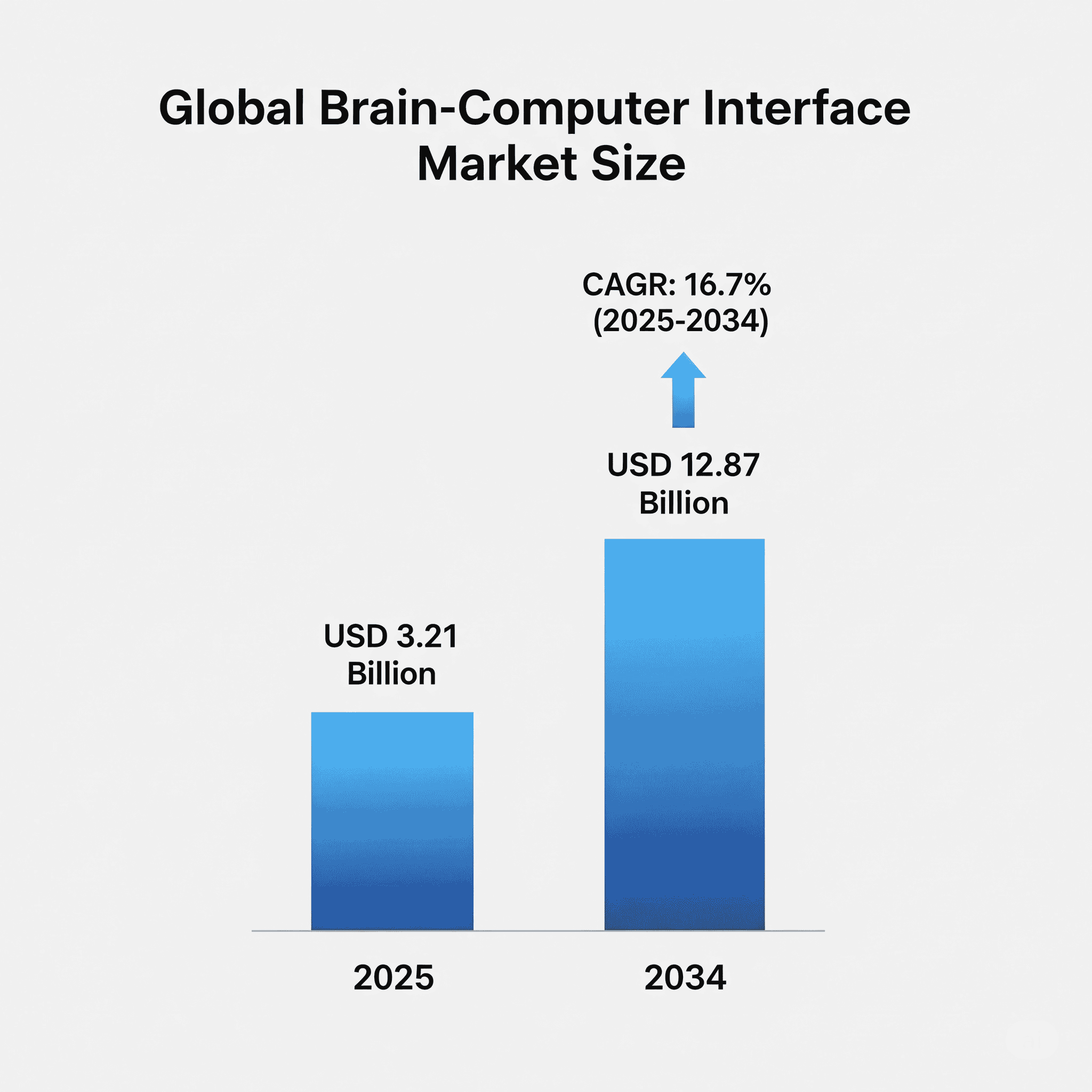
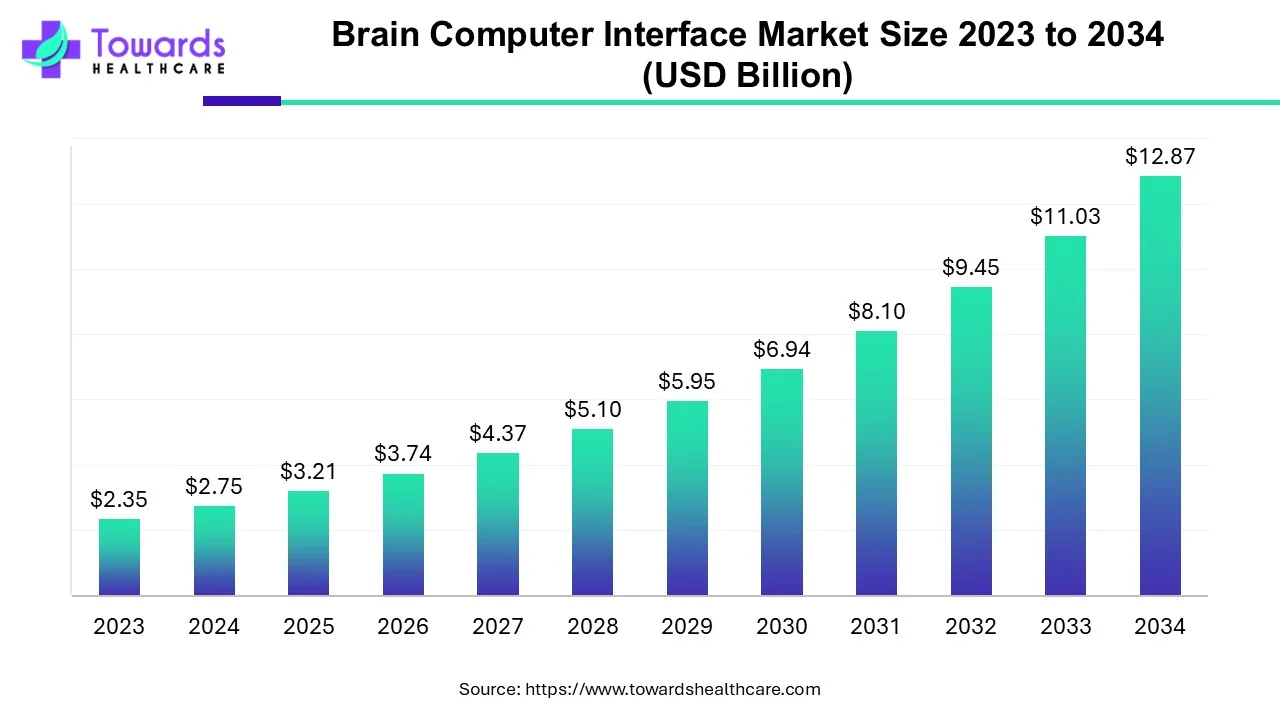
    The global brain-computer interfaces market is projected to grow significantly from USD 3.21 billion in 2025 to USD 12.87 billion by 2034, registering a strong CAGR of 16.7% during the forecast period. This growth is driven by the rising incidence of neurodegenerative disorders like ALS, Parkinson’s, and Alzheimer’s, along with increased adoption of BCI technologies in the gaming and entertainment sectors. The growing interest in human-computer interaction, coupled with advancements in artificial intelligence, neural decoding, and wearable neurotechnology, is further accelerating the development and commercialization of BCI systems across diverse industries including healthcare, defense, and education.

    Download this Free Sample Now and Get the Complete Report and Insights of this Market Easily @ https://www.towardshealthcare.com/download-sample/5036

    Top 10 Key Trends in the Brain-Computer Interface (BCI) Market:

    1. Rise in Neurodegenerative Disease Cases Driving BCI Adoption

    ●Increasing Patient Pool: Growing global aging population has led to a surge in cases of Alzheimer’s, Parkinson’s, epilepsy, and ALS.
    ●Assistive BCI Devices: BCI tech is being adopted for communication, mobility, and neurorehabilitation for such patients, enhancing quality of life.

    2. Growing Demand in Gaming and Entertainment Industry

    ●Immersive Gaming Experience: Game developers are exploring BCI to control avatars using brain signals, enabling more interactive gameplay.
    ●Neuroadaptive Gaming: EEG-based games are being developed to adapt based on players’ emotions or cognitive load in real time.

    3. Expansion of Non-Invasive BCI Devices

    ●User Comfort: Non-invasive EEG headsets are gaining popularity due to ease of use, no surgery, and lower cost.
    ●R&D Boost: Companies like Emotiv and Neurosky are innovating affordable, consumer-grade BCI products for daily use.

    4. Integration of Artificial Intelligence (AI) with BCI

    ●Enhanced Signal Processing: AI models improve interpretation of neural signals, reducing noise and increasing accuracy.
    ●Predictive Modeling: Deep learning enables prediction of user intent, which improves control in prosthetics and communication tools.

    5. Advancements in Neurofeedback and Cognitive Training

    ●Mental Health Support: BCIs are being used to monitor and manage ADHD, anxiety, PTSD, and depression through neurofeedback systems.
    ●Cognitive Enhancement: Training tools help users improve focus, memory, and brain flexibility through brain-signal-based feedback.

    6. Use of BCIs in Military and Defense Applications

    ●Enhanced Soldier Performance: BCIs are used to monitor fatigue, stress, and cognitive state in real-time.
    ●Mind-Controlled Drones: Research in mind-controlled weaponry and drones is being explored by defense agencies like DARPA.

    7. BCI for Communication in Locked-In Patients

    ●Restoring Communication: BCI allows people with complete paralysis to spell words using brain signals and virtual keyboards.
    ●Notable Studies: BrainGate and Neuralink are advancing communication tools for individuals with severe motor disabilities.

    8. Growing BCI Startups and Collaborations

    ●Startup Innovation: Emerging companies like Neurable, NextMind (now part of Snap Inc.), and Synchron are pushing the BCI frontier.
    ●Tech Giants’ Involvement: Companies like Meta, Elon Musk’s Neuralink, and Alphabet are investing in next-gen brain-interface tech.

    9. Regulatory and Ethical Challenges

    ●Data Privacy: Ethical concerns around neural data collection and interpretation are rising.
    ●FDA Approvals: Strict regulations for invasive BCIs can slow down clinical implementation despite promising results.

    10. Education and Training via BCIs

    ●Neurolearning Tools: BCIs are being introduced in educational settings to improve learning engagement and retention.
    ●Focus and Attention Tracking: Teachers can monitor students’ attention levels through neurofeedback for personalized learning.

    Check Out Below

    Immediate Delivery Available | Buy This Premium Research @ https://www.towardshealthcare.com/price/5036

    Access our exclusive, data-rich dashboard dedicated to the healthcare market – built specifically for decision-makers, strategists, and industry leaders. The dashboard features comprehensive statistical data, segment-wise market breakdowns, regional performance shares, detailed company profiles, annual updates, and much more. From market sizing to competitive intelligence, this powerful tool is one-stop solution to your gateway.

    Access the Dashboard: https://www.towardshealthcare.com/access-dashboard

    Become a valued research partner with us – https://www.towardshealthcare.com/schedule-meeting

    You can place an order or ask any questions, please feel free to contact us at sales@towardshealthcare.com
  • Brain-Computer Interfaces Market Leading Key Players & Insights

    Brain-Computer Interfaces Market Leading Key Players & Insights

    The global Brain‑Computer Interfaces market is poised for substantial expansion, projected to grow from approximately US $3.21 billion in 2025 to US $12.87 billion by 2034, implying a compound annual growth rate (CAGR) of 16.7% over the period. This growth stems largely from the rising prevalence of neurodegenerative disorders, such as ALS and Parkinson’s, and from increased adoption of BCI technologies in gaming, assistive devices, and consumer neurotech applications. The convergence of healthcare demand and entertainment/consumer market interest is driving investment and innovation across both invasive and non‑invasive BCI modalities.

    Brain Computer Interface Market Companies

    Download the Free Sample Now and Get the Complete Report and Insights of this Market Easily @ https://www.towardshealthcare.com/download-sample/5036

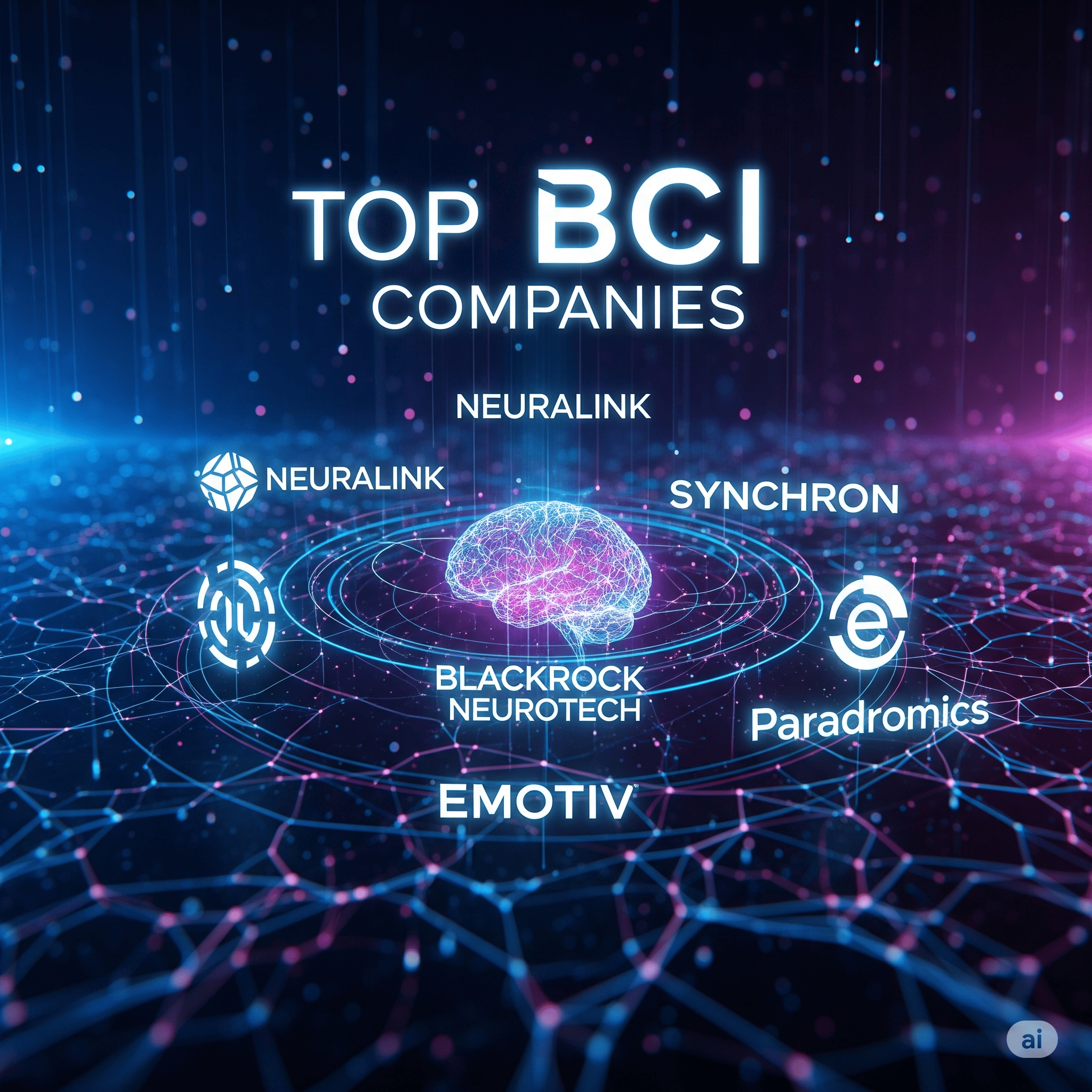
    Top 10 Leading BCI Companies

    Here are ten key players actively advancing the BCI space, each noted for their core strengths and offerings:

    1 Neuralink (Elon Musk’s venture)

    Strengths: Cutting-edge research into high‑bandwidth, implantable BCIs; modular “threads” for high‑density neural recording
    Products: Implantable neural interface systems (ongoing development, not yet commercial)

    2 Synchron

    Strengths: Pioneering minimally invasive “stentrode” technology (delivered via blood vessels), proven human safety
    Products: Investigational stent‑based BCI for communication and motor control in paralyzed patients

    3 Paradromics

    Strengths: Research‑focused on ultra‑high data‑rate intracortical interfaces; potential for rich neural data throughput
    Products: High‑channel‑count implants targeting medical and research applications

    4 Blackrock Neurotech

    Strengths: Established legacy in implantable electrode arrays (Utah arrays), strong academic/clinical adoption
    Products: Utah electrode arrays, Neural Signal Processors; used in neuroprosthetics and neurological research

    5 Kernel

    Strengths: Emphasis on non‑invasive functional imaging (e.g., time‑domain NIRS) for cognitive neuroscience and wellness
    Products: Kernel Flow (light‑based brain imaging headwear) aimed at research and consumer markets

    6 Emotiv

    Strengths: Affordable, wireless, consumer‑grade EEG headsets; focus on neurofeedback and BCI for commercial and wellness uses
    Products: Emotiv Insight, Emotiv EPOC+, with developer SDKs for applications ranging from games to mental health tools

    7 Neurable

    Strengths: Real‑time, non‑invasive EEG systems tailored for immersive experiences in AR/VR and gaming
    Products: Neurable Focus headsets enabling brain‑controlled VR environments and attention tracking

    8 OpenBCI

    Strengths: Open‑source approach, community support, highly customizable research kits at accessible price points
    Products: Cyton and Ganglion boards—modular EEG/EMG systems for hobbyists, researchers, and educators

    Check Out the Details Below

    Immediate Delivery Available | Buy This Premium Research @ https://www.towardshealthcare.com/price/5036

    Access our exclusive, data-rich dashboard dedicated to the healthcare market – built specifically for decision-makers, strategists, and industry leaders. The dashboard features comprehensive statistical data, segment-wise market breakdowns, regional performance shares, detailed company profiles, annual updates, and much more. From market sizing to competitive intelligence, this powerful tool is one-stop solution to your gateway.

    Access the Dashboard: https://www.towardshealthcare.com/access-dashboard

    Become a valued research partner with us – https://www.towardshealthcare.com/schedule-meeting

    You can place an order or ask any questions, please feel free to contact us at sales@towardshealthcare.com
  • Brain-Computer Interfaces Market Latest Trends and Insights 2025

    Brain-Computer Interfaces Market Latest Trends and Insights 2025

    The global Brain-Computer Interfaces (BCI) market is projected to grow from USD 3.21 billion in 2025 to USD 12.87 billion by 2034, expanding at a CAGR of 16.7%. This rapid growth is driven by advancements in neurotechnology, the rising prevalence of neurological disorders, and expanding applications in healthcare, smart home control, and gaming. AI integration, non-invasive technology, and government funding are key enablers. However, data privacy and ethical concerns remain critical challenges.

    Brain-Computer Interfaces Market Size 2023 - 2034

    The Complete Study is Now Available for Immediate Access | Download the Sample Pages of this Report @ https://www.towardshealthcare.com/download-sample/5036

    Market Trends

    AI Integration in BCIs
    ● Enhances signal interpretation and control response.
    ● Enables bidirectional brain-machine interaction for advanced applications.

    Medical Advancements
    ● Neuralink, Synchron, and Precision Neuroscience have made FDA-approved progress with human BCI implants.
    ● BCIs are being used to restore speech, treat ALS, and support neurorehabilitation.

    Smart Home Control Adoption
    ● ALS patients controlling smart homes using BCI (e.g., via Alexa).
    ● P300-based systems enable users to operate home devices using thought.

    Strategic Partnerships & Funding
    ● Neuralink, Synchron, and OpenBCI have raised significant investments.
    ● Government initiatives such as DARPA’s N3 and Europe’s PERTE Chip support development.

    Key Market Insights

    ● Non-invasive BCI dominated the market in 2024 due to ease of use and no surgical requirement.
    ● Medical end-use held the largest market share in 2024.
    ● Smart home control segment is projected to grow at the highest CAGR of 19.4%.
    ● AI and ML integration significantly enhance BCI performance in both clinical and non-clinical settings.

    Market Dynamics

    Drivers

    ● Growing cases of neurodegenerative diseases like Parkinson’s and ALS.
    ● AI and machine learning boosting performance and efficiency of BCIs.
    ● Strong government support and public-private investments.
    ● Increased demand for assistive technologies and realistic gaming.

    Challenges

    ● Cybersecurity & data privacy concerns with brain signal data.
    ● High development costs and need for skilled professionals.
    ● Ethical issues around mind-reading, ownership, and brain manipulation.

    Regional Analysis

    North America (Largest Market – 39.77% share in 2022)

    ● Home to major players like Neuralink, Paradromics, and OpenBCI.
    ● High adoption of advanced healthcare and gaming technologies.
    ● Strong government and private funding support.

    Asia-Pacific (Fastest Growing – CAGR 17.3%)

    ● Rising healthcare investment and neurological disorder prevalence.
    ● China’s release of “Guidelines for Research Ethics in BCI”.
    ● $518 million VC investment in Indian BCI startups in 2023.

    Europe

    ● Regulatory support and growing demand in Germany and the UK.
    ● €4 million funding to INBRAIN Neuroelectronics for graphene-based BCI.

    Segment Highlights

    By Product

    Non-Invasive BCI (Dominant)
    ● Uses EEG, MEG, or MRI without surgery.
    ● Widely adopted due to safety and cost-effectiveness.

    Invasive BCI (Fast Growing)
    ● Implanted microelectrodes offer high precision.
    ● Suitable for advanced medical use (e.g., ALS, paralysis).

    By Application

    Healthcare (58.63% market share in 2022)
    ● Includes neurorehabilitation, prosthetics, mental health, and speech recovery.

    Smart Home Control (Highest CAGR)
    ● Increasing use among mobility-impaired users for hands-free control.

    Gaming & Entertainment
    ● Growing demand for immersive and realistic experiences.

    By End User

    Medical (Largest share in 2024)
    ●BCI used in robotic arms, wheelchairs, and clinical diagnostics.

    Military (Significant Growth Expected)
    ● Applications in soldier communication, cognitive enhancement, and autonomous systems.

    Top Companies 2025

    ● Openbci
    ● Nihon Kohden Corporation
    ● Neuroky
    ● Natus Medical Incorporated
    ● Integra Lifesciences
    ● G.Tec Medical Enginneering Gmbh
    ● Emotiv
    ● Cortech Solutions
    ● Cadwell Industries
    ● Advanced Brain Monitoring, Inc
    ● Mind Technologies, Inc

    Top 5 FAQs 

    Q: What is driving the rapid growth of the brain-computer interface market?
    A: Key drivers include rising neurological disorders, AI integration, government funding, and increasing adoption in healthcare and smart home technologies.

    Q: Which segment is dominating the BCI market?
    A: The non-invasive BCI segment dominates due to its safety, cost-effectiveness, and ease of use without surgery.

    Q: How is AI used in brain-computer interfaces?
    A: AI processes and interprets brain signals, improving accuracy and enabling real-time responses in assistive devices and simulations.

    Q: Which region leads the BCI market and why?
    A: North America leads due to major tech players, high investment, advanced healthcare infrastructure, and growing adoption in smart tech.

    Q: What are the biggest challenges facing the BCI market?
    A: The main challenges include cybersecurity risks, data privacy concerns, ethical issues, and regulatory barriers.

    Immediate Delivery Available | Buy This Premium Research @ https://www.towardshealthcare.com/price/5036

    Access our exclusive, data-rich dashboard dedicated to the healthcare market – built specifically for decision-makers, strategists, and industry leaders. The dashboard features comprehensive statistical data, segment-wise market breakdowns, regional performance shares, detailed company profiles, annual updates, and much more. From market sizing to competitive intelligence, this powerful tool is one-stop solution to your gateway.

    Access the Dashboard: https://www.towardshealthcare.com/access-dashboard

    Become a valued research partner with us – https://www.towardshealthcare.com/schedule-meeting

    You can place an order or ask any questions, please feel free to contact us at sales@towardshealthcare.com