Tag: Plasmid DNA Manufacturing Market

  • Plasmid DNA Manufacturing Market Surges as Global Immunization Hits 89%; What’s Fueling This Growth?

    Vaccines quietly power global health systems, and behind many of them lies plasmid DNA. This small genetic structure plays a big role in developing modern vaccines, gene therapies, and advanced treatments.

    As immunization coverage expands worldwide, the demand for plasmid DNA manufacturing is rising at a steady and measurable pace.

    Vaccine Demand Drives the Plasmid DNA Manufacturing Market

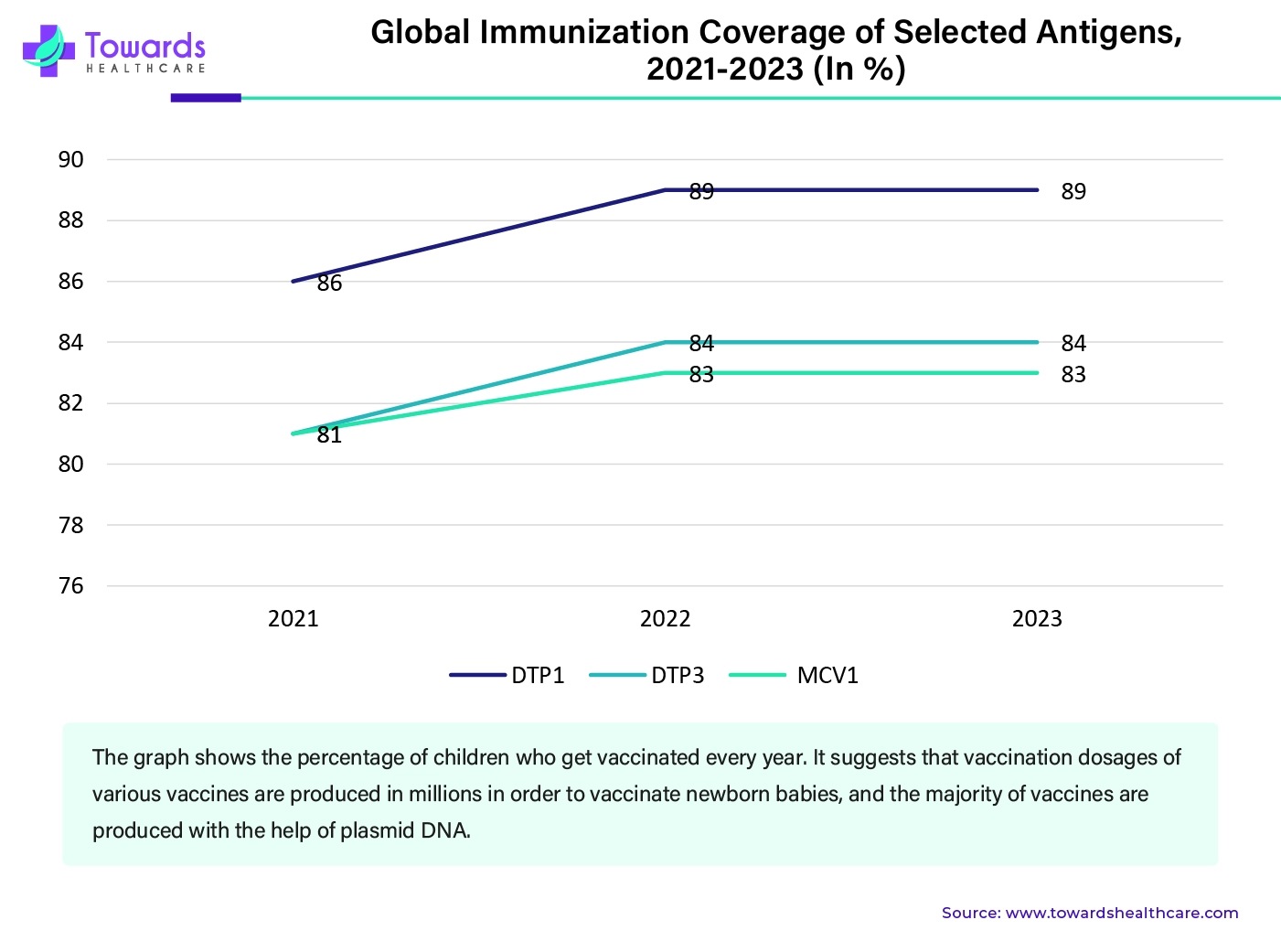
    Recent global data shows a clear upward trend in vaccination coverage. In 2021, DTP1 coverage stood at 86%, rising to 89% by 2022 and maintaining that level in 2023.

    Global Immunization Coverage of Selected Antigens, 2021-2023 (In %)

    Want clarity in a complex Plasmid DNA Manufacturing Market? Our experts offer a free personalized sample report just for you: https://www.towardshealthcare.com/download-sample/5239

    Similarly, DTP3 increased from 81% to 84%, while MCV1 reached 83% in 2023. These numbers may look incremental, but in population terms, they represent millions of additional vaccinated children each year.

    This growth directly translates into higher production volumes of vaccine components, including plasmid DNA. Every percentage increase reflects expanded manufacturing pressure.

    140 Million Births: A Consistent Demand Pipeline

    Each year, around 140 million babies are born globally. That breaks down to approximately 385,000 births every single day.

    This constant influx creates a stable and predictable demand for vaccines. Since many vaccines require multiple doses, the total number of doses administered annually is significantly higher than the number of births.

    • Multiple-dose schedules amplify production needs
    • Early childhood immunization drives consistent demand cycles
    • Booster doses further extend vaccine dependency

    This cycle ensures that plasmid DNA manufacturing remains an essential and continuously growing segment.

    Why Plasmid DNA Matters in Vaccine Production

    Plasmid DNA acts as a blueprint in the development of several modern vaccines. It enables the insertion of specific genetic material that helps the body recognize and fight diseases.

    Its role extends beyond vaccines into gene therapy and cell-based treatments, making it a foundational tool in biotechnology.

    • Supports development of DNA vaccines
    • Enables genetic engineering for targeted therapies
    • Acts as a key input in biologics manufacturing

    As healthcare shifts toward precision medicine, plasmid DNA becomes even more critical.

    Rising Cancer Cases Expand the Opportunity

    Cancer is no longer a distant threat—it is a growing global burden. In 2022 alone, around 20 million new cancer cases were recorded.

    By 2050, this number is expected to exceed 35 million, marking a 77% increase. This sharp rise is pushing the demand for advanced treatment options, many of which rely on plasmid DNA.

    Gene therapy, cancer vaccines, and monoclonal antibody production all depend on plasmid DNA at various stages. This creates a parallel demand stream beyond traditional vaccines.

    Personalized Medicine Changes the Game

    Healthcare is moving away from one-size-fits-all solutions. Personalized therapeutics are gaining traction, especially in oncology and rare diseases.

    Plasmid DNA enables customization at a genetic level, allowing treatments to be tailored to individual patients. This shift is not just technological—it is structural, influencing how therapies are developed and delivered.

    As a result, manufacturing requirements are becoming more complex and specialized, further boosting the need for high-quality plasmid DNA.

    Book a meeting and leave with a full understanding of your market—trends, data, competitor strategies and many more for FREE: https://www.towardshealthcare.com/schedule-meeting

    Regulatory Pressure Slows the Pace

    Despite strong demand, the plasmid DNA manufacturing market faces strict regulatory challenges. Genetic modification raises ethical and environmental concerns.

    Authorities require tight control over the handling and production of genetically modified materials to prevent unintended consequences.

    • Risk of GMO leakage into natural ecosystems
    • Strict compliance protocols increase operational costs
    • Time-intensive approval processes delay production cycles

    These factors add layers of complexity, making scalability more difficult for manufacturers.

    Balancing Innovation with Safety

    The industry stands at a delicate intersection of innovation and responsibility. While plasmid DNA opens doors to breakthrough therapies, it also demands careful handling.

    Manufacturers must invest in advanced containment systems, skilled workforce training, and regulatory compliance frameworks. This increases costs but ensures long-term sustainability.

    The challenge lies in maintaining innovation speed without compromising safety standards.

    Overview of Transactions for Organic Chemicals and Starch Products

    Consignee_Name Shipper_Name Product Description Sum of Quantity Sum of Weight
    A AND B INGREDIENTS INC Cosucra Group Starches and starch products 24403 517290
    ACHIM IMPORTING CO INC Nanjing Jinming New Decorative Mate Other organic chemicals 44587 209772
    BEST PARTNER SUPPLY CHAIN INC Yolotech Co Limited Other organic chemicals 38863 175135
    IBIC INTERNATIONAL GROUP INC Chongqing Tonghui Gas Co Limited Add Other organic chemicals 61754 176906
    MANILDRA MILLING CORP Shoalhaven Starches Pty Limited Starches and starch products 43200 2245285
    NATURZ ORGANICS LLC Naturz Organics Dalian Co Limited Starches and starch products 24000 496000
    OKAYA USA Okaya Co Limited Other organic chemicals 47539 6297576
    PURCHASER COMMERCE ENTERPRISES LLC Hongkong Inchoii Co Limited Other organic chemicals 27424 129702
    PLAYTEX MANUFACTURING INC Kdc/One Swallowfield Station Other organic chemicals 42044 169389
    TRAFON GROUP INC Grupo Lacteo Del Caribe Gruplac Other organic chemicals 34464 21406

    Access our exclusive, data-rich dashboard dedicated to the healthcare market – built specifically for decision-makers, strategists, and industry leaders. The dashboard features comprehensive statistical data, segment-wise market breakdowns, regional performance shares, detailed company profiles, annual updates, and much more. From market sizing to competitive intelligence, this powerful tool is one-stop solution to your gateway.

    Access the Dashboard: https://www.towardshealthcare.com/access-dashboard

    Checkout the Market Report Now at: https://www.towardshealthcare.com/checkout/5239

    You can place an order or ask any questions, please feel free to contact us at sales@towardshealthcare.com

    Europe Region – +44 778 256 0738

    North America Region – +1 8044 4193 44

    APAC Region: +91 9356 9282 04

    Visit Our Website: https://www.towardshealthcare.com

    Find us on social platforms: LinkedInTwitterInstagram | Medium

  • Plasmid DNA Manufacturing Market Growth, Size and Forecast 2025

    Plasmid DNA Manufacturing Market Growth, Size and Forecast 2025

    The global plasmid DNA manufacturing market was valued at US$ 1.85 billion in 2023 and is projected to grow to US$ 12.27 billion by 2034, at a CAGR of 18.77% (2024–2034). North America held the largest share (44%) in 2023, while Asia Pacific is projected to grow fastest. Viral vectors dominated by product type, gene therapy led applications, and infectious diseases led disease-based usage. Rising demand in vaccines, gene therapies, and oncology treatments is driving the market.
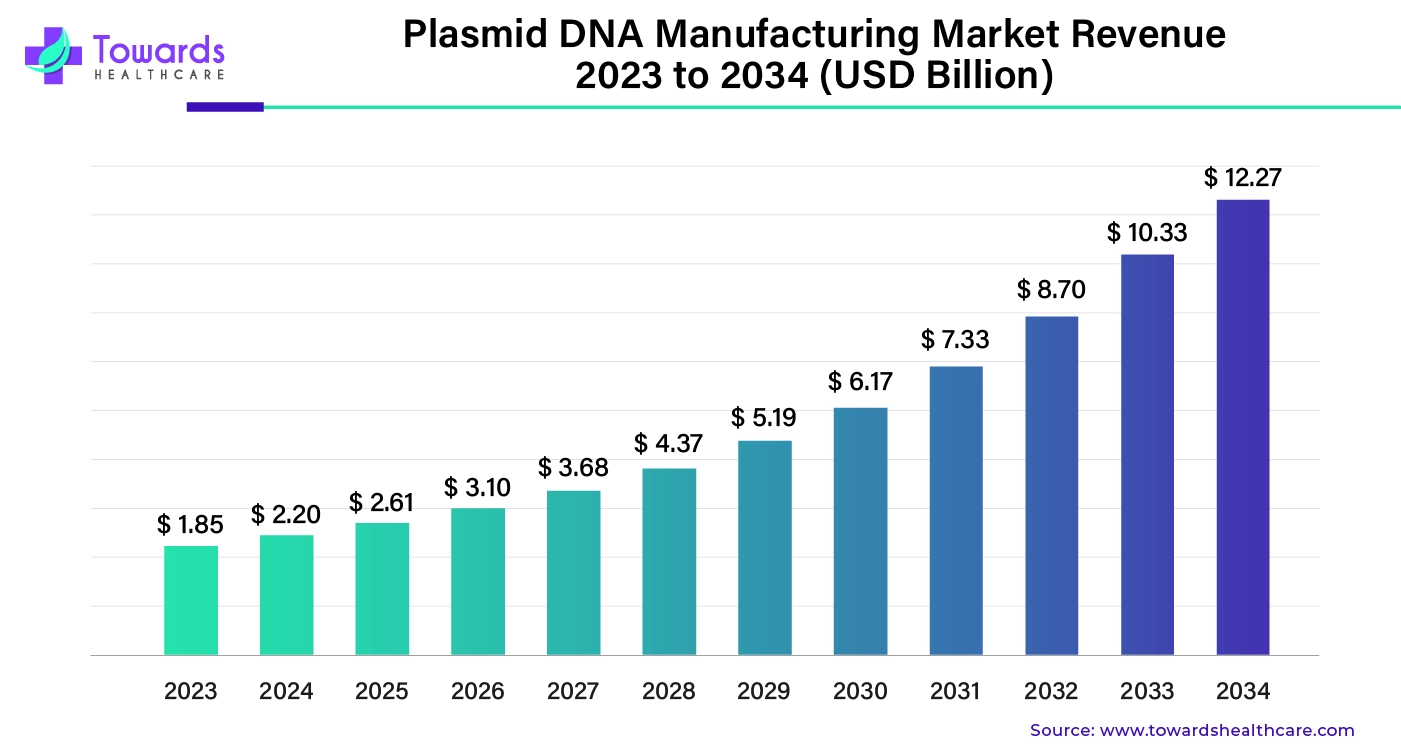
    Plasmid DNA Manufacturing Market Revenue 2023 to 2034 (USD Billion)

    Download the free sample and get the complete insights and forecasts report on this market @ https://www.towardshealthcare.com/download-sample/5239

    Market Size

    2023 – US$ 1.85 Billion

    ◉Market foundation driven by COVID-19 vaccine momentum, early-stage adoption of plasmid DNA in clinical trials, and demand for infectious disease treatments.

    ◉Viral vectors and plasmids accounted for the bulk of consumption.

    2025 – US$ 2.63 Billion

    ◉Growth driven by expansion of GMP manufacturing facilities such as ProBio’s New Jersey hub and BioNTech’s plasmid DNA plant in Germany.

    ◉Increased adoption of plasmid-based therapies in oncology and rare disease segments.

    2030 – US$ 6.04 Billion

    ◉Major inflection point: widespread use of plasmid DNA in personalized medicine.

    ◉Expansion of AI-designed plasmids for higher yield and stability.

    ◉Strong demand for plasmid-based monoclonal antibodies in cancer treatment.

    2034 – US$ 12.27 Billion

    ◉Plasmid DNA manufacturing becomes a core biomanufacturing industry.

    ◉Scaling breakthroughs like Kaneka Eurogentec’s 1 kg single-batch production pave the way for industrial-level output.

    ◉Gene therapy adoption becomes mainstream with over 1 million patients expected to receive plasmid-related therapies annually.

    Market Trends

    Cancer as a Growth Engine

    ◉WHO: 35M cancer cases by 2050 (+77% vs 2022).

    ◉Plasmid DNA enables monoclonal antibody production, personalized gene therapies, and cancer vaccines.

    ◉Example: NIH expects 1.09M patients in the U.S. will receive gene therapy by 2034.

    Vaccine Demand & Population Growth

    ◉140M babies born annually, all requiring multiple vaccines.

    ◉Plasmid DNA increasingly used in DNA vaccines for diseases like influenza, Zika, and COVID-19 variants.

    AI-Driven DNA Editing & Design

    ◉Profluent’s OpenCRISPR-1 (2024): first open-source AI gene editor, designed molecules for altering human DNA.

    ◉AI enhances affordability, precision, and efficiency in plasmid DNA design and production.

    Viral Vector Dominance

    ◉Viral vectors remain the preferred method for genetic material delivery.

    ◉Industry needs 2–3 billion liters/year of bioreactor capacity, expected to increase further as therapies scale.

    CDMO Expansion & Outsourcing

    ◉Outsourcing plasmid production is booming, reducing costs for pharma firms.

    ◉Example: Charles River & Ship of Theseus CDMO deal (2024) strengthens contract GMP plasmid DNA manufacturing.

    Breakthroughs in Manufacturing Scale

    ◉Kaneka Eurogentec (2024): first to achieve 1 kg plasmid DNA in one fermentation run.

    ◉This removes bottlenecks in large-scale therapy and vaccine production.

    AI’s Role in the Market

    Yield Stabilization

    ◉Traditional plasmid production yields are inconsistent.

    ◉AI-driven predictive fermentation control reduces instability and improves batch reliability.

    Precision Gene Editing

    ◉AI ensures lower off-target mutations in CRISPR and other editing methods.

    ◉Example: OpenCRISPR-1 highlights AI-designed editors that outperform manual processes.

    Therapy Personalization

    ◉AI analyzes genomic and patient data to create customized therapies.

    ◉Enables personalized cancer vaccines and rare disease therapies, improving patient outcomes.

    Optimized Drug Design & Simulation

    ◉AI models simulate plasmid stability under stress, storage, and transport conditions.

    ◉Reduces need for physical trials, saving time and cost.

    Clinical Trial Data Handling

    ◉AI manages large genomic datasets from trials, improving regulatory compliance and accelerating drug approvals.

    Next-Generation Plasmid Development

    ◉AI develops plasmids with improved resistance to degradation, extending shelf-life.

    ◉Supports mass vaccination programs in developing regions.

    Regional Insights
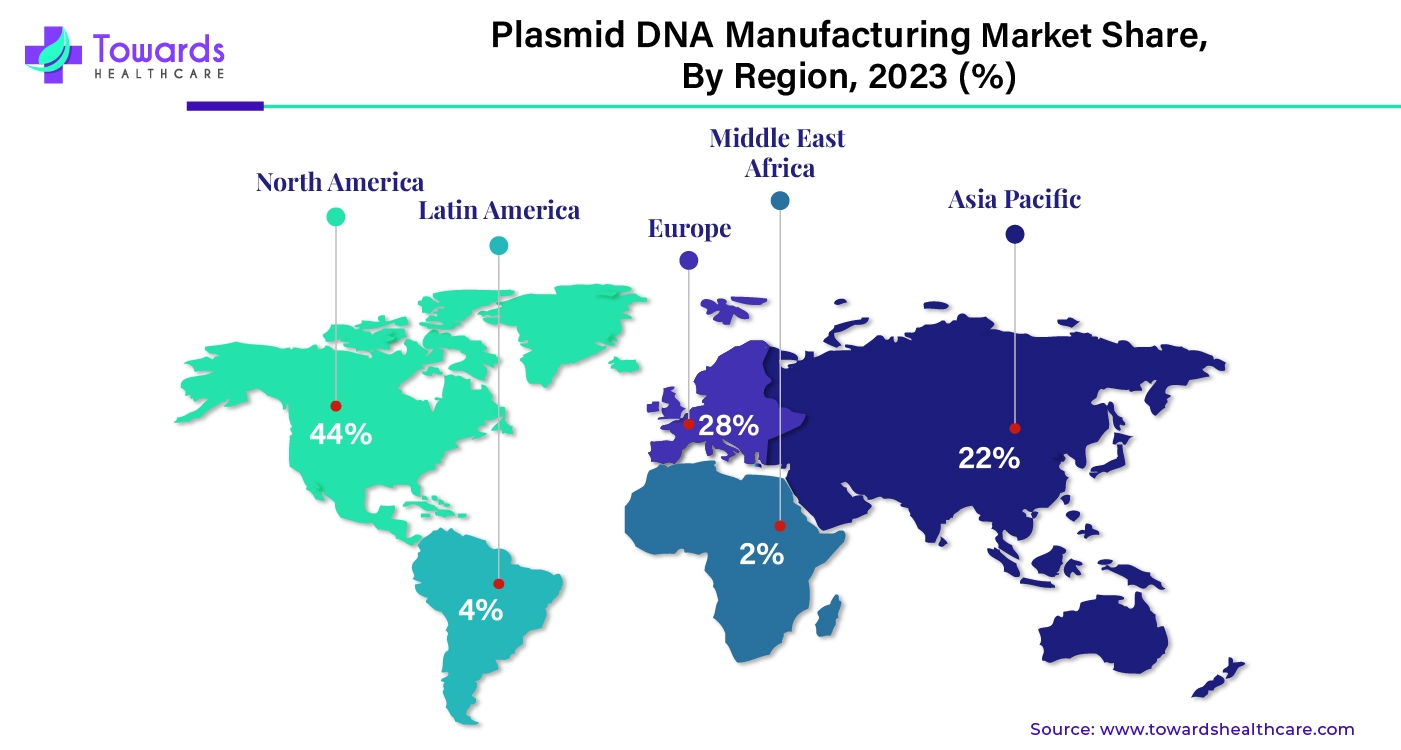
    Plasmid DNA Manufacturing Market NA, EU, APAC, LA, MEA Share, 2023 (%)

    North America (44% Share, 2023 – Market Leader)

    ◉North America is the dominant regional hub in the plasmid DNA and advanced therapy market, contributing nearly half of the global revenue in 2023.

    Strengths:
    ◉The U.S. and Canada are home to leading biotechnology companies such as Charles River Laboratories, Thermo Fisher Scientific, and ProBio, which provide both in-house plasmid manufacturing and contract development services (CDMOs). The region benefits from an advanced R&D ecosystem, driven by strong collaborations between universities, private pharma, and government initiatives. Government support—particularly through the NIH, BARDA, and FDA—provides funding, regulatory guidance, and incentives for innovation.

    Therapy Demand:
    ◉The National Institutes of Health (NIH) projects that the number of patients requiring gene therapies will reach 1.09 million by 2034, creating unprecedented demand for plasmid DNA as a core raw material for viral vectors and cell therapies.

    Recent Development:
    ◉In April 2024, ProBio launched a GMP plasmid DNA manufacturing facility in New Jersey, strategically boosting the U.S. supply chain and reducing reliance on imports. This development enhances supply security, a critical factor given rising concerns about manufacturing bottlenecks.

    Europe 

    ◉Europe holds a strong second position, driven by robust academic research, policy initiatives, and growing biotech clusters.

    Strengths:
    ◉Governments actively support advanced therapy medicinal products (ATMPs) through funding programs and regulatory flexibility. The European Medicines Agency (EMA) has accelerated approval pathways for gene therapies, fostering faster commercialization.

    United Kingdom:
    ◉The UK prioritizes rare disease therapies and promotes industry–government collaborations. The NHS is increasingly integrating gene and cell therapies into its healthcare system, making it a model for structured adoption.

    Germany:
    ◉Germany stands out as a biotech leader in Europe. In 2023, BioNTech inaugurated a plasmid DNA manufacturing plant dedicated to vaccines and oncology therapies. This investment strengthens Europe’s local supply chain and reduces dependence on U.S. and Asian suppliers.

    Asia Pacific (Fastest Growth Region)

    ◉The Asia Pacific market is projected to experience the highest CAGR through 2034, driven by population size, rising healthcare demand, and strong biotech investments.

    China:
    ◉With an aging population expected to surpass 400 million above the age of 60 by 2030, China faces increasing demand for treatments addressing cancer, cardiovascular diseases, and age-related disorders. The government is heavily investing in biotech innovation zones, clinical trial expansions, and local manufacturing capabilities to reduce dependency on Western suppliers.

    India:

    ◉Ranked as the third-largest biotech hub in Asia-Pacific.

    ◉Successfully developed the world’s first DNA-based COVID-19 vaccine (ZyCoV-D by Zydus Cadila), showcasing innovation capacity.

    ◉Hosts the second-highest number of USFDA-approved manufacturing plants globally, giving it a competitive edge in low-cost, large-scale plasmid DNA and biologics manufacturing.

    Japan:
    ◉Japan is a mature biotech market with heavy government and private-sector investment in life sciences. It boasts a strong pharmaceutical industry, a highly developed regulatory framework, and initiatives to position Japan as a global leader in gene therapies and regenerative medicine.

    Latin America & Middle East & Africa (Emerging but Challenged)

    ◉These regions are at a nascent stage, with opportunities emerging primarily through vaccine demand and healthcare expansion programs.

    Growth Factors:

    ◉Expanding healthcare access and national immunization programs.

    ◉Growing collaborations with global biotech firms to expand reach.

    Challenges:

    ◉Limited advanced manufacturing facilities hinder local plasmid production.

    ◉Reliance on imports and CDMO partnerships for critical raw materials.

    ◉Regulatory environments are still developing, slowing adoption of ATMPs.

    Market Dynamics 

    Drivers

    Rising Cancer Incidence

    ◉The WHO projects a 77% increase in cancer cases by 2050. Gene and cell therapies, which rely on plasmid DNA as a starting material, are increasingly being developed for oncology applications such as CAR-T cell therapy.

    Growing Vaccine Demand

    ◉With 140 million children born each year globally, vaccines remain a cornerstone of healthcare. DNA plasmids are central to next-generation vaccines against infectious diseases like COVID-19, influenza, and RSV.

    Expansion of Gene Therapy Trials

    ◉Over 5,000+ gene therapy clinical trials were ongoing in 2023, highlighting the massive pipeline of therapies that depend on plasmid DNA.

    AI-Driven Innovation

    ◉Artificial intelligence is being applied to plasmid design and optimization, improving yield, reducing production time, and increasing manufacturing efficiency.

    Restraints

    Regulatory Risks

    ◉Strict regulations due to biothreat risks and GMO leakage significantly slow approvals and increase compliance costs.

    High Costs of ATMPs

    ◉The average cost of advanced therapies can exceed $1–2 million per patient, limiting adoption despite clinical efficacy.

    Opportunities

    Scalable Manufacturing

    ◉Kaneka Eurogentec’s record 1 kg plasmid run (2024) demonstrated a breakthrough in scalability, lowering costs and enabling commercial-scale production.

    Expanding CDMO Industry

    ◉Outsourcing to CDMOs reduces entry barriers for pharma companies, allowing smaller biotechs to develop gene therapies without heavy CAPEX investments.

    Challenges

    Capacity Shortages

    ◉Demand for viral vectors requires 2–3 billion liters of plasmid fermentation annually, far exceeding current capacity.

    Slow ATMP Adoption

    ◉Despite regulatory approvals, adoption is slow due to limited durability data, affordability issues, and reimbursement challenges.

    Top Companies 

    Twist Bioscience

    Product: Semiconductor-based DNA synthesis platform.

    Strengths: High-throughput, precise, and scalable synthetic DNA production.

    Performance: Reported $96.1M in Q3 FY2025 revenue (+18% YoY growth), reflecting strong demand in synthetic biology and gene therapy markets.

    Charles River Laboratories

    Product: End-to-end plasmid DNA and viral vector manufacturing services.

    Strengths: Established CDMO presence, global reach, trusted by leading pharma/biotech firms.

    Revenue: Achieved $4.05B in 2024, with plasmid services contributing to growth.

    Thermo Fisher Scientific

    Product: PlasmidPro, an automated plasmid purification solution (mini-to-maxi scale).

    Strengths: A global biotech leader with automation-driven platforms reducing time-to-market for therapies.

    Bionova Scientific (Asahi Kasei Group)

    Product: CDMO plasmid DNA production.

    Strengths: Invested $100M in a Texas facility (100,000 sq. ft.) to expand plasmid DNA production and cater to U.S. demand.

    VGXI & Aldevron

    Strengths: Long-standing expertise in plasmid DNA supply for both vaccines and therapeutic applications. Trusted partners for biotech firms seeking high-quality, GMP-grade plasmids.

    Latest Announcements

    ◉ProBio (April 2025): Launched GMP plasmid DNA manufacturing facility in New Jersey, ensuring predictable delivery timelines.

    ◉EU Policy (May 2025): European regulators introduced reforms to increase affordability and access to ATMPs, aiming to boost adoption.

    Recent Developments

    ◉Kaneka Eurogentec (2024): Achieved 1 kg plasmid DNA output in a single fermentation batch – a scalability milestone.

    ◉Charles River & Ship of Theseus (2024): Entered a CDMO partnership to expand GMP plasmid DNA services.

    ◉BioNTech (2023): Opened its own plasmid DNA facility in Germany, securing supply for infectious disease vaccines and oncology therapies.

    Segments Covered 

    By Product

    ◉Viral Vectors (Leading Segment)

    ◉Why Leading? Viral vectors (such as adenovirus, AAV, retrovirus, and lentivirus) remain the gold standard for gene therapy because of their high transfection efficiency and ability to deliver therapeutic genes into target cells with precision.

    Key Drivers:

    ◉Over 70% of ongoing gene therapy trials use viral vectors.

    ◉Strong adoption in oncology and rare genetic disorders due to their ability to integrate into host genomes.

    ◉AAV vectors dominate for in vivo therapies, while lentiviral vectors lead in ex vivo therapies like CAR-T.

    ◉Challenges: High production costs (can exceed $1,000,000 per patient), scalability bottlenecks, and complex regulatory pathways.

    ◉Future Outlook: Advances in stable producer cell lines and next-gen viral vector engineering will help reduce costs and improve safety.

    Plasmid DNA (Core Tool)

    ◉Role: Plasmids act as the “blueprint” for viral vector manufacturing, DNA vaccines, and CRISPR gene editing. Without plasmids, large-scale vector production is not possible.

    Applications:

    ◉DNA vaccines: Used in infectious diseases (COVID-19, Zika, HPV).

    ◉Cell & gene therapy: Serve as templates for viral vector packaging.

    ◉Synthetic biology & R&D: Widely used in engineered microbes and protein production.

    Growth Drivers:

    ◉Expansion of mRNA vaccines (plasmids are required for in vitro transcription).

    ◉Rising demand for GMP-grade plasmids by CDMOs.

    Future Outlook: Scalable innovations (e.g., Kaneka Eurogentec’s 1 kg plasmid run) will make plasmid production cost-effective and industrialized.

    Non-Viral Methods

    Description: Techniques like electroporation, lipid nanoparticles (LNPs), polymers, and nanocarriers that bypass viral delivery.

    Advantages:

    ◉Safer (reduced risk of immune reactions).

    ◉Easier manufacturing and scalability.

    ◉Cost-effective compared to viral vectors.

    Use Cases:

    ◉mRNA vaccines rely on lipid nanoparticles for delivery (Pfizer-BioNTech, Moderna).

    ◉Electroporation is key in CRISPR-based therapies.

    Challenges:

    ◉Lower efficiency compared to viral vectors in some applications.

    ◉Limited duration of expression.

    ◉Future Outlook: Growing demand in oncology (cell therapies), vaccines, and rare diseases will accelerate adoption. Expected to catch up with viral vectors post-2030 as delivery tech improves.

    By Application

    Gene Therapy (Dominant Segment)

    ◉Why Leading? Gene therapy is currently the largest consumer of plasmid DNA and viral vectors, with 5,000+ active clinical trials globally.

    Key Areas:

    ◉Rare diseases (hemophilia, Duchenne muscular dystrophy, spinal muscular atrophy).

    ◉Oncology (CAR-T, TCR therapies, oncolytic viruses).

    Drivers:

    ◉FDA & EMA have already approved multiple gene therapies (Zolgensma, Luxturna, Yescarta).

    ◉NIH estimates 1.09M patients may benefit from gene therapy by 2034.

    ◉Future Outlook: As costs fall and durability improves, wider adoption beyond rare diseases is expected.

    DNA Vaccines

    ◉Role: DNA vaccines deliver genetic material directly into host cells to trigger an immune response.

    ◉Current Use Cases:

    ◉Infectious diseases (COVID-19, HPV, HIV, influenza, Zika).

    ◉Veterinary medicine (used for livestock and pets).

    ◉Advantages: Stable at room temperature (compared to fragile mRNA vaccines), scalable, and cost-efficient.

    ◉Challenges: Lower immunogenicity in humans compared to protein-based vaccines.

    ◉Future Outlook: Growing relevance in pandemic preparedness (WHO-backed initiatives), especially in developing countries with weak cold-chain infrastructure.

    Immunotherapy

    ◉Focus: Cancer immunotherapies such as CAR-T, TCR-T, tumor-infiltrating lymphocytes (TILs), and personalized cancer vaccines.

    Drivers:

    ◉CAR-T therapies approved for leukemias and lymphomas (Novartis’ Kymriah, Gilead’s Yescarta).

    ◉Use of plasmid DNA in manufacturing autologous and allogeneic cell therapies.

    ◉Future Outlook: The fastest-growing sub-segment due to oncology pipeline expansion and partnerships between biotech startups and large pharma (e.g., BMS, Roche).

    By Disease

    Infectious Diseases (Largest Share)

    ◉Why Leading? Pandemics and emerging infections (COVID-19, monkeypox, Zika, influenza) keep infectious diseases at the forefront.

    Applications:

    ◉DNA vaccines and plasmid-based production of viral vectors.

    ◉Pandemic preparedness programs (CEPI, WHO, BARDA).

    ◉Future Outlook: Continued government funding will ensure infectious diseases remain the largest disease segment, especially with global vaccination of ~140M newborns/year.

    Cancer

    Growth Drivers:

    ◉Rising incidence (+77% new cases by 2050).

    ◉Strong adoption of CAR-T and personalized immunotherapies.

    ◉Increasing investment from pharma (Pfizer, Novartis, BMS).

    Role of Plasmid DNA: Essential in CAR-T cell manufacturing and therapeutic vector development.

    ◉Future Outlook: Expected to surpass infectious diseases in revenue share post-2030 due to high therapy costs and strong oncology pipeline.

    Genetic Disorders

    ◉Use Cases: Rare and inherited diseases such as cystic fibrosis, hemophilia, Duchenne muscular dystrophy, SMA.

    Drivers:

    ◉Strong regulatory incentives (orphan drug designations).

    ◉Rising venture funding in rare disease biotech.

    ◉Future Outlook: While patient populations are smaller, premium pricing ($1M–$3M per therapy) makes this segment highly profitable.

    By Region

    North America (Largest Market)

    ◉Strengths: Leading biotech hubs (Boston, San Diego, Bay Area), NIH & BARDA funding, large CDMO presence (Charles River, Thermo Fisher, Aldevron).

    ◉Future Outlook: Will maintain dominance but face cost-control pressures as gene therapy prices rise.

    Europe

    ◉Strengths: Robust academic–industry collaborations, strong regulatory environment (EMA), major players like BioNTech, Lonza.

    ◉Focus: Rare disease and cancer therapies; growing plasmid DNA facilities.

    ◉Future Outlook: EU’s new 2025 ATMP policy to expand patient access will accelerate adoption.

    Asia Pacific (Fastest Growth)

    ◉China: World’s 2nd-largest biotech funding hub, aging society driving demand, government support for gene therapy R&D.

    ◉India: 3rd-largest biotech hub, developed world’s first DNA COVID-19 vaccine, 2nd-highest number of USFDA-approved plants globally.

    ◉Japan: Heavy pharma/biotech investment, leadership in regenerative medicine.

    ◉Future Outlook: APAC will outpace EU growth rates, becoming a global manufacturing hub for plasmid DNA and viral vectors.

    Latin America & MEA

    ◉Strengths: Increasing vaccination programs, growing pharma outsourcing.

    ◉Challenges: Lack of advanced biotech infrastructure, reliance on imports.

    ◉Future Outlook: Opportunities for CDMO partnerships and vaccine manufacturing expansion, but adoption will remain slower compared to other regions.

    Top 5 FAQs

    Q1. What is the size of the plasmid DNA manufacturing market?
    A1. Valued at US$ 1.85B in 2023, projected to reach US$ 12.27B by 2034 at a CAGR of 18.77%.

    Q2. Which region dominated in 2023?
    A2. North America held 44% share due to strong biotech/pharma industry and high R&D.

    Q3. Why is plasmid DNA important in vaccines?
    A3. Used for DNA vaccine production – essential since 140M babies born yearly need multiple immunizations.

    Q4. How does AI impact plasmid DNA manufacturing?
    A4. AI improves plasmid stability, precision in editing, personalized therapies, and large-scale manufacturing efficiency.

    Q5. Which company achieved a breakthrough in plasmid production?
    A5. Kaneka Eurogentec (2024) produced 1 kg plasmid DNA in one fermentation run, a record-setting milestone.

    Check out the details below

    Access our exclusive, data-rich dashboard dedicated to the healthcare market – built specifically for decision-makers, strategists, and industry leaders. The dashboard features comprehensive statistical data, segment-wise market breakdowns, regional performance shares, detailed company profiles, annual updates, and much more. From market sizing to competitive intelligence, this powerful tool is one-stop solution to your gateway.

    Access the Dashboard: https://www.towardshealthcare.com/access-dashboard

    Immediate Delivery Available | Buy This Premium Research @ https://www.towardshealthcare.com/price/5239

    Become a valued research partner with us – https://www.towardshealthcare.com/schedule-meeting

    You can place an order or ask any questions, please feel free to contact us at sales@towardshealthcare.com

    Powering Healthcare Leaders with Real-Time Insights: https://www.towardshealthcare.com/healthcare-intelligence-platform

    Europe Region – +44 778 256 0738

    North America Region – +1 8044 4193 44

    Web: https://www.towardshealthcare.com

    Find us on social platforms: LinkedInTwitterInstagram | Medium | Pinterest