Is America’s Home Turning Into the Hub for Home Medical Equipment in 2026?
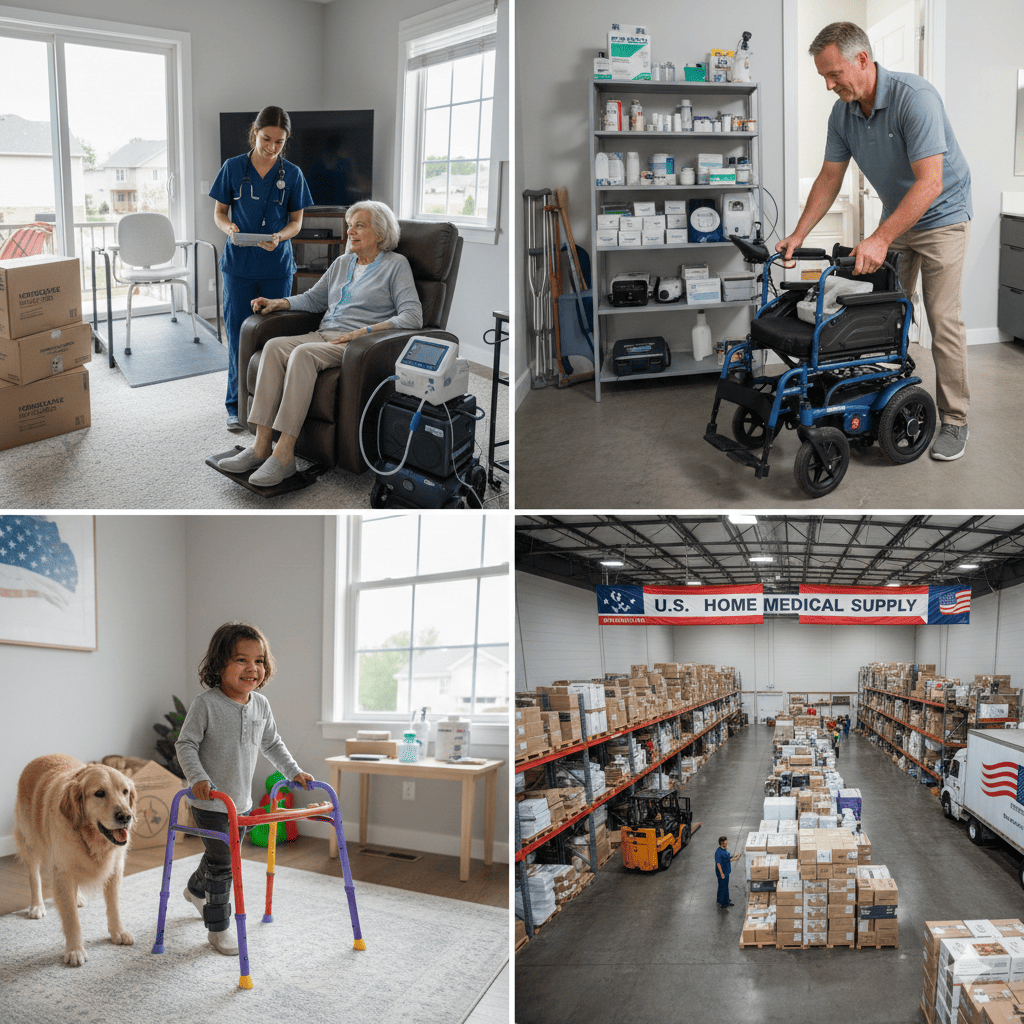
The U.S. home medical equipment healthcare system is undergoing a structural shift that is far deeper than policy debates or reimbursement changes. Care is steadily moving out of hospitals and into living rooms, bedrooms, and kitchens. Home medical equipment has become one of the strongest enablers of this change, reshaping how patients manage chronic disease, recover from surgery, and age with dignity. What was once viewed as supplementary equipment is now central to long-term care delivery across the country.
In 2024, the U.S. home medical equipment market stood at approximately USD 7.79 billion, reflecting a mature but rapidly evolving industry. By 2025, the market expanded to USD 8.29 billion and is projected to reach nearly USD 14.25 billion by 2034, growing at a steady compound annual rate of 6.4 percent. These numbers tell only part of the story. Beneath them lies a fundamental rethinking of where care happens and who controls it.
Download the free sample and get the complete insights and forecasts report on this market @ https://www.towardshealthcare.com/download-sample/6199
Why the Home Is Replacing the Hospital Bed
Healthcare in the United States has historically been institution-centric. Hospitals were the epicenter of diagnosis, treatment, and monitoring. That model is no longer sustainable for a population that is living longer, managing multiple chronic conditions, and demanding more autonomy over care decisions. Home medical equipment addresses these pressures by allowing patients to receive clinically meaningful care without the physical, financial, and emotional burden of frequent hospital visits.
The aging population is one of the most powerful drivers behind this shift. Older adults increasingly prefer to age in place, avoiding institutional settings whenever possible. At the same time, chronic diseases such as diabetes, cardiovascular disorders, respiratory illnesses, and sleep apnea require continuous monitoring and long-term therapy rather than episodic hospital interventions. Home-based devices bridge this gap by delivering consistent care in familiar environments.
Cost containment also plays a decisive role. Hospital stays are expensive, both for providers and payers. Home medical equipment reduces readmissions, shortens inpatient durations, and lowers overall healthcare spending. For policymakers and insurers, home-based care aligns economic efficiency with patient-centered outcomes.
Technology Turns Living Spaces into Care Environments
Modern home medical equipment is far removed from the bulky, mechanical devices of the past. Today’s systems are compact, intelligent, and increasingly connected. Advances in sensors, wireless communication, and software integration have transformed home equipment into extensions of the clinical ecosystem.
Remote patient monitoring allows clinicians to track vital signs, therapy adherence, and disease progression in near real time. Telemedicine platforms integrate seamlessly with home devices, enabling virtual consultations supported by objective data rather than subjective symptom descriptions. For patients, this means faster interventions and fewer emergencies. For providers, it means earlier insights and better clinical decision-making.
Artificial intelligence is accelerating this evolution. By analyzing large volumes of patient-generated data, AI-enabled devices identify patterns that may escape human observation. Predictive algorithms can flag early signs of deterioration, recommend therapy adjustments, and personalize treatment pathways. In practical terms, AI is turning home medical equipment from passive tools into active partners in care.
Government Signals a Long-Term Commitment to Home-Based Care
Public institutions are increasingly acknowledging the strategic importance of home healthcare. Regulatory bodies and research organizations are not only approving devices but also reimagining the home as an integral part of the healthcare infrastructure. Initiatives aimed at redesigning medical devices for real-world home environments reflect a growing recognition that care settings must adapt to patients, not the other way around.
By encouraging flexible, scalable device designs that work across diverse housing conditions, regulators are laying the groundwork for broader adoption. These efforts also signal long-term policy support, reducing uncertainty for manufacturers and investors while accelerating innovation across the value chain.
Therapeutic Equipment Sets the Market’s Pace
Within the U.S. home medical equipment market, therapeutic devices command the largest share. In 2024, this segment accounted for nearly half of total revenue, driven by widespread use of respiratory therapy systems, infusion pumps, home dialysis equipment, sleep apnea devices, and ventilators. These technologies address conditions that require daily or continuous intervention, making home-based solutions both practical and essential.
Respiratory care stands out as a critical growth area. Rising rates of chronic obstructive pulmonary disease, sleep apnea, and post-viral respiratory complications have increased reliance on oxygen concentrators, CPAP and BiPAP machines, and nebulizers. These devices allow patients to maintain respiratory stability without prolonged hospitalization, improving quality of life while reducing systemic strain.
Infusion therapy and home dialysis represent another significant shift. Treatments that once required specialized clinical settings are now safely administered at home under appropriate monitoring protocols. This transition reflects growing confidence in device reliability, patient education, and remote oversight capabilities.
The Silent Rise of Everyday Home Care Supplies
While therapeutic equipment dominates revenue, other home care supplies are emerging as the fastest-growing segment. Products such as wound care systems, incontinence supplies, and nutritional support devices address daily health needs that often determine long-term outcomes. These tools may appear less technologically complex, but their impact on patient comfort, dignity, and independence is profound.
As healthcare becomes more holistic, attention is shifting toward preventing complications rather than reacting to crises. Proper wound management reduces infections. Nutritional support improves recovery and immune function. Incontinence products preserve mobility and social engagement. Together, these supplies form the foundation of sustainable home-based care.
Elderly Patients Shape Demand, Providers Drive Expansion
Elderly patients represent the largest end-user group in the U.S. home medical equipment market. Demographic projections indicate that the population aged 100 and above will increase dramatically over the coming decades. This trend carries significant implications for healthcare delivery, as very old patients often require continuous support rather than acute interventions.
Home medical equipment enables seniors to maintain independence while managing complex health conditions. Mobility aids reduce fall risk. Monitoring devices provide reassurance to both patients and caregivers. Therapeutic systems support ongoing treatment without constant clinical supervision.
At the same time, home healthcare providers are emerging as the fastest-growing end-user segment. These organizations rely heavily on home medical equipment to deliver professional services ranging from skilled nursing to rehabilitation therapy. As provider networks expand and diversify, demand for reliable, interoperable equipment continues to rise.
Retail Stores Hold Ground as Digital Channels Accelerate
Distribution dynamics in the U.S. home medical equipment market reflect a balance between tradition and innovation. Retail medical stores remain the dominant channel, valued for their hands-on service, immediate availability, and expert guidance. For complex or high-value devices, in-person consultation remains an important factor in purchasing decisions.
However, online platforms are growing at the fastest rate. E-commerce offers convenience, broader product selection, transparent pricing, and direct-to-door delivery. As digital literacy improves among older adults and caregivers, online channels are becoming an accepted and often preferred option. Hybrid models that combine digital ordering with professional support are likely to define the next phase of distribution.
Regional Dynamics Reveal Uneven but Robust Growth
Geographically, the South U.S. leads the market, supported by a large aging population and higher prevalence of chronic conditions. States such as Florida and Texas illustrate how demographic concentration directly influences equipment demand. Rural healthcare challenges further amplify reliance on home-based solutions in this region.
The West U.S., meanwhile, is poised for the fastest growth. Despite higher care costs, the region demonstrates strong adoption of aging-in-place models and digital health technologies. Cultural preferences for independence, combined with innovation-friendly ecosystems, position the West as a testing ground for advanced home healthcare solutions.
Behind the Scenes: How the Industry Delivers Care
The value chain of the U.S. home medical equipment market extends far beyond manufacturing. Research and development processes emphasize user-centered design, regulatory compliance, and rigorous testing. Devices must perform reliably not only in clinical settings but also in diverse home environments with varying levels of caregiver support.
Distribution involves complex coordination among manufacturers, wholesalers, retailers, and service providers. Increasingly, direct-to-consumer models and partnerships with telehealth platforms are reshaping traditional pathways. Patient support services complete the chain by ensuring proper installation, training, maintenance, and ongoing assistance.
This ecosystem approach underscores a critical reality: successful home medical equipment deployment depends as much on service quality as on device performance.
Competitive Landscape Reflects Strategic Consolidation
The U.S. home medical equipment market features a mix of global healthcare conglomerates and specialized manufacturers. Established players leverage scale, regulatory expertise, and broad portfolios to maintain leadership positions. At the same time, niche innovators focus on specific therapeutic areas or technological differentiators.
Competition increasingly centers on integration rather than standalone products. Companies that offer connected platforms, data analytics, and service support gain an advantage in an environment where outcomes matter as much as equipment sales. Strategic acquisitions and partnerships continue to reshape the competitive landscape as firms seek comprehensive solutions rather than isolated devices.
Recent Developments Signal What Comes Next
Recent product launches and policy initiatives highlight the direction of the market. New monitoring systems capable of tracking multiple vital parameters through a single connection illustrate the push toward simplicity and continuity of care. Regulatory initiatives that reframe the home as a healthcare hub reinforce long-term commitment to this model.
Industry leaders and advocacy groups emphasize the economic and social value of home-based care, particularly the role of family caregivers. As recognition grows, supportive policies and reimbursement frameworks are likely to follow, further accelerating adoption.
A Market Defined by Human Need, Not Just Numbers
The U.S. home medical equipment market is not driven solely by financial projections or technological novelty. At its core, it responds to human needs for comfort, independence, and dignity. Patients want care that fits into their lives rather than disrupts them. Families want reassurance that loved ones are safe and supported. Providers want tools that extend their reach without compromising quality.
With steady growth projected through 2034, the market reflects a healthcare system in transition. Homes are no longer peripheral spaces in care delivery. They are becoming central nodes in an interconnected network of patients, providers, and technologies.
As the boundaries between clinical settings and everyday life continue to blur, home medical equipment will play a defining role in shaping the future of American healthcare. The question is no longer whether care belongs at home, but how effectively the system can support it there.
Access our exclusive, data-rich dashboard dedicated to the medical devices industry – built specifically for decision-makers, strategists, and industry leaders. The dashboard features comprehensive statistical data, segment-wise market breakdowns, regional performance shares, detailed company profiles, annual updates, and much more. From market sizing to competitive intelligence, this powerful tool is one-stop solution to your gateway.
Table of Contents
ToggleQuick Links:
Access the Dashboard: https://www.towardshealthcare.com/access-dashboard
Checkout U.S. Home Medical Equipment Market Report Now at: https://www.towardshealthcare.com/checkout/6199
Become a valued research partner with us – https://www.towardshealthcare.com/schedule-meeting
You can place an order or ask any questions, please feel free to contact us at sales@towardshealthcare.com
Powering Healthcare Leaders with Real-Time Insights: https://www.towardshealthcare.com/healthcare-intelligence-platform
Europe Region – +44 778 256 0738
North America Region – +1 8044 4193 44
APAC Region: +91 9356 9282 04
Visit Our Website: https://www.towardshealthcare.com
Find us on social platforms: LinkedIn | Twitter | Instagram | Medium | Pinterest
About the Author