Next generation sequencing (NGS) has transformed the way researchers understand diseases. Instead of relying on traditional testing methods, scientists now read millions of DNA fragments simultaneously. This breakthrough allows them to uncover genetic mutations, track disease patterns, and develop targeted therapies.
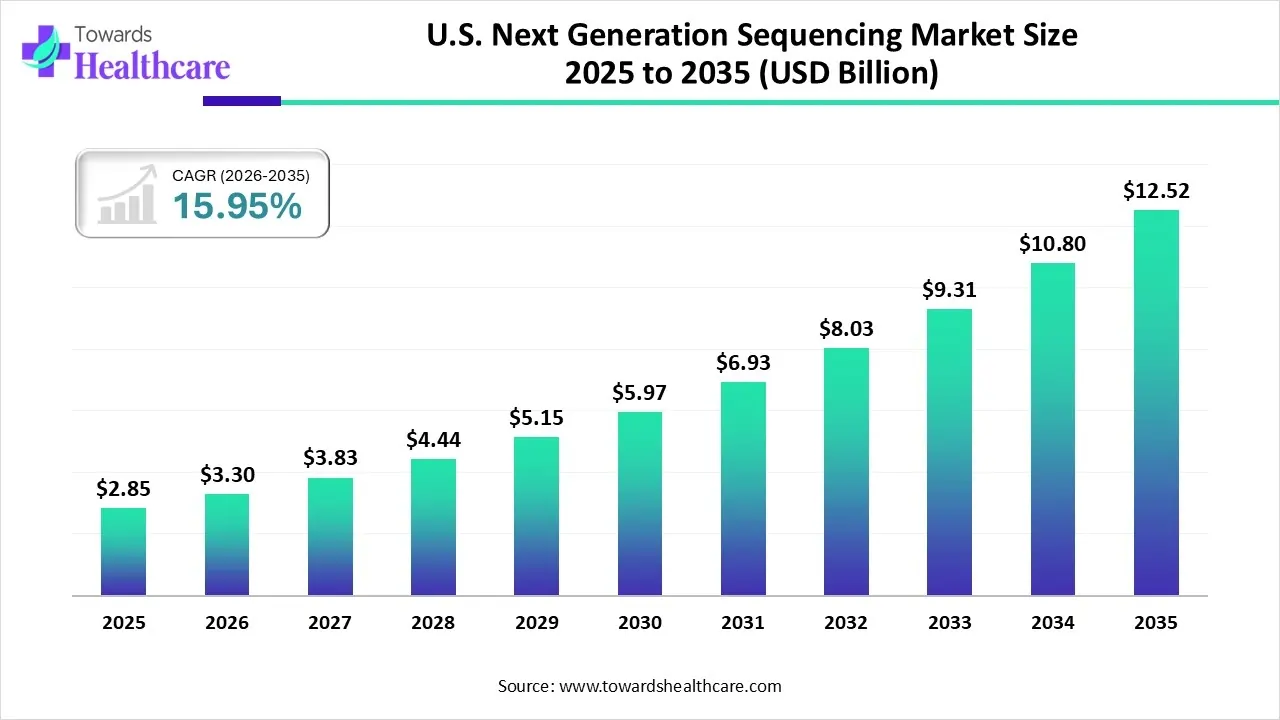
As a result, the U.S. next-generation sequencing market is expanding rapidly. The market, valued at USD 2.85 billion in 2025, is projected to grow to USD 12.52 billion by 2035, reflecting the increasing importance of genomics in modern healthcare.
Download Free Sample Report: https://www.towardshealthcare.com/download-sample/6450
From DNA Data to Medical Decisions
The impact of NGS extends far beyond research labs. Hospitals and diagnostic laboratories are adopting genomic testing to improve patient care.
Doctors now use sequencing technologies to identify rare genetic disorders, detect cancer mutations, and personalize treatment plans. Instead of prescribing a one-size-fits-all therapy, clinicians can tailor treatments based on a patient’s genetic profile.
This shift toward precision medicine is one of the strongest drivers behind the growth of the NGS industry. As healthcare systems aim to deliver more targeted therapies, the demand for genomic insights continues to rise.
The ability to analyze vast amounts of DNA data has opened a new era in disease detection and treatment planning.
Technology That Reads Life’s Code Faster
At the heart of the NGS boom lies a wave of technological innovation. Modern sequencing instruments can process massive volumes of genetic information in a fraction of the time older technologies required.
Sequencing by synthesis remains the most widely used technology due to its high throughput and reliability. This technique reads DNA sequences as new strands are synthesized, producing accurate genomic data at scale.
At the same time, alternative approaches such as semiconductor sequencing and solid-phase technologies are gaining traction. These technologies offer faster processing speeds and simplified workflows, helping laboratories analyze genetic data more efficiently.
Innovation in sequencing technology continues to reshape genomic research and clinical diagnostics.
AI Steps Into the Sequencing Lab
Artificial intelligence is quickly becoming an essential partner in genomic science. As sequencing technologies generate enormous datasets, researchers rely on AI algorithms to interpret complex genetic information.
Machine learning tools help scientists detect rare mutations, classify genetic variants, and predict disease risks with remarkable precision.
AI also improves laboratory workflows by automating steps such as experiment planning and data interpretation. This reduces manual errors and allows researchers to focus on deeper biological insights.
The integration of AI into sequencing platforms represents a major step forward in transforming raw genetic data into actionable medical knowledge.
Instruments, Reagents, and Services: The Ecosystem Behind NGS
The next-generation sequencing industry operates within a sophisticated ecosystem that includes instruments, consumables, reagents, and specialized services.
Sequencing instruments currently represent a significant share of the market. These automated platforms allow researchers to conduct high-throughput sequencing experiments with minimal hands-on work.
However, the fastest-growing segment lies in consumables and reagents. Every sequencing experiment requires specialized kits and chemical reagents, creating a steady demand for these essential components.
Key parts of the NGS ecosystem include:
-
Sequencing instruments that perform high-throughput DNA and RNA analysis
-
Consumables and reagents used in sample preparation and sequencing workflows
-
Bioinformatics tools that interpret genomic data
-
Sequencing services provided by contract research organizations
Together, these components form the backbone of the genomic research infrastructure.
Clinical Diagnostics Leads the Way
Among the many applications of next-generation sequencing, clinical diagnostics has emerged as the most dominant.
Healthcare providers increasingly rely on genomic testing to detect diseases at earlier stages. Sequencing technologies can identify subtle genetic mutations that traditional diagnostic tools may overlook.
For example, NGS plays a crucial role in cancer diagnostics. By analyzing tumor DNA, doctors can identify mutations that drive cancer growth and select targeted therapies.
NGS also supports prenatal screening, infectious disease detection, and rare disease diagnosis. As awareness of genetic testing grows, clinical applications continue to expand rapidly.
The Growing Role of Drug Discovery
Pharmaceutical companies are also embracing NGS as a powerful research tool. Drug developers use genomic sequencing to understand disease pathways, identify potential drug targets, and evaluate treatment responses.
By analyzing genetic variations across large populations, researchers can uncover biomarkers that guide the development of personalized medicines.
NGS enables scientists to study how genes interact with proteins, cells, and environmental factors. This deeper understanding helps researchers design therapies that target diseases more precisely.
The use of genomic data in drug discovery is accelerating innovation across the biopharmaceutical industry.
Hospitals, Biotech Firms, and Research Institutes Join Forces
The growth of the sequencing market reflects collaboration across multiple sectors of the healthcare ecosystem.
Hospitals and diagnostic laboratories remain the largest users of NGS technologies. Their access to patient samples and clinical data allows them to integrate genomic testing directly into medical care.
Meanwhile, biopharmaceutical companies and contract research organizations are rapidly expanding their sequencing capabilities to support drug development programs.
Academic and research institutions also play a critical role. Universities and research centers continue to push the boundaries of genomics through large-scale studies and collaborative projects.
This multi-sector collaboration fuels the continuous advancement of sequencing technologies.
Whole Genome Sequencing Unlocks Deeper Insights
Whole genome sequencing (WGS) has become one of the most powerful applications of NGS technology. Instead of analyzing only selected genes, WGS reads the entire genetic blueprint of an organism.
This comprehensive approach helps researchers identify rare mutations, track disease outbreaks, and study genetic variations across populations.
However, other sequencing methods are gaining popularity as well. Exome sequencing focuses specifically on protein-coding regions of the genome, providing a cost-effective alternative for many studies.
Targeted sequencing allows scientists to examine specific genes or genomic regions in great detail. Each approach offers unique advantages depending on the research objective.
Key sequencing strategies shaping the market include:
-
Whole genome sequencing for comprehensive genetic analysis
-
Exome sequencing for focused study of protein-coding genes
-
Targeted sequencing for high-precision investigation of specific genetic regions
These techniques collectively expand the possibilities of genomic research.
The Future of Genomics Is Already Taking Shape
The future of next-generation sequencing looks increasingly dynamic. Rapid advances in robotics, liquid handling systems, and automated sample preparation are making sequencing workflows more efficient.
At the same time, portable sequencing devices are emerging as a new frontier. These compact systems could allow genetic testing to take place outside traditional laboratories, including in clinics, field research settings, and remote locations.
Venture capital investment in biotechnology startups is also accelerating innovation across the genomics sector. Emerging companies are exploring new sequencing platforms, advanced bioinformatics tools, and novel diagnostic solutions.
As genomic science continues to evolve, the ability to read and interpret DNA will play a central role in shaping the future of medicine.
Decoding Tomorrow’s Medicine
Next-generation sequencing has moved far beyond being a specialized research tool. It now stands at the core of a broader transformation in healthcare, biotechnology, and life sciences.
By unlocking the information hidden within DNA, scientists are gaining unprecedented insights into human biology and disease.
From precision medicine to drug discovery and population genomics, NGS technologies are helping researchers decode the complexity of life itself.
As sequencing becomes faster, more affordable, and more accessible, its influence on healthcare will only continue to grow—bringing the promise of truly personalized medicine closer to reality.
Access our exclusive, data-rich dashboard dedicated to the biotechnology market – built specifically for decision-makers, strategists, and industry leaders. The dashboard features comprehensive statistical data, segment-wise market breakdowns, regional performance shares, detailed company profiles, annual updates, and much more. From market sizing to competitive intelligence, this powerful tool is one-stop solution to your gateway.
Access the Dashboard: https://www.towardshealthcare.com/access-dashboard
Checkout the Market Report Now at: https://www.towardshealthcare.com/checkout/6450
You can place an order or ask any questions, please feel free to contact us at sales@towardshealthcare.com
Europe Region – +44 778 256 0738
North America Region – +1 8044 4193 44
APAC Region: +91 9356 9282 04
Visit Our Website: https://www.towardshealthcare.com
Find us on social platforms: LinkedIn | Twitter | Instagram | Medium
About the Author