Cancer treatment is not only about controlling the disease itself. For many patients, maintaining body weight, muscle strength, appetite, and overall quality of life can be just as important.
Cancer cachexia is a complex condition associated with cancer that can cause significant weight loss, reduced appetite, muscle wasting, and physical weakness. As awareness of these challenges increases, researchers and healthcare providers are paying greater attention to better ways of managing the condition.
A Growing Need for Better Supportive Care
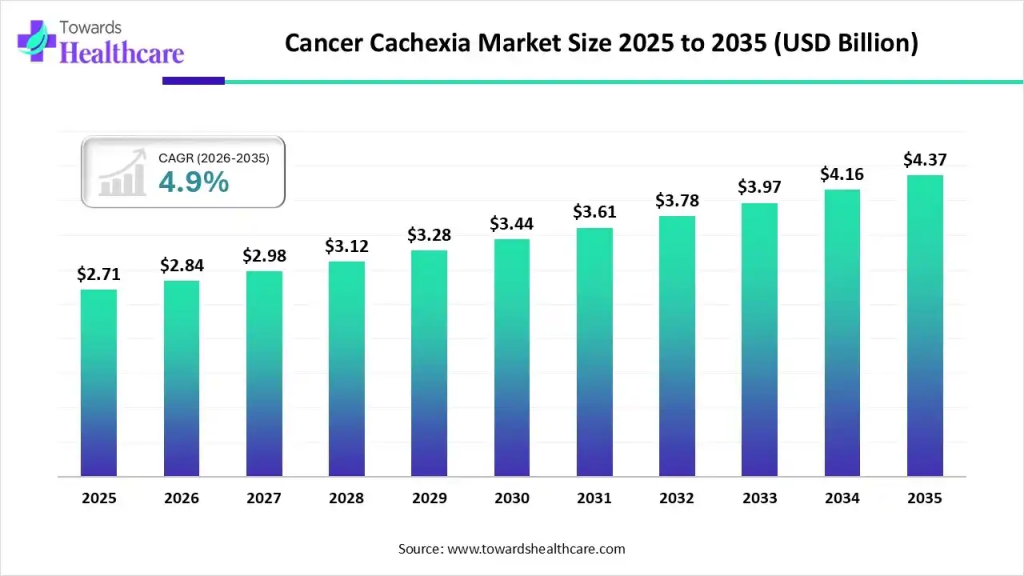
The global cancer cachexia sector was valued at around USD 2.71 billion in 2025 and is expected to reach approximately USD 4.37 billion by 2035, growing at a 4.9% CAGR between 2026 and 2035.
The rising global cancer burden is one of the main factors behind this growth. Lung, pancreatic, gastrointestinal, and other cancers can be associated with cachexia, creating a greater need for treatments that address appetite loss, muscle wasting, and metabolic changes.
What stands out to me is the growing shift toward treating cachexia as an important part of supportive oncology rather than looking at it only as a secondary symptom.
Treatment Approaches Are Expanding
Appetite stimulants currently account for the largest share of treatment use. These therapies can help patients improve appetite and calorie intake, which is particularly important when maintaining nutrition becomes difficult.
At the same time, cannabinoid receptor agonists are attracting more attention and are expected to grow quickly in the coming years. Researchers are also exploring anabolic agents, corticosteroids, metabolic therapies, and combination approaches.
The bigger opportunity is in developing treatments that go beyond appetite and directly address muscle loss and metabolic changes.
AI Is Bringing New Possibilities
AI is also starting to play a role in cancer cachexia research.
Researchers are exploring AI-based models that can identify patients at higher risk of developing cachexia, analyze biomarkers, and monitor changes in weight and muscle mass.
AI can also support drug discovery by helping researchers understand disease pathways and identify potential treatment candidates more efficiently.
Wearable devices and digital monitoring tools could become particularly useful in the future. Regular tracking of body weight, muscle condition, activity, and other indicators may help healthcare professionals identify changes earlier.
Personalized Treatment Is Becoming More Important
Not every patient experiences cancer cachexia in the same way. This is why personalized treatment is becoming an important area of research.
Researchers are increasingly looking at genetic, metabolic, nutritional, and clinical factors when developing treatment strategies. The goal is to understand which approach may work best for a particular patient instead of relying on a single treatment for everyone.
This could eventually lead to more targeted therapies and better supportive care plans.
Lung Cancer Currently Leads
Among different cancer types, lung cancer accounted for the largest share in 2025. The high incidence of lung cancer contributes to a significant number of patients experiencing cachexia-related complications.
Pancreatic cancer is expected to see faster growth in the coming years. Its aggressive progression and strong association with weight and muscle loss are increasing the need for more effective supportive treatments.
North America Remains Ahead
North America held the leading position in 2025, supported by advanced healthcare infrastructure, strong oncology research, clinical trials, and greater adoption of innovative therapies.
The U.S. continues to be a major contributor, with pharmaceutical companies and research organizations investing in new approaches for cancer cachexia.
Asia Pacific, however, is expected to experience faster growth through 2035. Expanding oncology infrastructure, rising cancer cases, increasing healthcare investments, and improving access to advanced treatments are creating new opportunities across countries such as India and China.
Research and Investment Are Picking Up
Investment activity is another area worth watching.
In February 2025, Tensegrity Pharma Inc. raised ¥150 million in seed funding from Mitsubishi UFJ Capital to support the development of TSP-101, a drug candidate targeting cachexia.
There have also been encouraging developments around ART27.13, being developed by Artelo Biosciences. Interim Phase 2 results announced in September 2025 reported an increase in lean body mass in the treatment group, highlighting continued interest in new therapeutic approaches.
What Could Come Next?
The future of cancer cachexia care will likely depend on a combination of therapies rather than one solution.
Better nutritional support, personalized medicines, muscle-preserving treatments, digital monitoring, and targeted drug development could all contribute to improving patient outcomes.
For me, the most important development is the growing recognition that maintaining strength, nutrition, and quality of life should be part of the overall cancer care journey. As research continues, more personalized and effective options could give patients better support alongside their primary cancer treatment.
Download Customized Sample: https://www.towardshealthcare.com/download-sample/6525
About Us
Healthcare WebWire is a part of Towards Healthcare Research & Consulting is a global healthcare market research and consulting firm dedicated to helping businesses make informed decisions through reliable market intelligence and strategic insights. We serve pharmaceutical, biotechnology, medical device, AI in healthcare, cell and gene therapy, digital health, and life sciences organizations with in-depth market research, custom consulting, competitive analysis, and growth forecasts. Our team combines industry expertise with rigorous research to deliver clear, actionable insights that support market expansion, product strategy, investment decisions, and long-term business growth. From emerging innovations to established healthcare markets, we help organizations understand where the industry is today and where it’s headed tomorrow.
You can place an order or ask any questions, please feel free to contact us at [email protected]
Europe Region – +44 778 256 0738
North America Region – +1 8044 4193 44
APAC Region: +91 9356 9282 04
Visit Our Website: Towards Healthcare Research & Consulting – Expert Consulting Solutions & Research Reports
Find us on social platforms: LinkedIn | Twitter | Instagram | Medium