The global medical clothing market is stepping into a transformative decade. What once centered purely on sterile uniforms and disposable gowns has evolved into a dynamic ecosystem of performance textiles, regulatory precision, ergonomic design, and digital integration.
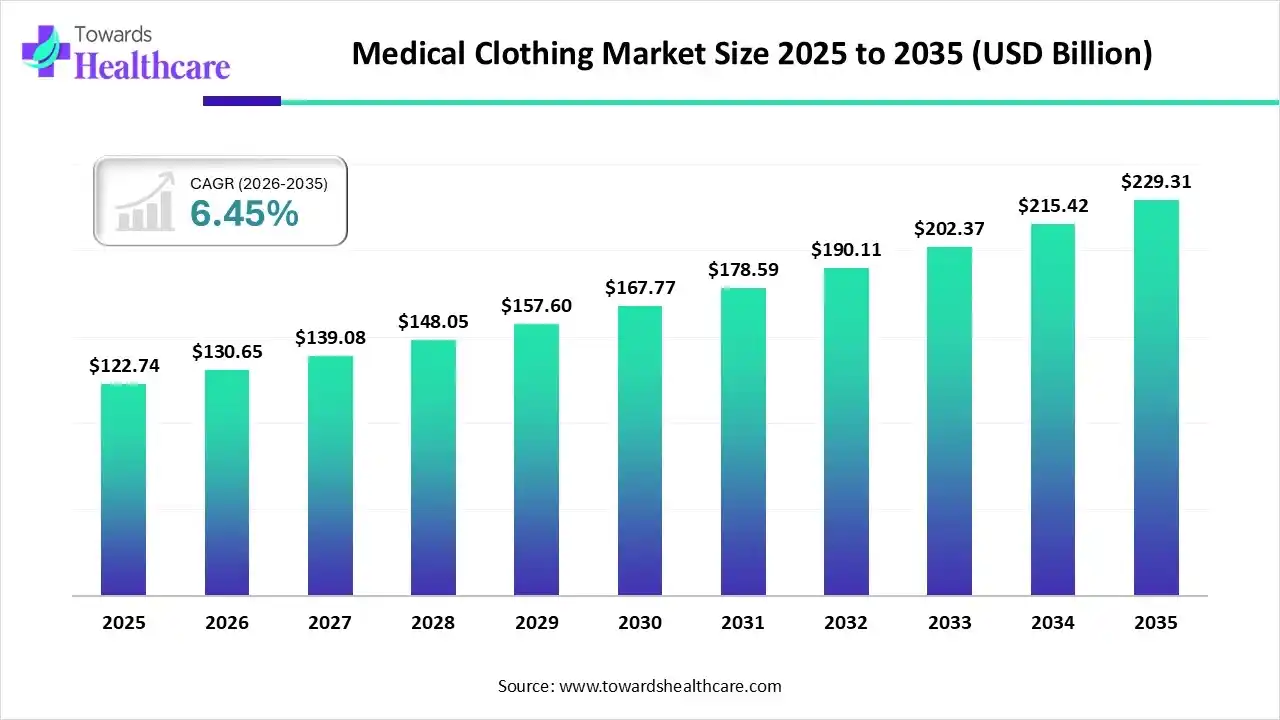
In 2025, the market stood at USD 122.74 billion. It is projected to reach USD 130.65 billion in 2026 and surge to approximately USD 229.31 billion by 2035, expanding at a CAGR of 6.45% between 2026 and 2035.
Download Free Sample: https://www.towardshealthcare.com/download-sample/6564
This is not just growth in numbers. It is a structural shift in how healthcare systems think about safety, sustainability, supply chain resilience, and user-centric design. From antimicrobial fabrics to AI-assisted manufacturing, medical clothing has moved from being a background necessity to a strategic healthcare asset.
Let’s examine what is truly shaping this evolution.
Healthcare Apparel Is No Longer “Just Uniforms”
Medical clothing includes surgical gowns, scrubs, drapes, lab coats, gloves, facial protection, sterilization wraps, and patient apparel. These garments serve one core function: protect both healthcare professionals and patients from infection and contamination.
But today, the market is driven by deeper forces:
-
Rising global surgical volumes
-
Expanding hospital infrastructure
-
Strict infection-control regulations
-
Growing awareness of occupational safety
-
Sustainability mandates
-
Digital procurement channels
Every surgery, outpatient procedure, emergency visit, and inpatient stay generates recurring demand for compliant, high-performance medical garments.
Healthcare apparel has become operational infrastructure.
Surgical Volumes Are Fueling Recurring Demand
Medical clothing demand directly correlates with the number of surgical procedures performed globally. As surgical volumes rise, so does the consumption of scrubs, gowns, drapes, and protective apparel.
Over the past two decades, global surgeries have steadily increased. Projections for 2030 suggest that annual procedures could range between 430 and 550 million worldwide. Knee replacement surgeries alone are increasing year after year.
Each procedure requires multiple layers of protective clothing:
-
Sterile surgical gowns
-
Disposable drapes
-
Facial protection
-
Gloves
-
Scrub suits
The math is simple. More procedures mean more consumption. That recurring, non-optional demand underpins the stability of the medical clothing market.
North America Leads—But Asia-Pacific Accelerates
Why North America Dominates
North America held the largest revenue share in 2025. The region benefits from:
-
Well-established healthcare infrastructure
-
High healthcare expenditure
-
Strict regulatory compliance
-
Early adoption of advanced textiles
The United States leads regional performance due to its extensive hospital network, large procedural volume, and consistent procurement systems. Companies such as 3M Company, Cardinal Health, Inc., and Medline Industries, LP anchor the market with broad portfolios of surgical gowns, PPE, and medical textiles.
Institutional purchasing and long-term supply contracts further strengthen regional dominance.
Why Asia-Pacific Is Growing Faster
Asia-Pacific is expected to witness the fastest growth during the forecast period.
Key drivers include:
-
Rapid hospital expansion
-
Rising medical tourism
-
Government investment in healthcare infrastructure
-
Expanding domestic manufacturing capabilities
-
Increased infection-control awareness
China leads regional production capacity. Its manufacturing scale and cost efficiencies position it as both a domestic supplier and export hub.
Emerging economies across India and ASEAN countries are also expanding public healthcare systems. As facilities modernize, demand for certified protective apparel rises in parallel.
The Product War: Drapes & Gowns vs. Facial Protection
The Dominant Segment: Surgical Drapes, Scrubs & Gowns
This segment dominated in 2025. It continues to lead due to:
-
Mandatory use in operating rooms
-
Strict sterile field requirements
-
High replacement frequency
-
Standardized hospital protocols
Every surgical environment requires layered textile protection. This baseline necessity keeps the segment resilient and consistently in demand.
The Fastest Growing Segment: Facial Protection
Facial protection is projected to grow at the highest CAGR. Increased awareness of airborne pathogens has permanently altered hospital protocols.
Masks, respirators, and face shields are no longer limited to pandemic cycles. They are embedded into routine infection prevention strategies.
Innovation in breathability, fluid resistance, and antiviral coatings further supports segment expansion.
Professionals Drive Demand; But Patients Drive Growth
Healthcare Professional Segment: The Revenue Anchor
Healthcare professionals represent the largest revenue share. Doctors, nurses, technicians, and surgical staff require daily use garments that meet regulatory compliance and durability standards.
Strict dress codes and infection-control policies reinforce constant procurement.
Patient Segment: The Fastest Growing
Hospitals increasingly focus on patient dignity, comfort, and hygiene. Patient gowns now prioritize:
-
Ease of wear
-
Breathability
-
Single-use sterility
-
Comfort-focused fabrics
With rising admissions and outpatient procedures, this segment shows the fastest growth trajectory.
Disposable Dominance Meets Reusable Revival
Why Disposable Still Leads
The disposable segment dominated in 2025. Hospitals prefer single-use garments because they:
-
Reduce cross-contamination
-
Require no sterilization cycles
-
Simplify inventory management
-
Ensure consistent compliance
Emergency rooms, ICUs, and surgical theaters rely heavily on disposable apparel.
Why Reusable Is Accelerating
However, sustainability concerns are reshaping purchasing decisions.
Reusable garments:
-
Reduce medical waste
-
Lower long-term costs
-
Leverage antimicrobial textiles
-
Withstand repeated sterilization
Advances in fabric engineering now allow reusable gowns to match safety standards while supporting environmental goals.
Sustainability is no longer optional. It is becoming procurement criteria.
B2B Dominates Procurement; But B2C Is Rising
Institutional Power: B2B Channel
Business-to-business sales contribute the largest revenue share. Hospitals operate through centralized procurement systems and long-term supplier contracts.
Bulk purchasing, regulatory compliance assurance, and customized product specifications strengthen B2B dominance.
Direct Access: B2C Expansion
However, B2C is the fastest-growing channel. Individual healthcare professionals increasingly purchase:
-
Premium scrubs
-
Personalized uniforms
-
Specialty protective wear
E-commerce platforms provide size customization, brand differentiation, and direct delivery.
Self-employed practitioners and home-care providers further accelerate B2C demand.
Technology Enters the Wardrobe
Medical clothing is no longer passive fabric. Technology is embedding intelligence into textiles.
AI in Fabric Engineering
AI-driven textile analytics optimize:
-
Breathability
-
Fluid resistance
-
Durability
-
Ergonomic fit
Manufacturers use predictive modeling to reduce fabric defects and improve performance testing outcomes.
AI in Manufacturing & Supply Chain
Artificial intelligence enhances:
-
Predictive maintenance
-
Automated quality inspection
-
Demand forecasting
-
Inventory optimization
Healthcare surges require responsive supply chains. AI enables rapid scaling while minimizing waste.
Sustainability Becomes a Strategic Mandate
The medical sector generates substantial textile waste. Disposable apparel contributes to landfill burden and regulatory scrutiny.
Manufacturers now focus on:
-
Recycled materials
-
Biodegradable fibers
-
Reduced water usage
-
Low-impact dye processes
European markets, supported by strong regulatory frameworks, are particularly proactive in sustainable medical textiles.
Companies such as Mölnlycke Health Care AB and Lohmann & Rauscher are aligning portfolios with reusable and environmentally conscious designs.
Sustainability is shifting from branding narrative to compliance requirement.
Strategic Industry Moves Reshape the Landscape
Recent corporate developments signal consolidation and capability expansion.
-
Honeywell divested its PPE business to Protective Industrial Products in 2025, reshaping competitive dynamics.
-
3M Company expanded its protective clothing portfolio through acquisition activity.
-
Kimberly-Clark Corporation expanded manufacturing capacity to meet rising global demand.
Strategic partnerships also strengthen distribution networks. Cardinal Health, Inc. continues to reinforce institutional reach through collaboration across hospital networks.
The market is consolidating around scale, compliance, and distribution strength.
Regulatory Compliance Shapes Market Structure
Medical clothing operates within strict regulatory frameworks.
Manufacturers must satisfy:
-
Barrier protection standards
-
Sterility certifications
-
Fluid penetration resistance tests
-
Biocompatibility assessments
In the United States, oversight from bodies such as the U.S. Food and Drug Administration ensures performance validation before market entry.
European markets enforce CE marking and textile safety standards. These requirements create barriers to entry but ensure consistent quality.
Compliance is both a cost driver and competitive moat.
Europe’s Quiet Momentum
Europe is expected to grow at a significant CAGR. Aging populations and expanding public healthcare systems drive consistent demand.
The United Kingdom, supported by centralized NHS procurement systems, demonstrates steady institutional purchasing.
Germany, France, and Nordic countries emphasize sustainable textiles and reusable solutions.
European buyers prioritize certified, traceable, and environmentally responsible garments. This regional emphasis reshapes product innovation priorities.
Value Chain: From Fiber to Frontline
The medical clothing value chain includes:
-
Research and Development
-
Fabric manufacturing
-
Performance testing
-
Regulatory approval
-
Distribution
-
Institutional procurement
-
End-user feedback integration
Organizations like Medline Industries, LP and Cardinal Health, Inc. manage integrated supply systems, while distribution networks supported by firms such as McKesson Corporation ensure hospital-level access.
Each link in the chain must align with safety, efficiency, and compliance requirements.
SWOT Snapshot: Structural Strength Meets Strategic Pressure
Strengths
-
Mandatory demand
-
Recurring consumption
-
Strong regulatory frameworks
-
Growing safety awareness
Weaknesses
-
High compliance costs
-
Raw material price volatility
-
Environmental disposal challenges
Opportunities
-
Emerging market hospital expansion
-
Sustainable apparel demand
-
Government emergency stockpiling
-
Smart textile innovation
Threats
-
Counterfeit products
-
Supply chain disruptions
-
Tightening waste regulations
-
Shifting trade policies
The market stands resilient but must adapt to global economic and regulatory shifts.
The Road to 2035: Where Function Meets Intelligence
By 2035, the medical clothing market is projected to approach USD 229.31 billion.
Growth will not come from volume alone. It will stem from:
-
Smart textile integration
-
Sustainable manufacturing
-
Advanced antimicrobial fabrics
-
AI-driven production systems
-
Expanded outpatient ecosystems
-
Digitized procurement platforms
Hospitals will demand garments that deliver measurable performance. Professionals will expect comfort without compromise. Patients will expect dignity and hygiene. Regulators will demand transparency and compliance.
Medical clothing will evolve from standardized necessity to engineered healthcare infrastructure.
Access our exclusive, data-rich dashboard dedicated to the life sciences market – built specifically for decision-makers, strategists, and industry leaders. The dashboard features comprehensive statistical data, segment-wise market breakdowns, regional performance shares, detailed company profiles, annual updates, and much more. From market sizing to competitive intelligence, this powerful tool is one-stop solution to your gateway.
Access the Dashboard: https://www.towardshealthcare.com/access-dashboard
Checkout Medical Clothing Market Report Now at: https://www.towardshealthcare.com/checkout/6564
You can place an order or ask any questions, please feel free to contact us at [email protected]
Europe Region – +44 778 256 0738
North America Region – +1 8044 4193 44
APAC Region: +91 9356 9282 04
Visit Our Website: https://www.towardshealthcare.com
Find us on social platforms: LinkedIn | Twitter | Instagram | Medium | Pinterest