Sleep is not just rest—it’s a system.
Your body runs on an internal clock, and when that clock shifts, life starts to feel out of sync.
Circadian Rhythm Sleep Disorders (CRSDs) are not rare anymore.
They quietly affect students, professionals, and even children—changing how people sleep, work, and think.
In 2025, this market is not just growing—it is evolving.
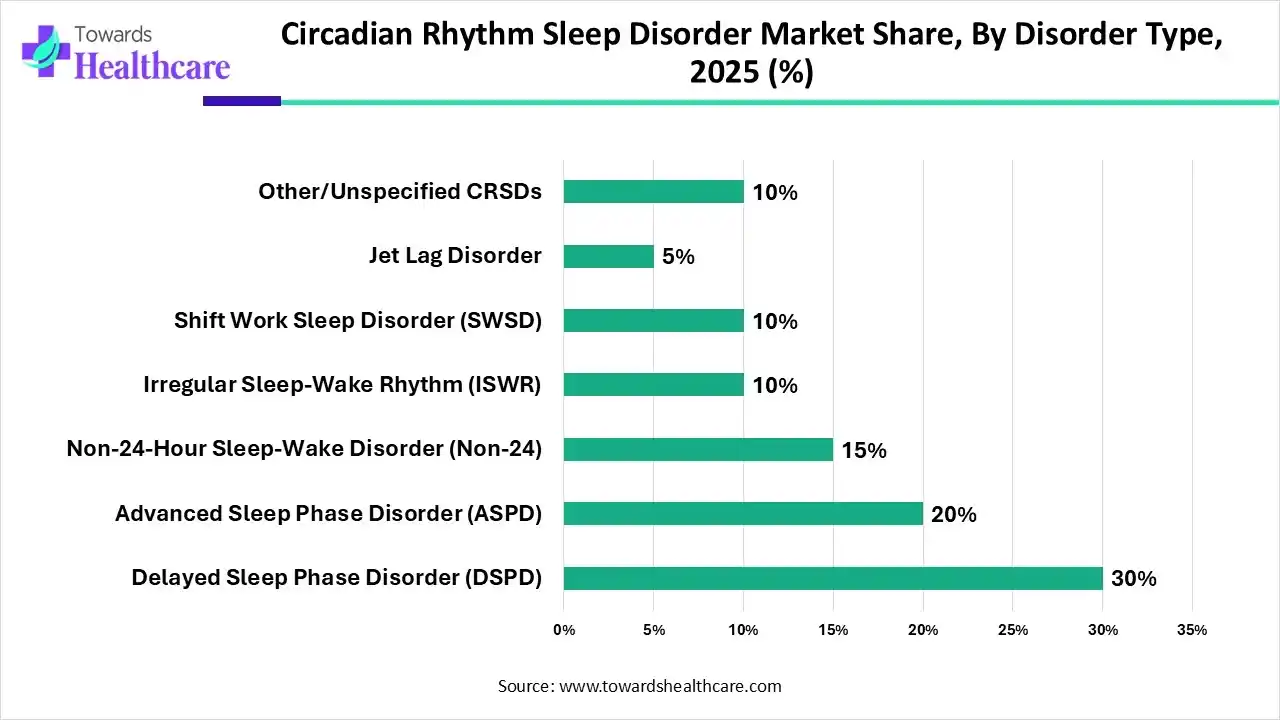
And the data reveals one clear leader: Delayed Sleep Phase Disorder (DSPD), holding a strong 30% share.
DSPD: The Silent Disruptor Taking the Lead
Download Free Sample: https://www.towardshealthcare.com/download-sample/6350
Delayed Sleep Phase Disorder is not just “sleeping late.”
It is a biological shift where a person’s sleep cycle moves hours ahead of the normal schedule.
Teenagers and young adults face this the most.
Studies show that around 1% to 16% of them experience DSPD.
This disorder impacts more than sleep.
It affects mental health, productivity, and daily performance in school or work.
People with DSPD struggle to fall asleep at conventional times.
Waking up early feels unnatural, leading to chronic sleep deprivation.
Why DSPD Dominates the Market
The dominance of DSPD comes from both prevalence and awareness.
More people are now identifying their sleep issues instead of ignoring them.
Treatments are also more accessible and effective:
- Melatonin therapy helps regulate sleep timing
- Bright light therapy resets the body clock
- Cognitive behavioral therapy ensures long-term improvement
This combination makes DSPD manageable, which drives demand in the market.
The Fastest Riser: Non-24-Hour Sleep-Wake Disorder
While DSPD leads, another segment is growing rapidly—Non-24-Hour Sleep-Wake Disorder.
This condition breaks the traditional 24-hour cycle completely.
The sleep pattern shifts daily, making routine almost impossible.
It affects nearly half of all blind individuals.
Without light perception, the body cannot align with day-night cycles.
However, it is not limited to them.
Even sighted individuals, especially children, can develop this disorder.
What Drives Its Growth?
Treatment advancements play a big role.
Medications like melatonin supplements and melatonin receptor agonists are improving outcomes.
The increasing focus on rare and underserved conditions is also pushing this segment forward.
Healthcare systems are expanding attention beyond common disorders.
Pharmacological Therapies: Still the Backbone of Treatment
In 2025, pharmacological therapies dominate with a 50% market share.
Despite new innovations, medicines remain the primary solution.
Doctors rely on medications for quick and effective symptom control.
These treatments address insomnia, irregular sleep cycles, and daytime sleepiness.
Common Drug Categories Used
- Benzodiazepines and non-benzodiazepine hypnotics for sleep induction
- Melatonin receptor agonists to regulate circadian rhythm
- Dopamine agonists for conditions like excessive daytime sleepiness
These treatments provide immediate relief, which explains their strong demand.
Digital Therapeutics: The New-Age Disruptor
While medicines lead today, digital therapeutics are shaping tomorrow.
Apps, online platforms, and even virtual reality tools are entering the sleep space.
They do more than track sleep—they guide behavior change.
People now want control over their health.
Digital tools offer personalized insights without frequent hospital visits.
Why This Segment Is Growing Fast
Digital solutions bring flexibility and accessibility:
- Real-time sleep tracking and analysis
- Personalized sleep improvement plans
- Remote consultation and therapy access
- Integration with daily lifestyle habits
This shift reflects a larger trend—healthcare moving from reactive to proactive.
Hospitals & Sleep Clinics: The Core of Diagnosis and Care
Hospitals and specialized sleep clinics dominate the end-user segment with a 35% share.
Sleep disorders require accurate diagnosis.
And that often means advanced tools like sleep studies and monitoring systems.
These clinics provide structured and personalized care.
They go beyond symptoms to identify root causes.
Patients benefit from:
- Comprehensive sleep analysis
- Expert diagnosis and treatment planning
- Long-term monitoring and adjustments
This depth of care ensures better outcomes compared to general treatments.
Corporate Wellness: Sleep Enters the Workplace
A new trend is emerging—companies are investing in employee sleep health.
Corporate wellness programs now include sleep assessments and support systems.
Businesses understand that tired employees are less productive.
Better sleep leads to better focus, mood, and performance.
This realization is driving growth in the occupational health segment.
Organizations are taking steps like:
- Including sleep checks in health programs
- Encouraging exercise and stress management
- Promoting healthier work-life balance
Sleep is no longer a personal issue—it’s a workplace priority.
Young Adults Lead: A Lifestyle-Driven Shift
Among all age groups, young adults (18–34) hold the largest share at 30%.
This group faces the highest disruption in sleep patterns.
Late-night screen use, irregular schedules, and digital habits play a major role.
Sleep is often sacrificed for productivity or entertainment.
But the long-term effects are becoming more visible.
Why Young Adults Dominate
Their lifestyle directly impacts their sleep cycle.
And awareness is growing faster in this group.
Common triggers include:
- Excessive mobile and screen time
- Irregular sleep schedules
- Work stress and social habits
As awareness rises, more young adults seek treatment—boosting market demand.
Adolescents: The Next Growth Engine
Adolescents are expected to show the fastest growth in the coming years.
This phase of life is already sensitive.
Sleep disruption adds another layer of complexity.
Mental health concerns often begin during adolescence.
And poor sleep can intensify these issues.
Early intervention is becoming critical.
Schools, families, and healthcare providers are working together.
Simple changes can make a big difference:
- Delaying school start times
- Limiting social media usage
- Encouraging physical activity
These steps not only improve sleep but also overall well-being.
A Market Driven by Behavior, Not Just Biology
The circadian rhythm sleep disorder market is not just about medical conditions.
It reflects how modern life is changing human behavior.
Technology, work culture, and lifestyle choices are reshaping sleep patterns.
People are staying awake longer and waking up earlier than their bodies prefer.
This mismatch creates a growing demand for solutions.
From medicines to apps, the ecosystem is expanding rapidly.
Final Thought: Sleep Is Becoming a Strategic Health Priority
Sleep is no longer ignored or underestimated.
It is now seen as a core pillar of health and productivity.
The dominance of DSPD highlights how common disrupted sleep cycles have become.
At the same time, the rise of digital therapeutics shows where the future is heading.
Healthcare is shifting toward personalization.
And sleep, once overlooked, is now at the center of that transformation.
The message is clear—
Fixing sleep is no longer optional. It’s essential.
Access our exclusive, data-rich dashboard dedicated to the healthcare market – built specifically for decision-makers, strategists, and industry leaders. The dashboard features comprehensive statistical data, segment-wise market breakdowns, regional performance shares, detailed company profiles, annual updates, and much more. From market sizing to competitive intelligence, this powerful tool is one-stop solution to your gateway.
Access the Dashboard: https://www.towardshealthcare.com/access-dashboard
Checkout the Market Report Now at: https://www.towardshealthcare.com/checkout/6350
You can place an order or ask any questions, please feel free to contact us at [email protected]
Europe Region – +44 778 256 0738
North America Region – +1 8044 4193 44
APAC Region: +91 9356 9282 04
Visit Our Website: https://www.towardshealthcare.com
Find us on social platforms: LinkedIn | Twitter | Instagram | Medium