Behind every breakthrough in healthcare, there’s something quietly working in the background—biological sample storage.
From blood and DNA to cell lines and tissues, these samples hold the key to diagnosis, drug discovery, and personalized treatments.
In 2026, this “invisible” industry is no longer small. Biological Sample Temperature-controlled Storage Services Market has already reached $695.39 million and is moving steadily toward $1.84 billion by 2035.
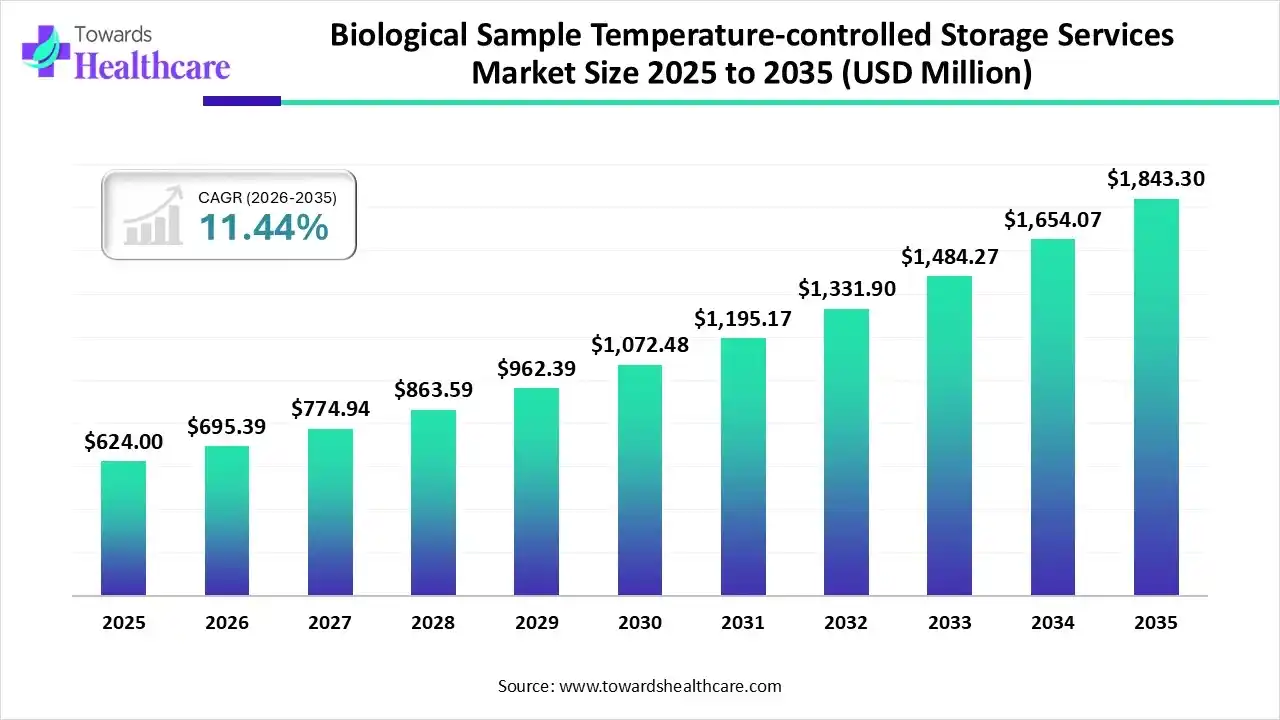
Download Free Sample: https://www.towardshealthcare.com/download-sample/6329
That growth is not accidental—it reflects a deeper shift in how healthcare operates today.
Why This Market Is Suddenly Gaining Attention
Healthcare is no longer just about treatment. It is about data, precision, and long-term research.
Biological samples act as the foundation for all three.
As diseases become more complex, researchers need better-quality samples stored in perfect conditions. Even a small temperature fluctuation can destroy years of work.
That is why temperature-controlled storage services are becoming essential—not optional.
From Freezers to Smart Systems: A Silent Transformation
Earlier, storage meant basic refrigeration. Today, it means advanced systems powered by automation and AI.
Modern storage solutions do more than preserve samples; they actively protect them.
Sensors track temperature in real time. Systems send alerts before any damage occurs. Data logs ensure full traceability.
This shift is turning storage into a high-tech ecosystem rather than just infrastructure.
What Is Driving This Rapid Growth?
Several forces are pushing this market forward at once.
- Rising chronic and rare diseases demand more research samples
- Growth in clinical trials increases storage needs globally
- Expansion of biobanks creates long-term storage demand
- Personalized medicine requires precise sample preservation
Each of these factors connects to one core need: reliable, stable storage.
Biobanks Are Expanding Faster Than Ever
Biobanks are no longer limited to large institutions. They are expanding across countries, research centers, and even private organizations.
These facilities store thousands—even millions—of samples for future use.
Governments and research bodies are also stepping in. New regulations, funding, and infrastructure upgrades are improving how samples are collected, stored, and used.
This expansion directly increases demand for advanced storage solutions.
AI Is Quietly Changing Everything
Artificial intelligence is not just helping doctors—it is transforming storage systems too.
AI now helps monitor temperature conditions, predict equipment failures, and optimize storage efficiency.
Instead of reacting to problems, systems can now prevent them.
This reduces sample loss, improves reliability, and builds trust in long-term storage systems.
The Rise of Ultra-Low and Cryogenic Storage
Not all samples are equal. Some require extremely low temperatures to remain stable.
That is where ultra-low and cryogenic storage come in.
These systems can go as low as -80°C to -190°C, ensuring long-term preservation of sensitive materials like cell therapies and genetic samples.
Although still a smaller segment, this category is critical for advanced therapies and future innovations.
Who Uses These Services the Most?
The demand is spread across multiple industries, but a few sectors stand out.
- Pharmaceutical companies leading drug discovery and biologics development
- Research laboratories handling large volumes of experimental samples
- Clinical trial organizations managing patient-derived data
- Biotech firms working on next-generation therapies
Each of these players depends on storage systems that never fail.
Clinical Trials Are Fueling the Next Growth Wave
Clinical trials are becoming more complex and more global.
Every trial generates large volumes of biological samples that must be stored safely for extended periods.
With the rise of personalized medicine, trials now rely on precise sample tracking and storage conditions.
This is why the clinical trials segment is expected to grow the fastest in the coming years.
Sustainability: The Industry’s Hidden Challenge
Temperature-controlled storage consumes a lot of energy.
Running ultra-low freezers and cryogenic systems is expensive—not just financially, but environmentally.
Companies are now focusing on:
- Energy-efficient cooling technologies
- Eco-friendly refrigerants
- Automated systems to reduce waste
- Digital tracking to minimize duplication
Sustainability is no longer a side goal—it is becoming a necessity.
Regional Power Shifts Are Reshaping the Market
North America currently dominates the market, holding around 40% share.
This leadership comes from strong research infrastructure, high R&D spending, and early adoption of advanced technologies.
However, Asia Pacific is catching up fast.
Countries like India, China, and Japan are investing heavily in healthcare infrastructure, clinical trials, and biobanking systems.
This makes Asia Pacific the fastest-growing region in the coming decade.
Startups Are Bringing Fresh Innovation
The startup ecosystem is adding a new layer of innovation to this market.
Instead of building traditional storage systems, startups are focusing on:
- Software-driven sample tracking
- Automation for error-free handling
- Alternative preservation methods (like room-temperature storage)
- Scalable and cost-effective solutions
These innovations could redefine how samples are stored in the future.
The Value Chain Is Becoming More Complex
Storage is no longer a single step—it is part of a larger ecosystem.
From collection to distribution, every stage requires precision and control.
Sample packaging, transportation, tracking, and regulatory compliance all play critical roles.
This complexity is pushing companies to offer end-to-end solutions rather than standalone services.
What Lies Ahead for This Market?
The future of biological sample storage is closely tied to the future of healthcare itself.
As medicine becomes more personalized, data-driven, and research-focused, the need for high-quality samples will only increase.
Storage systems will continue to evolve—becoming smarter, more efficient, and more sustainable.
At the same time, competition will push companies to innovate faster and reduce costs.
Most people never think about where medical samples go after collection.
But without proper storage, modern healthcare would collapse.
From life-saving drugs to breakthrough therapies, everything depends on preserving biological material correctly.
This market may operate behind the scenes, but its impact is massive—and growing every year.
Access our exclusive, data-rich dashboard dedicated to the healthcare market – built specifically for decision-makers, strategists, and industry leaders. The dashboard features comprehensive statistical data, segment-wise market breakdowns, regional performance shares, detailed company profiles, annual updates, and much more. From market sizing to competitive intelligence, this powerful tool is one-stop solution to your gateway.
Access the Dashboard: https://www.towardshealthcare.com/access-dashboard
Checkout the Market Report Now at: https://www.towardshealthcare.com/checkout/6329
You can place an order or ask any questions, please feel free to contact us at [email protected]
Europe Region – +44 778 256 0738
North America Region – +1 8044 4193 44
APAC Region: +91 9356 9282 04
Visit Our Website: https://www.towardshealthcare.com
Find us on social platforms: LinkedIn | Twitter | Instagram | Medium