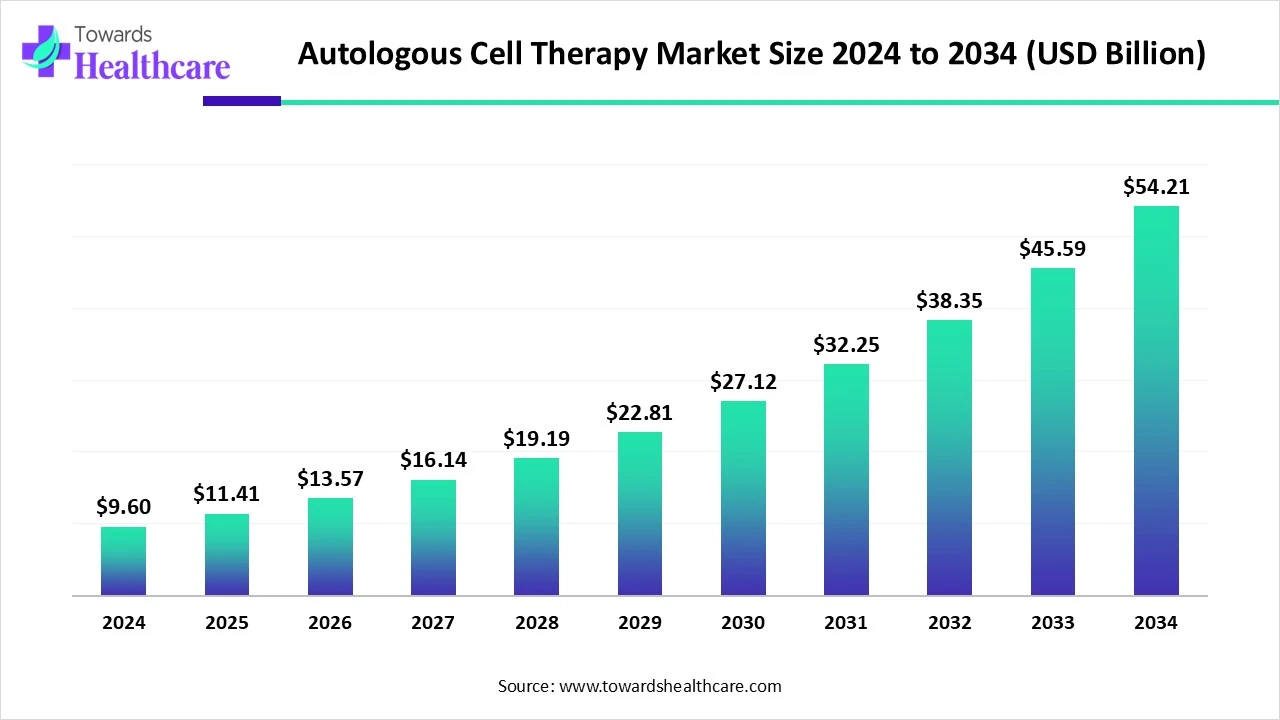
The global autologous cell therapy market—valued at US$ 9.6 billion in 2024 and US$ 11.41 billion in 2025—is projected to expand to approximately US$ 54.21 billion by 2034 (a CAGR of 18.9% from 2025–2034), driven by advances in personalized/regenerative medicine, regulatory support and manufacturing automation while constrained by high per-patient costs.
Download the free sample and get the complete insights and forecasts report on this market @ https://www.towardshealthcare.com/download-sample/6022
Market size
Historical and forecast headline numbers
●2024 market size: US$ 9.6 billion
●2025 market size: US$ 11.41 billion
●2034 projected market size: US$ 54.21 billion
●Forecast period used here: 2025 → 2034 (9 years); reported CAGR: 18.9%.
●Absolute and relative growth (2025→2034)
●Absolute increase: US$ 42.80 billion (54.21 − 11.41).
●Growth multiple: market is expected to become 4.75× larger in revenue by 2034 vs 2025 (54.21 / 11.41 ≈ 4.75).
●The implied effective annual growth rate matches the reported 18.9% CAGR (i.e., 18.90% annualized).
●2024 revenue composition anchors (high-level shares)
●North America dominated in 2024 with 41% share of the global market.
●CAR-T (autologous) accounted for the largest therapy-type share: 32% in 2024.
●By technology, genetic modification techniques held 30% share in 2024.
●Hospitals were the largest end-user channel with 45% share in 2024.
Unit / price context
●Typical treatment price range cited: US$ 300,000 – US$ 500,000 per patient (illustrative of today’s cost challenge).
●Reported automation examples (CiRA) suggest potential to reduce manufacturing cost orders of magnitude in select programs (example given: a reduction from ¥50 million → ¥1 million per patient in an iPSC program using automation — strong proof-of-concept, though not yet universal).
Market structure & concentration
●The market comprises a mix of large pharmas/biotechs with commercial capabilities and numerous specialized biotech companies focused on specific cell modalities (CAR-T, gene-edited stem cells, MSCs, TILs, etc.).
●High regulatory hurdles, specialized manufacturing and hospital delivery logistics concentrate early commercial volumes in well-resourced firms and centers of excellence.
Investment dynamics embedded in size
●The rapid projected growth (4.75×) implies heavy new capacity build, clinical pipelines maturing to commercialization, and payer negotiation activity to accommodate high-cost curative/one-time therapies.
Market Trends
Regulatory approvals enabling new indications (2024–2025)
●April 2025: Abeona’s Zevaskyn (prademagene zamikeracel) — first autologous, cell-based gene therapy for wounds in RDEB — U.S. FDA approval (demonstrates gene-corrected autologous skin cell commercialization).
●31 Jan 2025: NHS approval of exagamglogene autotemcel under a managed access scheme — first CRISPR-based gene-edited stem cell therapy for sickle cell disease (signals regulatory willingness for gene-edited autologous products under managed programs).
EU market expansion via marketing authorizations
●July 2025: Autolus Therapeutics received European Commission marketing authorization for Aucatzyl, an autologous CAR-T therapy for certain B-cell precursor ALL — indicates EU commercialization and geographic expansion of autologous CAR-T access.
Manufacturing automation & platform launches
●7 May 2024: Cellipont Bioservices & Adva Biotechnology launched the ADVA X3 automated AI-driven platform to accelerate CAR-T manufacturing in North America (an example of platform automation moving from R&D to production).
●Kyoto University / CiRA (Jan 2025): automated production of autologous iPS cells in Osaka — claims cost reductions from ¥50M to ¥1M per patient and capacity for ~1,000 patients/year (illustrates scale-up potential for iPSC workflows).
Strategic manufacturing partnerships & capacity expansion
●June 25, 2025: AGC Biologics announced a new facility in Yokohama, Japan to expand cell-therapy process development and clinical manufacturing for autologous and allogeneic programs — reflects regional capacity build for APAC demand.
●June 2025: MaxCyte & Ori Biotech collaboration to integrate closed-loop systems for improved autologous therapy manufacturing efficiency.
AI, digital twins and process intelligence adoption
●AI and predictive analytics are being applied across process control, digital twins, QC monitoring and scale-out strategies to improve consistency and shorten turnaround times — these technologies are already being integrated into production platforms (examples noted above).
Therapy diversification beyond oncology
●The report highlights widening clinical activity and approvals in wound healing, rare genetic disorders, neurodegenerative disease (early trials), ophthalmology and orthopedics — pointing to slower but meaningful adoption outside blood cancers.
Shift to decentralized and point-of-care manufacturing
●Closed-system, point-of-care manufacturing and specialty clinic delivery are flagged as growth vectors — enabling more patient-centric models and relieving hospital capacity constraints over time.
Payer evolution and managed access models
●Examples of managed access (NHS CRISPR approval) and increasing payer interest in long-term cost offsets are beginning to shape formulary pathways for one-time/high-cost therapies.
Clinical evidence continues to drive value capture
●CAR-T’s early clinical successes in hematologic malignancies are the historical catalyst; now, gene-edited stem cells, iPSC-based approaches and improved cell expansion systems are fueling future TAM growth.
Persistent cost & logistics constraint
●Despite all the above, high per-patient cost, complex logistics and manufacturing variability remain key restraints needing systemic solutions (automation, AI, closed systems, partnerships).
Roles / impacts of AI on the autologous cell therapy market
Closed-loop process control & predictive culture optimization
●Mechanism: AI models ingest sensor, imaging and molecular QC data from bioreactors to predict cell growth trajectories and automatically adjust feed/conditions.
●Benefit: Higher batch consistency, reduced failure rates and shorter culture cycles → higher yield per run.
●Implication: Enables smaller footprint facilities to produce more doses reliably; directly lowers per-dose cost when paired with automation (as in ADVA X3 style platforms).
Digital twins for manufacturing scale-out
●Mechanism: Create a virtual replica (digital twin) of a patient-specific manufacturing run to test parameter changes without risking the real batch.
●Benefit: Safe experimentation to shorten process development, faster tech-transfer, mitigated batch risk.
●Implication: Vital for unique autologous batches where every run is single-patient.
Predictive quality control (QC) and release decisioning
●Mechanism: ML models predict potency and safety from upstream signatures (metabolites, cell markers) allowing early go/no-go decisions.
●Benefit: Reduces late-stage batch failures and QC cycle times—critical for time-sensitive autologous therapies.
●Implication: Faster patient treatment timelines and lower waste.
Automated image analysis for cell identity & morphology
●Mechanism: Computer vision classifies cell morphology, confluency, contamination and differentiation states during culture.
●Benefit: Objective, continuous monitoring vs episodic manual inspection; decreased human variability.
●Implication: Supports scaling to 1,000 patient/year claims (CiRA example) by reducing manual QC burden.
AI-driven scheduling & logistics orchestration
●Mechanism: Algorithms coordinate leukapheresis/collection, transport, manufacturing slots and return infusion to optimize turnaround.
●Benefit: Minimized patient wait time and optimized use of constrained manufacturing slots.
●Implication: Increases throughput of existing facilities without physical expansion.
Supply chain risk analytics for critical reagents
●Mechanism: Predictive models flag reagent shortage risks, optimize inventory; suggest alternate vendors.
●Benefit: Reduces batch delays due to raw material shortages.
●Implication: Greater resilience for hospital/regional manufacturing networks.
Adaptive dosing and patient stratification
●Mechanism: Integrate patient-specific clinical/genomic data with historical outcome models to recommend cell dose and preconditioning regimens.
●Benefit: Potential to improve efficacy/safety and reduce need for retreatment.
●Implication: Better health economics and more favorable payer discussions.
Accelerated process development and transfer (AI-guided DoE)
●Mechanism: ML automates design-of-experiments and finds optimal parameter combinations faster than trial-and-error.
●Benefit: Shorter time from bench to clinic, reducing cost of development.
●Implication: Enables smaller companies to industrialize processes more rapidly.
Regulatory intelligence and documentation automation
●Mechanism: NLP tools extract required evidence and auto-generate standardized sections for IND/BLA/market authorization dossiers.
●Benefit: Reduces regulatory submission time and errors, speeds approvals under adaptive pathways.
●Implication: Easier managed access filings (like NHS examples), faster time-to-market.
Post-market real-world evidence (RWE) and safety surveillance
●Mechanism: AI analyses of EHRs, registries and real-world datasets to detect long-term efficacy signals and rare adverse events.
●Benefit: Supports payer value models and post-approval commitments while informing future label expansions.
●Implication: Strengthens payer confidence in high-cost one-time therapies and shapes outcome-based contracts.
Regional insights
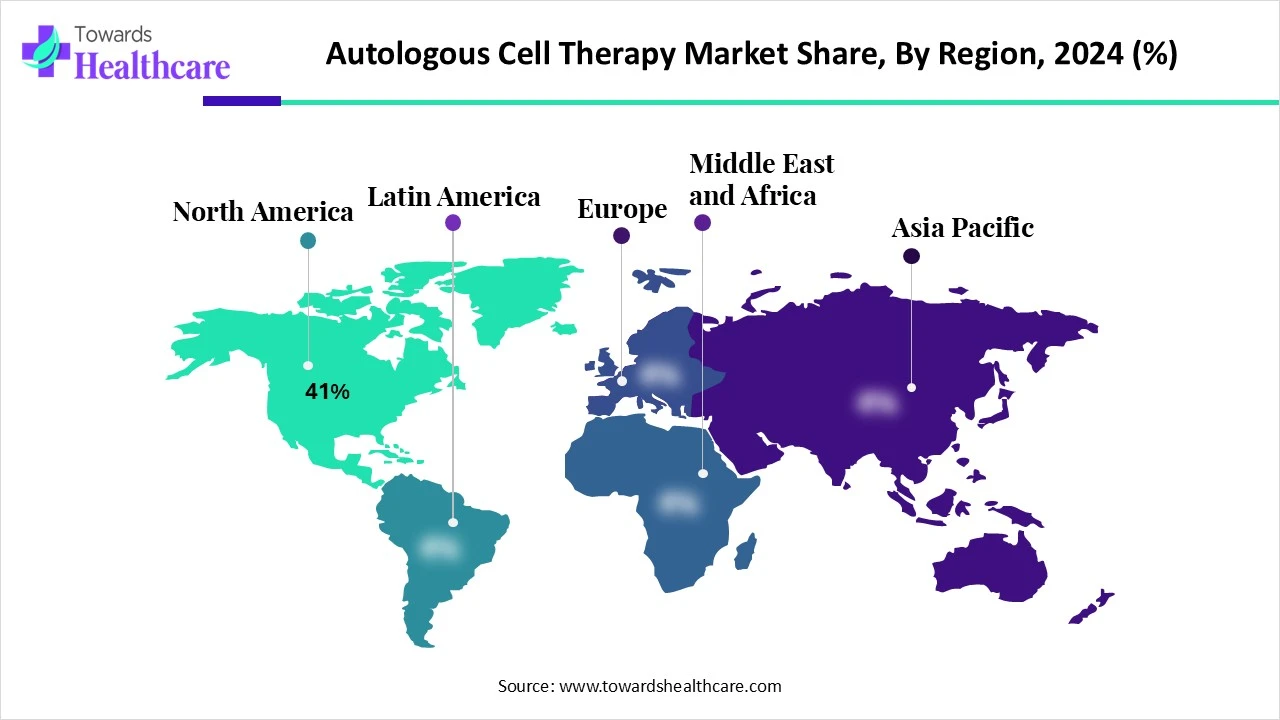
A. North America (lead, 41% share in 2024)
Ecosystem strengths
●World-class clinical trial networks, numerous centers of excellence, and leading biotech/pharma players — these translate into fast clinical translation and early commercial uptake.
Regulatory & payer enablers
●Incentives like RMAT (U.S.) and precedent for high-value reimbursements accelerate adoption of life-saving products.
Delivery model dominance
●Hospitals remain primary administration centers due to the ability to manage acute toxicities (e.g., cytokine release syndrome) — explains the 45% hospital end-user share.
Consequence
●Large share, high per-patient spending, and concentrated manufacturing capacity — North America will continue to lead short-term commercialization and capture disproportionate revenues.
B. Europe
Regulatory fragmentation vs centralized pathways
●Centralized EC marketing authorization enables EU-wide access (example: Autolus Aucatzyl). However, national HTA/payer decisions can slow adoption in specific countries.
Managed access & conditional reimbursement
●NHS examples (managed access for CRISPR therapy) show willingness for innovative access mechanisms to balance uncertainty and patient need.
C. Asia-Pacific (fastest growth projection)
Drivers
●Rapid government investment, expanding clinical trial activity, rising healthcare infrastructure and local manufacturing builds (e.g., AGC Biologics in Yokohama).
Country notes
●China: Growing biotech investment, regulatory streamlining and hospital adoption are accelerating local commercialization pathways.
●Japan: Academic centers (CiRA) and tech adoption support advanced programmes (automated iPSC production example).
●India: Emerging talent, regulatory reforms and private investment are building domestic capabilities and potentially lower-cost delivery models.
Consequence
●APAC is a strategic growth corridor for manufacturers building regional CDMOs and commercial partners.
D. Latin America, Middle East & Africa
Current state
●Lower penetration due to constrained infrastructure, limited payer capacity and fewer specialized centers.
Opportunity
●As manufacturing decentralizes (closed systems) and cost per dose falls, targeted partnerships and technology transfer can open these markets for select indications.
Market dynamics
Drivers
●Personalized medicine momentum — autologous therapies match patient biology, lowering immunogenicity and improving durable response rates, especially in oncology.
●Regulatory pathways & designations — accelerated approvals, managed access schemes and RMAT-like frameworks support commercialization.
●Investment & partnerships — venture, strategic and CDMO partnerships scale manufacturing and distribution.
●Technology advances — gene editing, automated bioreactors and AI process control lower variability and cost over time.
Restraints
●High manufacturing & treatment cost — current per-patient costs (US$300k–500k) limit access and strain payers.
●Complex logistics & single-patient runs — bespoke manufacturing precludes classic economies of scale.
●Regulatory/quality complexity — lot-to-lot variability and stringent QC create barriers to commoditization.
Opportunities
●New therapeutic areas — wound healing, neurology, ophthalmology, orthopedics and rare diseases extend TAM beyond oncology.
●Decentralized manufacturing / point-of-care — closed, portable systems and specialty clinics can bring treatment closer to patients and lower hospital bottlenecks.
●AI + automation to reduce costs — CiRA and ADVA X3 show the pathway to large cost reductions and greater throughput.
Value-chain implications (R&D → Patient) — deep
●R&D / Discovery: gene editing and cell engineering drive candidate differentiation (CRISPR, non-viral delivery, antigen design).
●Process development: focus on scale-up/scale-out using microcarriers, automated bioreactors and AI-guided process optimization.
●Clinical manufacturing: the rise of specialized CDMOs and hospital/clinic GMP suites for point-of-care manufacture.
●Distribution & logistics: robust cryo/temperature logistics, same-day/next-day shipment models, and scheduling systems for single-patient runs.
●Delivery & patient management: hospital readiness for infusion, toxicity management, and long-term follow-up infrastructure (RWE registries) for safety and payer outcomes.
Top 10 companies
Novartis AG
●Product focus: Advanced autologous cell therapies (CAR-T and gene-modified cell programs).
●Overview: Large global pharma with commercialization, regulatory and global supply chain experience.
●Strengths: Global commercial footprint, robust manufacturing networks, strong payer negotiation experience—critical for scaling autologous launches.
Gilead Sciences, Inc. (Kite Pharma)
●Product focus: Autologous CAR-T / engineered T-cell therapies.
●Overview: Kite operates as a major cell-therapy developer with focus on hematologic oncology.
●Strengths: Deep clinical development expertise in CAR-T, manufacturing know-how, strategic partnerships.
Bristol Myers Squibb
●Product focus: Autologous and gene-modified cell therapy portfolios (immuno-oncology focus).
●Overview: Big pharma investor in cell therapy R&D and commercialization.
●Strengths: Large commercial organization, capacity to integrate complex therapies into clinical practice and payer models.
Bluebird Bio, Inc.
●Product focus: Gene-therapy and gene-modified cell programs (autologous vectors in rare diseases/oncology).
●Overview: Specialist in gene-modified cell approaches.
●Strengths: Deep expertise in vector design and gene correction, with a focus on rare genetic disorders.
Vericel Corporation
●Product focus: Autologous cell therapies for regenerative/repair indications (e.g., skin, cartilage).
●Overview: Focused regenerative medicine company delivering autologous solutions.
●Strengths: Commercial experience in tissue/regenerative products and site-of-care deployment.
Autolus Therapeutics plc
●Product focus: Autologous CAR-T cell therapies (notably EU marketing authorization for Aucatzyl per supplied data).
●Overview: Commercializing autologous CAR-T in major markets.
●Strengths: Clinical experience in CAR-T design and now EU regulatory approval — a proof point for commercialization.
Iovance Biotherapeutics, Inc.
●Product focus: Autologous TIL (tumor-infiltrating lymphocyte) therapies and other personalized T-cell products.
●Overview: Specialist in TIL approaches targeting solid tumors.
●Strengths: Scientific focus on solid tumor T-cell approaches, clinical pipeline experience in TIL manufacturing.
Orchard Therapeutics plc
●Product focus: Ex vivo gene-corrected autologous stem cell therapies for rare genetic disorders.
●Overview: Developer of autologous, gene-modified stem cell therapies.
●Strengths: Experience with ex vivo gene correction workflows and managed access/regulatory negotiations.
Poseida Therapeutics, Inc.
●Product focus: Gene-engineered autologous cell therapies (non-viral methods / CAR-T etc.).
●Overview: Developing autologous advanced cell constructs with proprietary engineering approaches.
●Strengths: Novel engineering platforms aimed at increasing potency and manufacturability.
Adaptimmune Therapeutics plc
●Product focus: T-cell receptor (TCR) engineered autologous therapies.
●Overview: Focus on TCR-based autologous immunotherapies (targets a different antigen class than CAR-T).
●Strengths: TCR expertise for intracellular antigen targeting and potential in solid tumors.
Latest announcements
Abeona Therapeutics — FDA approval of Zevaskyn (Apr 2025)
●What happened: FDA approval for Zevaskyn, the first autologous cell-based gene therapy for wounds in RDEB (uses patient’s skin cells with corrected COL7A1).
●Implications: Demonstrates regulatory acceptance for gene-corrected autologous dermatologic products; opens a commercial precedent for autologous regenerative skin therapies and creates a template for payer discussions regarding durable benefit.
Autolus Therapeutics — EC marketing authorization for Aucatzyl (July 2025)
●What happened: EU marketing authorization for an autologous CAR-T for relapsed/refractory B-cell precursor ALL (adult).
●Implications: Solidifies EU pathway for autologous CAR-T reimbursement & distribution; encourages other CAR-T developers to pursue centralized EU approvals and cross-border commercialization.
CiRA Foundation / Kyoto University — automated autologous iPS production (Jan 2025)
●What happened: Start of automated iPSC production in Osaka, claimed cost reduction from ¥50M → ¥1M per patient and capacity for 1,000 patients/year.
●Implications: Proof that automation + process control can massively lower costs and scale iPSC-based autologous programs—if generalizable, this is transformational for broader autologous cell therapy affordability.
ADVA X3 platform launch (Cellipont & Adva Biotechnology, May 7, 2024)
●What happened: Launch of an AI-driven automated CAR-T manufacturing platform in North America.
●Implications: Example of industry moving from manual, bespoke processes to automated production, which should reduce turnaround time and variability.
NHS approval — exagamglogene autotemcel (31 Jan 2025)
●What happened: Managed-access scheme approval for CRISPR-based gene-edited stem cell therapy for sickle cell disease.
●Implications: Shows public payers will adopt managed access to provide early availability while collecting RWE; favorable for other gene-edited autologous products seeking reimbursement.
AGC Biologics — new Yokohama facility (25 Jun 2025)
●What happened: Facility expansion for process development and clinical manufacturing in Japan.
●Implications: Regional manufacturing capacity build to enable Asia Pacific commercial scale-up.
MaxCyte & Ori Biotech collaboration (Jun 2025)
●What happened: Collaboration to improve manufacturing efficiency and scale via integrated closed-loop systems.
●Implications: Examples of CDMO/platform consolidation to tackle autologous manufacturing bottlenecks.
Regeneration Biomedical — Phase 1 update (May 2025)
●What happened: Presented updated Phase 1 data of an autologous, adipose-derived stem cell therapy in Alzheimer’s showing safety and cognitive improvements.
●Implications: Suggests potential non-oncology expansion of autologous approaches into neurodegeneration; early signal may stimulate further investment in this space.
AstraZeneca — planned acquisition of EsoBiotec (Mar 2025)
●What happened: Announcement of up to US$ 1 billion deal to strengthen in vitro cell therapy capabilities.
●Implications: Indicates big pharma strategic moves to secure cell-therapy process/assay capabilities (in vitro development + manufacturing support).
Industry executive commentary (Hope Biosciences; Autolus CEO comments)
●What happened: Public statements highlighting MSC safety track record and the clinical potency/complexity of CAR-T therapies.
●Implications: Reinforces investor/clinician confidence in certain modalities and acknowledges the need to overcome logistical challenges.
Recent developments
●Proof-points for automation & scaling — CiRA and ADVA X3 examples demonstrate production automation moving from concept to real-world capacity (CiRA’s 1,000 patients/year claim) and AI-driven manufacturing platforms for CAR-T. These are the most concrete levers to materially reduce cost and improve throughput.
●Regulatory milestones unlocking new indications — approvals and managed-access use (Abeona, Autolus, NHS CRISPR) widen the permitted clinical/marketing space for autologous therapies beyond hematologic cancers into wounds and genetic disease.
●Strategic industry consolidation & capacity build — pharma acquisitions (AstraZeneca → EsoBiotec), CDMO expansions (AGC Biologics), and platform partnerships (MaxCyte/Ori) are actively addressing manufacturing and scale barriers.
●Clinical expansion into non-oncology — Phase 1 Alzheimer’s adipose-derived stem cell updates indicate movement toward clinical proof in neurodegenerative disorders — if validated, this extends the market TAM significantly.
●Integrated manufacturing collaborations — collaborations integrating closed-loop systems point to the industry moving toward standardized, interoperable manufacturing ecosystems (reducing bespoke setups).
Segments covered
By Therapy Type (segments + subpoints)
Stem Cell Therapy
●Hematopoietic Stem Cell Therapy (HSCT): historically widespread; autologous HSCT used for hematologic conditions.
●Mesenchymal Stem Cells (MSCs): broad investigational space (safety track record emphasized).
●Neural stem cells / adipose-derived: development for neurology and regenerative indications.
Non-Stem Cell Therapy
●Non-genetically modified T-cells & macrophage therapies: simpler manufacturing, lower regulatory complexity for some indications.
●Fibroblast & other somatic cell therapies: used in dermal/regenerative applications.
Gene-Modified Autologous Cell Therapy
●CAR-T Cell Therapy: largest segment circa 2024 (32% share) — high clinical impact in hematology.
●TCR-T Cell Therapy: targets intracellular antigens; potential for solid tumors.
●Gene-edited stem cells: fastest growing (driven by CRISPR and other editors).
By End-User
●Hospitals — dominant channel (45% share); necessary for complex infusions and toxicity management.
●Specialty Clinics — fastest growing as closed systems and point-of-care manufacturing enable decentralization.
●Academic & Research Institutes — centers for trials and early adoption.
By Technology
●Cell Harvesting & Processing — leukapheresis, tissue harvest; logistics complexity.
●Genetic Modification Techniques — viral vectors, non-viral delivery, gene-editing tools (30% share in 2024).
●Cell Expansion & Culture Systems — fastest growing tech area: bioreactors, microcarrier systems, automation.
●Cryopreservation & Storage — critical for logistics; cryo quality affects product potency.
●Quality Control & Testing — molecular, potency, sterility, release assays — bottleneck for throughput.
By Region (already covered in Regional Insights)
●North America, Europe, Asia Pacific, Latin America, Middle East & Africa — each with the structural drivers and constraints noted earlier.
Top-5 FAQs
Q1 — What is the current market size and growth outlook?
A: The market was US$ 9.6B in 2024, US$ 11.41B in 2025, and is projected to reach US$ 54.21B by 2034, growing at a CAGR of 18.9% from 2025–2034 (a 4.75× revenue increase over that period).
Q2 — Which region leads the market and what is its share?
A: North America dominated in 2024 with a 41% share, driven by strong clinical research, regulatory support, established manufacturing and payer pathways.
Q3 — Which therapy and technology types dominated in 2024?
A: By therapy type, CAR-T cell therapy held the largest share (32%) in 2024. By technology, genetic modification techniques formed the largest technology slice at 30% in 2024.
Q4 — What are the biggest barriers to growth?
A: High per-patient costs (typically US$ 300k–500k), complex bespoke manufacturing, logistical challenges and stringent QC/regulatory requirements remain the primary restraints.
Q5 — How will AI and automation change the economics?
A: AI-driven automation and closed-loop manufacturing (examples: ADVA X3, CiRA automated iPSC production) are expected to improve reproducibility, reduce failure rates and materially lower costs (CiRA reported a reduction ¥50M → ¥1M per patient for an automated iPSC program), unlocking scale and widening access.
Access our exclusive, data-rich dashboard dedicated to the therapeutic area sector – built specifically for decision-makers, strategists, and industry leaders. The dashboard features comprehensive statistical data, segment-wise market breakdowns, regional performance shares, detailed company profiles, annual updates, and much more. From market sizing to competitive intelligence, this powerful tool is one-stop solution to your gateway.
Access the Dashboard: https://www.towardshealthcare.com/access-dashboard
Immediate Delivery Available | Buy This Premium Research @ https://www.towardshealthcare.com/price/6022
Become a valued research partner with us – https://www.towardshealthcare.com/schedule-meeting
You can place an order or ask any questions, please feel free to contact us at [email protected]
Powering Healthcare Leaders with Real-Time Insights: https://www.towardshealthcare.com/healthcare-intelligence-platform
Europe Region – +44 778 256 0738
North America Region – +1 8044 4193 44
APAC Region: +91 9356 9282 04
Web: https://www.towardshealthcare.com
Find us on social platforms: LinkedIn | Twitter | Instagram | Medium | Pinterest