The baby hamster kidney fibroblast cells market may sound highly technical, but it plays a critical role in modern medicine.
These cells are widely used in vaccine production, virology research, and biotechnology innovation.
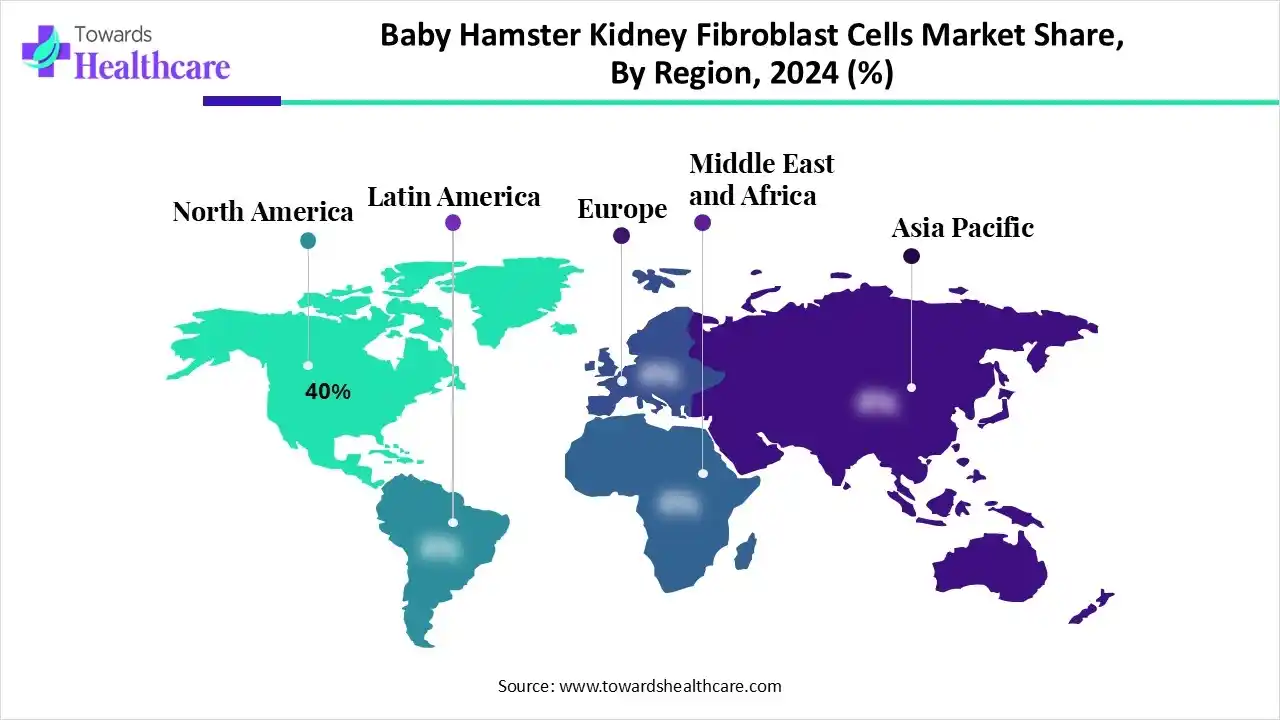
In 2024, one region clearly stood ahead. North America captured around 40% of the total market share, setting the pace for global growth.
 Download Free Sample: https://www.towardshealthcare.com/download-sample/6343
But this leadership is not accidental—it is the result of deep-rooted structural advantages.
Why North America Dominates the Market
North America’s dominance comes from a combination of strong infrastructure, consistent funding, and advanced research ecosystems.
The region has built a solid foundation that supports both innovation and commercialization.
Pharmaceutical giants, biotech startups, and academic institutions work closely together.
This creates a continuous pipeline of research, development, and production.
Key factors behind North America’s leadership include:
- High investment in research and development
- Strong presence of global biopharmaceutical companies
- Advanced healthcare and laboratory infrastructure
- Supportive regulatory environment
These elements collectively create an ecosystem where technologies like BHK cells can thrive and scale efficiently.
The U.S.: A Major Demand Engine
Within North America, the United States plays a pivotal role in driving demand.
One of the biggest contributors is vaccine production, especially for diseases like rabies.
Every year, thousands of individuals in the U.S. receive preventive rabies vaccinations after potential exposure.
Even though deaths are rare, the risk management approach remains aggressive and proactive.
This demand directly increases the use of BHK cells in vaccine manufacturing.
Additionally, government-led initiatives to control animal-borne diseases further strengthen this demand.
Programs focused on wildlife vaccination and disease prevention reflect a broader commitment to public health safety.
Such efforts keep the demand for cell-based vaccine production stable and growing.
Asia Pacific: The Fastest Rising Contender
While North America leads today, Asia Pacific is rapidly emerging as the fastest-growing region.
Countries like China and India are becoming major hubs for biotechnology and pharmaceutical manufacturing.
The region is witnessing a surge in research investments and infrastructure development.
Governments and private players are actively funding biotech innovation.
Several factors are accelerating growth in Asia Pacific:
- Expanding biopharmaceutical production capabilities
- Increasing focus on genetic and cell-based research
- Cost advantages in manufacturing and labor
- Growing healthcare demands from large populations
This combination is turning Asia Pacific into a strong competitor in the global market.
China’s Challenge: Turning a Crisis into Opportunity
China faces a significant public health challenge with rabies.
The disease remains one of the most reported infectious conditions in the country.
Dogs are the primary carriers, and rising pet ownership has complicated control efforts.
Urban centers are especially struggling to manage this issue effectively.
However, this challenge is also driving innovation.
The need for large-scale vaccine production is pushing the adoption of technologies like BHK cells.
In response, China is investing heavily in:
- Vaccine development programs
- Public health awareness campaigns
- Biotechnology research infrastructure
This approach is not only addressing the crisis but also strengthening the country’s position in the global biotech landscape.
Europe’s Steady and Structured Growth
Europe may not lead in market share, but it shows consistent and stable growth.
The region focuses heavily on quality, safety, and regulatory compliance.
Countries like Germany and the United Kingdom have strong industrial and research capabilities.
Their structured approach ensures reliability and long-term sustainability.
Strict regulations in Europe often set global benchmarks.
This pushes companies to maintain high standards in production and research.
Another key advantage is collaboration.
Cross-border partnerships within Europe enable knowledge sharing and innovation.
Germany: A Strategic Innovation Hub
Germany stands out as a key contributor to Europe’s growth.
The government has committed significant funding to boost biotechnology and related industries.
A dedicated “Future Fund” supports startups and research initiatives.
This funding is designed to attract both public and private investment.
Innovation clusters in cities like Berlin, Munich, and Heidelberg play a crucial role.
They bring together academia, research institutions, and industry players.
This collaborative ecosystem ensures that ideas move quickly from research labs to real-world applications.
It also strengthens Germany’s position as a biotech leader in Europe.
The Bigger Picture: What This Means for the Market
The global baby hamster kidney fibroblast cells market is not just about regional competition.
It reflects broader trends in healthcare, biotechnology, and disease management.
Key market drivers shaping the future include:
- Rising demand for vaccines and biologics
- Increasing focus on infectious disease control
- Growth in biotechnology research and funding
- Expansion of pharmaceutical manufacturing capabilities
Each region contributes differently to these trends.
North America leads with innovation, Asia Pacific drives growth, and Europe ensures quality and stability.
A Market Defined by Purpose, Not Just Profit
What makes this market unique is its direct connection to public health.
From rabies control to advanced vaccine development, the impact is tangible and global.
Regions are not just competing—they are addressing real-world challenges.
Each investment, policy, and innovation contributes to safer and healthier populations.
As the demand for biologics continues to rise, the importance of BHK cells will only grow.
And while North America currently leads with 40%, the global landscape is evolving rapidly.
Access our exclusive, data-rich dashboard dedicated to the healthcare market – built specifically for decision-makers, strategists, and industry leaders. The dashboard features comprehensive statistical data, segment-wise market breakdowns, regional performance shares, detailed company profiles, annual updates, and much more. From market sizing to competitive intelligence, this powerful tool is one-stop solution to your gateway.
Access the Dashboard: https://www.towardshealthcare.com/access-dashboard
Checkout the Market Report Now at: https://www.towardshealthcare.com/checkout/6343
You can place an order or ask any questions, please feel free to contact us at [email protected]
Europe Region – +44 778 256 0738
North America Region – +1 8044 4193 44
APAC Region: +91 9356 9282 04
Visit Our Website: https://www.towardshealthcare.com
Find us on social platforms: LinkedIn | Twitter | Instagram | Medium