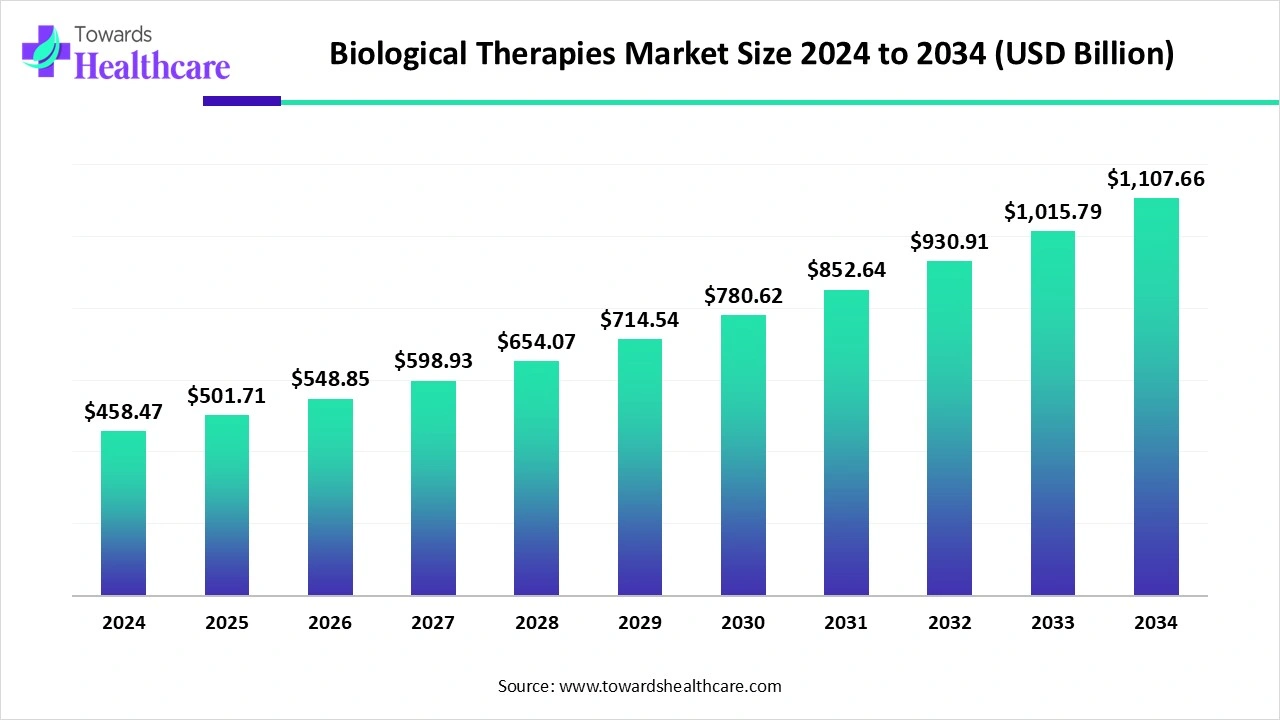
The global biological therapies market stood at USD 458.47 billion in 2024, grew to USD 501.71 billion in 2025, and is forecasted to surpass USD 1,107.66 billion by 2034, advancing at a robust CAGR of 9.35%. This growth is fueled by rising chronic disease cases, AI-powered R&D, and the adoption of monoclonal antibodies, vaccines, and advanced biologics.
Download this Free Sample Now and Get the Complete Report and Insights of this Market Easily @ https://www.towardshealthcare.com/download-sample/6191
Market Size Insights
2024 Market Size – USD 458.47 billion.
2025 Market Size – USD 501.71 billion, highlighting strong year-on-year growth.
2034 Forecast Size – USD 1,107.66 billion, more than doubling within a decade.
CAGR (2025–2034) – 9.35%, reflecting sustainable long-term expansion.
Regional Leadership – North America dominated in 2024 due to advanced healthcare, high biologics adoption, and strong pharma R&D.
Fastest Growing Region – Asia Pacific driven by investments in China, India, and Japan, and growing chronic disease burden.
Dominant Product (2024) – Monoclonal antibodies (mAbs) owing to their widespread application in oncology, immunology, and infectious diseases.
Fastest Growing Product – Vaccines, fueled by advanced biotech platforms and global immunization drives.
Route of Administration – Intravenous biologics dominated in 2024 and will grow fastest due to efficacy in complex therapies.
End-Users – Hospitals dominated the market in 2024, while specialty centers are forecast to grow fastest.
Market Trends
Personalized Medicine Expansion – Biologics drive tailored treatments using genetic/molecular data.
Rising Gene & Cell Therapy Investments – Bharat Biotech invested $75M in India (2025); Stylus Medicine raised $85M (2025) for in vivo gene editing drugs.
AI-Driven Drug Discovery – AI accelerates biologics development by predicting efficacy/safety earlier.
Biosimilar Competition – Out of 226 biologics in the U.S., 62 lost patents, but only 12 biosimilars launched (2023).
Growing Biotech Startups – Windward Bio raised $200M Series A (2025) for autoimmune disorder biologics.
Vaccines Growth – Preventive and therapeutic vaccines evolving beyond infectious diseases to cancer therapies.
Rising Costs – Biologic therapies range from $10,000 to $250,000 annually, restraining affordability.
Microbiome-Based Therapies – Expanding focus on gut microbiota as new treatment pathways.
Digital Health Integration – Online pharmacies and telemedicine boosting biologic access globally.
Emerging Economies Growth – India, China, and Brazil are increasing biopharma capacity and innovation hubs.
10 AI Impacts on the Biological Therapies Market
Drug Target Discovery – AI analyzes genetic/protein structures to identify novel targets for biologics.
Molecular Modeling – Machine learning simulates drug-receptor interactions, reducing failed trials.
Clinical Trial Optimization – AI selects patient cohorts, designs adaptive trials, and predicts outcomes.
Biosimilar Development – AI accelerates similarity analysis between biologics and biosimilars.
Supply Chain Forecasting – Predictive AI ensures biologics availability in critical regions.
Adverse Effect Prediction – AI flags potential safety risks earlier in the development phase.
Precision Dosing – Personalized biologics dosage prediction using AI-based biomarker analysis.
Patient Adherence Support – AI-powered chatbots and monitoring apps enhance biologic therapy compliance.
Market Trend Forecasting – AI predicts demand across regions, helping manufacturers scale.
Cost Reduction in R&D – AI reduces years of development into months, saving billions.
Regional Insights
1.North America (Market Leader, 2024)
Overview
●Dominated the global market in 2024, with the U.S. contributing the largest share.
●Nearly 50% of U.S. prescription drug spending in 2023 was attributed to biologics, highlighting their deep market penetration.
Key Drivers
High biologics adoption rates in oncology, immunology, and rare diseases.
●Strong presence of leading pharma giants: Pfizer, Johnson & Johnson, Merck, Roche, Amgen, AbbVie.
●Favorable reimbursement systems for high-cost therapies.
●Advanced biotech ecosystem with biopharma clusters (Boston, San Diego, San Francisco).
Challenges
●High therapy costs ($10,000–$250,000 per patient annually) limiting affordability.
●Biosimilar uptake lagging – out of 62 biologics losing patent protection, only 12 biosimilars were launched by 2023.
●Increasing regulatory scrutiny on pricing transparency.
Opportunities (2025–2034)
●Expansion of biosimilars to reduce biologics costs.
●Adoption of AI in drug discovery and clinical trials.
●Growing demand for gene and cell therapies.
📈 Outlook – North America will remain the largest revenue contributor through 2034, but growth rates will be slower compared to Asia Pacific due to market maturity.
Asia Pacific (Fastest Growing Region, 2025–2034)
Overview
●Expected to record the highest CAGR in biologics during 2025–2034.
●Growth led by China, India, and Japan, which are expanding biotech capabilities.
Key Drivers
●Rising burden of chronic diseases (diabetes, cancer, autoimmune disorders).
Government reforms to support local biopharma R&D and manufacturing.
●Expanding patient access programs and domestic biotech funding.
●Example: Bharat Biotech (India) invested $75M in 2025 to set up a gene therapy lab.
Challenges
●Limited healthcare infrastructure in rural areas.
●Intellectual property and regulatory barriers slowing biosimilar penetration.
●Price sensitivity among patients.
Opportunities (2025–2034)
●Biosimilars manufacturing hubs in India and China.
●Global outsourcing opportunities in clinical trials and biologics production.
●Public-private partnerships in Japan and South Korea for advanced biologics.
📈 Outlook – Asia Pacific will remain the fastest-growing biologics market through 2034, with China and India becoming key innovation and manufacturing centers.
3. Europe
Overview
●A mature biologics market with advanced healthcare infrastructure.
●Leading countries: Germany, U.K., France, Switzerland.
Key Drivers
●Strong R&D and biotech clusters (Basel, Munich, Cambridge).
●Robust adoption of oncology and immunology biologics.
●Policy push for biosimilar approvals to cut biologics therapy costs.
Challenges
●Price controls and reimbursement restrictions reduce margins for pharma companies.
●Slower adoption of novel biologics compared to U.S. due to regulatory delays.
Opportunities (2025–2034)
●Expansion of oncology biologics and personalized medicine.
●Growing pipeline of therapeutic vaccines.
●Accelerated approvals of biosimilars and cost-efficient therapies.
📈 Outlook – Europe will remain the second-largest biologics market, with steady growth driven by oncology and biosimilars expansion.
4. Latin America
Overview
●Emerging biologics market with Brazil and Mexico as key hubs.
●Market growing due to expanding healthcare coverage and biosimilars adoption.
Key Drivers
●Increasing prevalence of cancer, diabetes, and autoimmune disorders.
●Governments promoting biosimilar adoption to reduce healthcare costs.
●Partnerships with global pharma firms to improve biologics access.
Challenges
●High treatment costs vs. low patient affordability.
●Regulatory inconsistencies across the region.
●Limited local biologics manufacturing capacity.
Opportunities (2025–2034)
●Public-private partnerships to improve biologics access.
●Rising investments in vaccination programs.
●Growing role of domestic biosimilar producers.
📈 Outlook – Latin America will grow moderately, led by Brazilian and Mexican biosimilars markets, but adoption will remain uneven across smaller economies.
5. Middle East & Africa (MEA)
Overview
●Smaller market but growing rapidly due to healthcare modernization.
●Key countries: Saudi Arabia, UAE, South Africa.
Key Drivers
●Government investments in healthcare infrastructure (Saudi Vision 2030, UAE biotech initiatives).
●Expanding demand for oncology and rare disease biologics.
●Growth in medical tourism in UAE and South Africa.
Challenges
●Limited local biologics manufacturing capacity.
●Heavy dependence on imports, raising costs.
●Access inequality between urban and rural areas.
Opportunities (2025–2034)
●Expansion of biotech hubs in GCC countries.
●Collaborations with multinational pharma for biosimilar production.
●Potential role in clinical trials outsourcing.
📈 Outlook – MEA will remain a smaller but high-potential market, with growth tied to government initiatives and private investments.
Market Dynamics
Drivers
Personalized Medicine & Precision Therapies – Targeted biologics for cancer, autoimmune, and rare diseases.
Chronic Disease Burden – Increasing global incidence of diabetes, cancer, immunological disorders.
AI & Biotech Synergy – Accelerating biologics discovery and clinical development.
Restraints
High Treatment Costs – Biologics priced $10,000–$250,000 annually, limiting affordability.
Complex Manufacturing – Requires advanced facilities and expertise.
Opportunities
RNA & Genome Editing Therapies – Expanding biologics pipeline.
Microbiome & Next-Gen Vaccines – Unlocking new therapeutic frontiers.
Biosimilar Expansion – Cost-effective alternatives to expensive biologics.
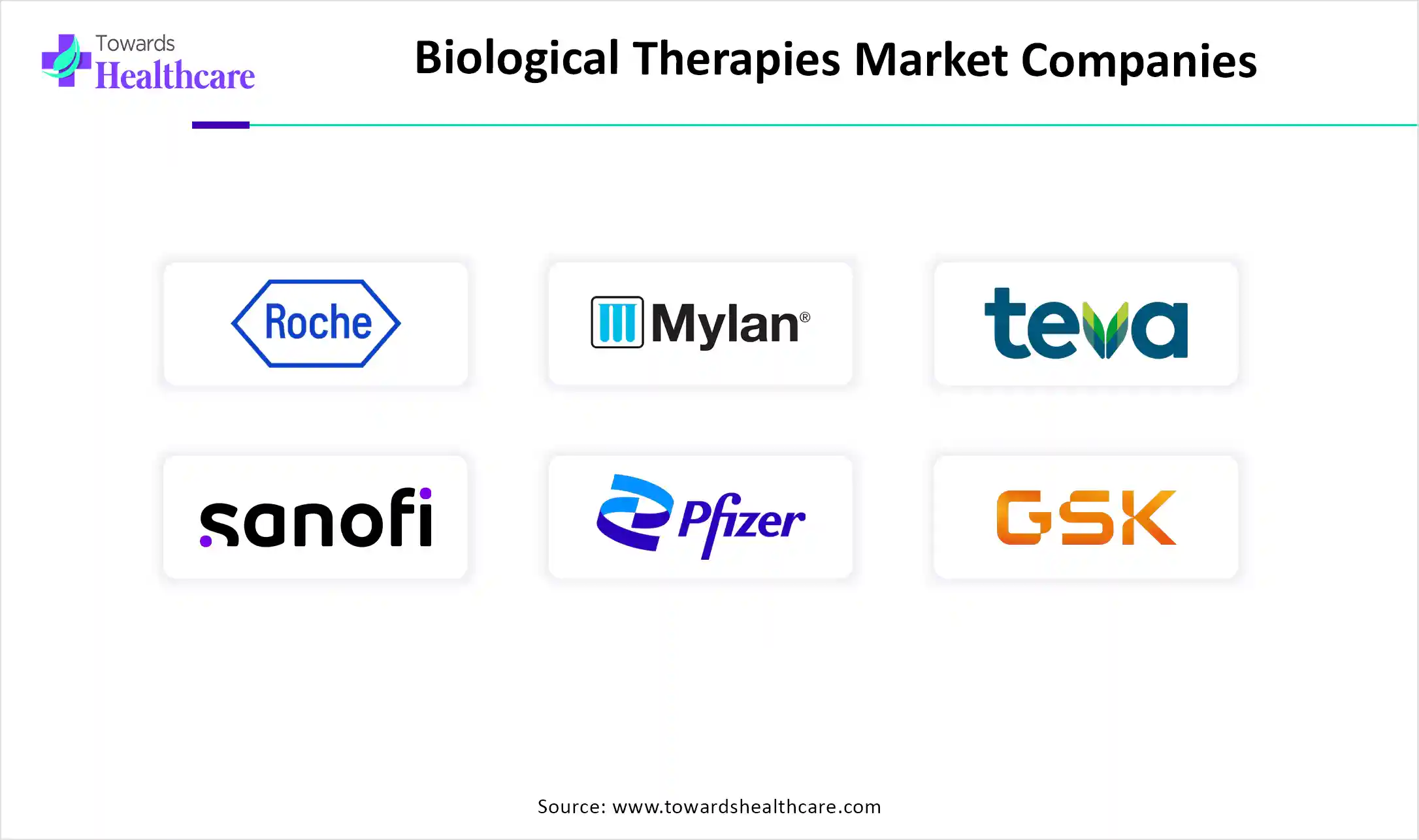
Top 10 Companies
Latest Announcements
June 2025 – Pondicherry Institute of Medical Sciences (India) introduced a biological therapy for severe asthma using Benralizumab alongside a new medical ICU.
Recent Developments
Sept 2025 – Kalexo Bio (U.S./China JV) launched to develop siRNA therapeutic (2MW7141), with Mabwell eligible for $1B milestone payments.
Jan 2025 – Windward Bio raised $200M Series A to advance biologics for severe immunological disorders.
Segments Covered
By Type
Monoclonal Antibodies (mAbs)
Naked Antibodies – First-generation mAbs with no drug/radioactive attachment. Widely used in oncology and autoimmune disorders. Example: Rituximab (Rituxan) for lymphomas.
Conjugated Antibodies – Linked to chemotherapy drugs, toxins, or radioactive isotopes to deliver targeted treatment. Example: Brentuximab vedotin (ADC).
Bispecific Antibodies – Next-gen biologics designed to bind two targets simultaneously (e.g., cancer cell + T-cell). Example: Blinatumomab for leukemia.
📈 Market Insight – Monoclonal antibodies dominated in 2024 due to their role in oncology, immunology, and infectious diseases. Their continued innovation ensures they remain the largest revenue-generating segment through 2034.
Vaccines
Preventive Vaccines – Designed to prevent infections such as HPV, influenza, COVID-19.
Therapeutic Vaccines – Emerging space targeting cancer and chronic diseases by stimulating immune response. Example: personalized cancer vaccines in clinical trials.
📈 Market Insight – Vaccines are the fastest-growing sub-segment, with global expansion in immunization programs and new oncology vaccine platforms.
Cancer Growth Blockers
Tyrosine Kinase Inhibitors (TKIs) – Block signaling pathways in cancer cells. Example: Imatinib (Gleevec).
Proteasome Inhibitors – Prevent breakdown of proteins, disrupting cancer cell survival. Example: Bortezomib for multiple myeloma.
mTOR Inhibitors – Target cell growth and proliferation pathways. Example: Everolimus.
📈 Market Insight – These targeted therapies are critical in oncology biologics, with expanding approvals in hematological malignancies.
Cytokines
Interferons – Boost immune response against viral infections and cancers. Example: Interferon-alpha.
Interleukins – Regulate immune cells for autoimmune disorders and cancer treatment. Example: IL-2 analogs.
📈 Market Insight – Cytokines remain smaller in market share compared to antibodies but continue growing due to immunotherapy advancements.
Others
Includes cell-based therapies (CAR-T), gene therapies, and RNA-based biologics.
📈 Market Insight – The “Others” category is expected to expand rapidly as next-gen biologics like CRISPR-based therapies and siRNA drugs gain regulatory approvals.
By Route of Administration
Intravenous (IV)
Most common method for mAbs, cytokines, and advanced biologics.
Offers rapid systemic absorption and high efficacy.
📈 Market Insight – Dominant in 2024 and expected to grow further, especially for oncology and rare disease treatments.
Subcutaneous (SC)
Convenient, self-administered method for therapies like insulin biologics, monoclonal antibodies (Dupixent, Humira biosimilars).
Improves patient compliance and reduces hospital visits.
📈 Market Insight – Fastest growing segment due to biopharma shift toward home-use formulations.
Intramuscular (IM)
Primarily used for vaccines (influenza, hepatitis, COVID-19).
Limited adoption for large molecule biologics compared to IV and SC.
📈 Market Insight – Expected steady growth, driven by global vaccination programs.
Others
Includes oral biologics (under research), inhalable biologics, and topical formulations.
📈 Market Insight – Niche but promising area; oral biologics are a major R&D focus to enhance convenience.
By End-Users
Hospitals
Primary centers for cancer, autoimmune, and rare disease biologics administration.
Equipped with ICUs, infusion centers, and specialty pharmacies.
📈 Market Insight – Largest segment in 2024; hospitals dominate biologics use due to need for specialist oversight.
Homecare
Growing adoption of subcutaneous biologics, auto-injectors, and wearable delivery devices.
Expands biologics access for chronic diseases (diabetes, rheumatoid arthritis, asthma).
📈 Market Insight – Fastest-growing due to patient convenience, cost-effectiveness, and telemedicine integration.
Specialty Centers
Dedicated centers for oncology, immunology, and rare diseases.
Focus on precision biologics and advanced gene/cell therapy infusions.
📈 Market Insight – Expected to witness significant growth as biologics become more personalized.
Others
Includes research institutes, academic centers, and military healthcare systems.
📈 Market Insight – Smaller share, but key for clinical trials and early access programs.
By Distribution Channel
Hospital Pharmacies
Major channel for inpatient biologic use and oncology therapies.
📈 Market Insight – Dominated in 2024; biologics’ complexity requires specialist dispensing and handling.
Online Pharmacies
Expanding in biologics distribution, especially biosimilars and SC formulations.
Supported by telemedicine adoption and home delivery systems.
📈 Market Insight – Fastest growing due to rising digital health ecosystems.
Retail Pharmacies
Limited role, mostly for low-complexity biologics and vaccines.
📈 Market Insight – Expected moderate growth; largely dependent on regulatory reforms allowing wider biologics dispensing.
By Region
North America
Largest market share in 2024, driven by advanced R&D, early adoption, and high biologics spend (50% of U.S. prescriptions in 2023 were biologics).
Strong presence of Pfizer, Amgen, J&J, Roche, Merck.
Europe
Growing due to biosimilar approvals and cost-cutting reforms.
Leaders in biotech research: Germany, U.K., France.
Asia Pacific
Fastest-growing region – fueled by China and India’s investments, large patient base, and increasing biotech startups.
Rising demand for vaccines, biosimilars, and oncology biologics.
Latin America
Brazil and Mexico lead adoption.
Public-private partnerships expanding access to affordable biosimilars.
Middle East & Africa (MEA)
Growth led by Saudi Arabia, UAE, South Africa.
Government healthcare modernization driving imports of biologics.
Top 5 FAQs
Q1. What is the market size of the biological therapies market in 2025?
A1. It is valued at USD 501.71 billion in 2025.
Q2. What is the forecasted size of the biological therapies market by 2034?
A2. It is projected to reach USD 1,107.66 billion.
Q3. Which product segment dominated the market in 2024?
A3. Monoclonal antibodies dominated in 2024.
Q4. Which region is expected to grow fastest during 2025–2034?
A4. The Asia Pacific region will grow at the highest CAGR.
Q5. What is the biggest restraint in the biological therapies market?
A5. The high cost of biologics (ranging from USD 10,000 to 250,000 annually).
Access our exclusive, data-rich dashboard dedicated to the therapeutic area sector – built specifically for decision-makers, strategists, and industry leaders. The dashboard features comprehensive statistical data, segment-wise market breakdowns, regional performance shares, detailed company profiles, annual updates, and much more. From market sizing to competitive intelligence, this powerful tool is one-stop solution to your gateway.
Access the Dashboard: https://www.towardshealthcare.com/access-dashboard
Immediate Delivery Available | Buy This Premium Research @https://www.towardshealthcare.com/price/6191
Become a valued research partner with us – https://www.towardshealthcare.com/schedule-meeting
You can place an order or ask any questions, please feel free to contact us at sales@towardshealthcare.com
Powering Healthcare Leaders with Real-Time Insights: https://www.towardshealthcare.com/healthcare-intelligence-platform
Europe Region – +44 778 256 0738
North America Region – +1 8044 4193 44
APAC Region: +91 9356 9282 04
Web: https://www.towardshealthcare.com
Find us on social platforms: LinkedIn | Twitter | Instagram | Medium | Pinterest
About the Author