Bioprocess bags may not grab headlines, but they quietly power some of the most critical steps in modern drug manufacturing.
From vaccines to cell therapies, these flexible, single-use systems are becoming essential. They simplify processes that once relied heavily on rigid, expensive stainless-steel systems.
As the biotechnology industry expands rapidly, bioprocess bags are evolving from a supporting tool into a strategic necessity.
Why Bioprocess Bags Are Becoming Irreplaceable
Bioprocess bags bring a rare combination of flexibility, safety, and efficiency.
They allow manufacturers to store, transport, and process sensitive biological materials without risking contamination. Their multi-layer film structure ensures compatibility with a wide range of chemicals and biological substances.
What makes them truly valuable is their adaptability. Whether it’s small-scale research or large-scale production, these bags adjust to different needs without major infrastructure changes.
The Growth Curve Is Hard to Ignore
The numbers tell a strong story.
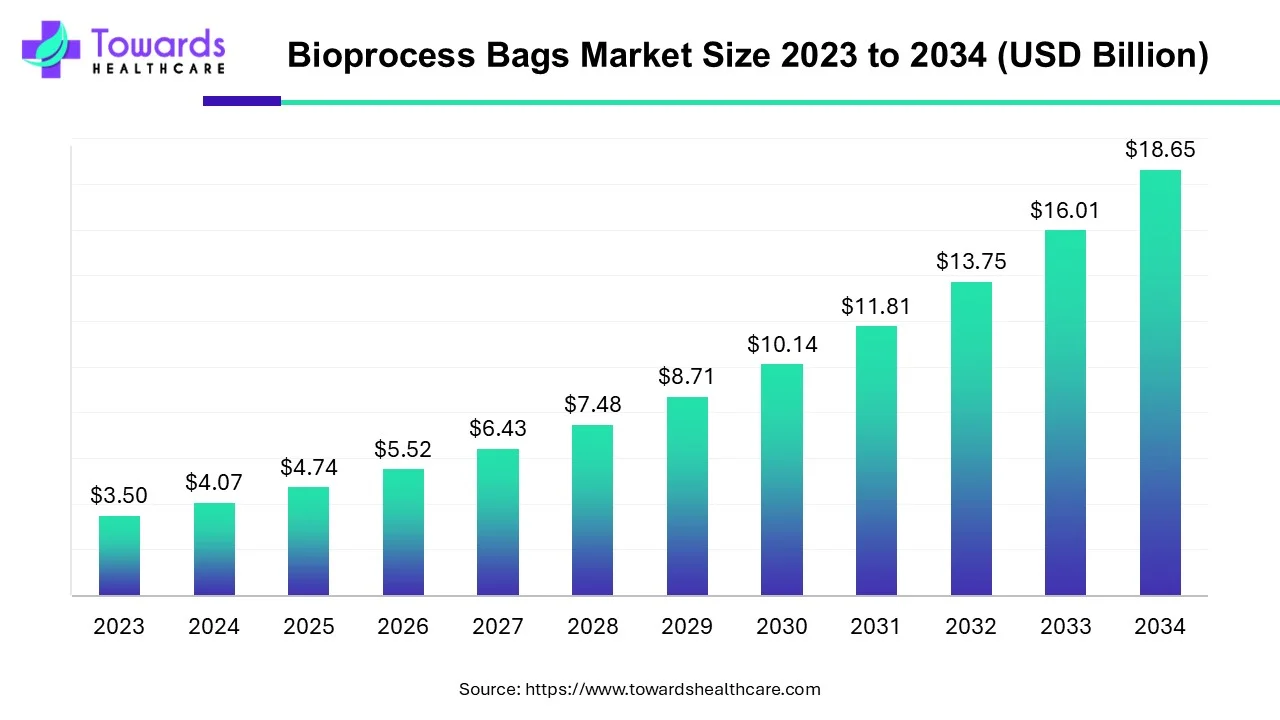
The global bioprocess bags market is valued at USD 5.52 billion in 2026 and is projected to reach USD 21.71 billion by 2035. This growth reflects a powerful CAGR of 16.44%, signaling strong long-term demand.
North America leads the market with a 36% share, but Asia-Pacific is quickly catching up with faster growth momentum.
This shift shows how global biomanufacturing is expanding beyond traditional hubs.
What’s Fueling This Rapid Expansion?
The demand for bioprocess bags is closely tied to the rise of biopharmaceuticals.
Modern treatments like monoclonal antibodies, vaccines, and gene therapies require sterile and controlled environments. Bioprocess bags make this possible without complex cleaning and validation processes.
Key growth drivers include:
-
Increasing cases of chronic diseases pushing demand for advanced therapies
-
Rising investments in biotechnology and life sciences research
-
Faster drug development cycles requiring flexible manufacturing systems
-
Shift toward single-use technologies to reduce contamination risks
These factors collectively push companies to adopt solutions that are efficient, scalable, and reliable.
From 2D to 3D: A Shift in Design Thinking
Not all bioprocess bags are the same. Their design directly impacts how they are used in production.
2D bioprocess bags dominate the market with a 50% share. They work best for smaller volumes and are easy to handle, store, and transport. Their flat structure makes them highly practical for routine processes.
On the other hand, 3D bioprocess bags are gaining attention fast. They support larger volumes, ranging from 50L to 3000L, making them ideal for large-scale production.
This shift reflects how manufacturers are preparing for higher output and commercial-scale biologics production.
The Role of Workflow: Where Bags Fit In
Bioprocess bags are deeply integrated into the entire production cycle.
In upstream processing, they support cell culture growth and preparation. This stage demands strict sterility, and single-use bags eliminate contamination risks effectively.
Downstream processing, which focuses on purification and final product formulation, is also adopting these bags at a growing pace.
The ability to use the same system across multiple stages simplifies operations and reduces costs.
Who Uses Bioprocess Bags the Most?
Pharmaceutical and biopharmaceutical companies remain the largest users, holding 45% of the market share.
These companies invest heavily in research, production, and innovation, making them early adopters of advanced technologies.
However, contract organizations are emerging as strong players.
-
CMOs (Contract Manufacturing Organizations) help scale production
-
CROs (Contract Research Organizations) support research and testing
Their growing role reflects a larger trend—companies are outsourcing complex processes to improve efficiency and reduce operational burden.
How AI Is Quietly Transforming the Market
Artificial intelligence is not just a buzzword here. It is actively reshaping how bioprocess bags are designed, produced, and managed.
AI helps automate manufacturing, reducing manual errors and improving consistency. It also optimizes production schedules and predicts demand, making supply chains more resilient.
Beyond production, AI supports sustainability by minimizing material waste and improving resource efficiency.
This integration of AI is turning a traditional manufacturing component into a smart, data-driven system.
The Challenges No One Can Ignore
Despite strong growth, the market faces real challenges.
Environmental concerns are at the forefront. Most bioprocess bags are made from plastics like polyethylene and polypropylene, which are not biodegradable. This raises serious sustainability questions.
Supply chain disruptions also remain a concern. The post-pandemic world has exposed vulnerabilities in global logistics, affecting the availability of critical materials.
Companies now need to balance efficiency with environmental responsibility—a challenge that will define the future of this market.
Customization Is Opening New Doors
One of the most promising opportunities lies in customization.
Manufacturers are no longer offering one-size-fits-all solutions. Instead, they design bioprocess bags tailored to specific applications, materials, and workflows.
This includes:
-
Custom tubing and connector systems for seamless integration
-
Specialized materials for enhanced chemical resistance
-
Tailored sizes and shapes for specific production needs
-
Solutions for niche applications like cryopreservation and gene therapy
This level of customization gives companies more control over their processes and outcomes.
The Road Ahead: More Than Just a Container
Bioprocess bags are no longer just storage solutions. They are becoming a critical part of the biomanufacturing ecosystem.
As biologics continue to dominate the pharmaceutical landscape, the need for flexible, scalable, and sterile systems will only grow.
The future will likely see smarter materials, more sustainable designs, and deeper integration with digital technologies.
In simple terms, bioprocess bags are evolving from passive tools to active enablers of innovation.
The bioprocess bags market is not just growing—it is transforming.
What started as a convenience is now a necessity, driven by the demands of modern medicine and advanced therapies.
As the industry moves forward, the real question is not whether bioprocess bags will grow, but how far they will go in reshaping the future of biomanufacturing.
Access our exclusive, data-rich dashboard dedicated to the laboratory equipment sector – built specifically for decision-makers, strategists, and industry leaders. The dashboard features comprehensive statistical data, segment-wise market breakdowns, regional performance shares, detailed company profiles, annual updates, and much more. From market sizing to competitive intelligence, this powerful tool is one-stop solution to your gateway.
Access the Dashboard: https://www.towardshealthcare.com/access-dashboard
Checkout the Market Report Now at: https://www.towardshealthcare.com/checkout/5398
You can place an order or ask any questions, please feel free to contact us at sales@towardshealthcare.com
Europe Region – +44 778 256 0738
North America Region – +1 8044 4193 44
APAC Region: +91 9356 9282 04
Visit Our Website: https://www.towardshealthcare.com
Find us on social platforms: LinkedIn | Twitter | Instagram | Medium
About the Author