Atopic dermatitis (AD), commonly known as eczema, is no longer treated as just a skin condition. It is now recognized as a chronic inflammatory disease that affects millions of people worldwide, disrupting sleep, mental health, work productivity, and quality of life. As more advanced biologics and oral targeted therapies become available, competition among leading pharmaceutical companies has intensified.
Pfizer remains an important player in atopic dermatitis market with Cibinqo (abrocitinib), but it faces strong competition from companies that have introduced biologics with broader physician adoption and expanding clinical evidence.
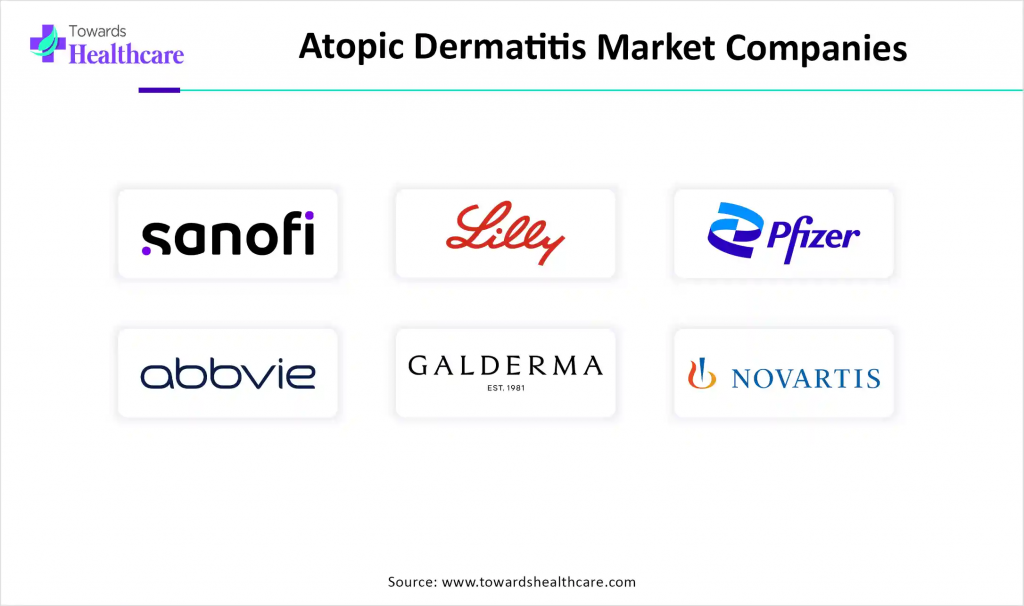
Growing Burden of Atopic Dermatitis is Expanding Treatment Demand
Atopic dermatitis affects nearly 223 million people globally, including around 43 million children aged 1–4 years, making it one of the most common chronic inflammatory skin diseases.
According to the World Health Organization (WHO), skin diseases rank among the leading causes of non-fatal disease burden worldwide. In the United States, the National Eczema Association estimates that nearly 31.6 million Americans experience some form of eczema, while approximately 16.5 million adults have atopic dermatitis, including around 6.6 million with moderate-to-severe disease.
The increasing prevalence of allergies, urbanization, environmental pollution, and genetic susceptibility continues to drive demand for advanced therapies that provide long-term disease control rather than temporary symptom relief.
Pfizer’s Marketed Product: Cibinqo Strengthens Its Oral Therapy Portfolio
Pfizer entered the competitive atopic dermatitis market with Cibinqo (abrocitinib), an oral Janus kinase (JAK1) inhibitor approved for adults and eligible adolescents with moderate-to-severe atopic dermatitis who require systemic therapy.
Unlike injectable biologics, Cibinqo offers the convenience of once-daily oral administration. Clinical studies demonstrated rapid itch reduction, with many patients reporting meaningful symptom improvement within the first two weeks of treatment.
The medicine has received approvals across several major markets, including the United States, Europe, Japan, and numerous additional countries. Pfizer continues expanding real-world evidence to strengthen physician confidence while monitoring long-term safety requirements associated with JAK inhibitors.
Major Competitors Are Reshaping the Market
The biggest competitive challenge comes from Sanofi and Regeneron, whose biologic Dupixent (dupilumab) has become the global market leader. Since its initial approval, Dupixent has expanded into multiple age groups and additional Type 2 inflammatory diseases, making it one of the fastest-growing biologic medicines worldwide.
Another major competitor is Eli Lilly, whose biologic Ebglyss (lebrikizumab) has shown strong efficacy with convenient maintenance dosing schedules. The company is steadily expanding global commercialization.
AbbVie competes directly with Pfizer through Rinvoq (upadacitinib), another oral JAK inhibitor. Rinvoq has demonstrated high skin clearance rates in clinical trials and continues gaining physician preference for appropriate patients requiring rapid disease control.
LEO Pharma markets Adbry (tralokinumab) in several countries, offering another biologic option targeting IL-13, while Galderma continues strengthening its dermatology portfolio through strategic investments and collaborations.
Competitive Landscape at a Glance
| Company | Marketed Product | Drug Class | Key Competitive Strength |
|---|---|---|---|
| Pfizer | Cibinqo (abrocitinib) | Oral JAK1 inhibitor | Rapid itch relief, once-daily oral therapy |
| Sanofi & Regeneron | Dupixent (dupilumab) | IL-4/IL-13 biologic | Market leader with broad indications |
| AbbVie | Rinvoq (upadacitinib) | Oral JAK inhibitor | High efficacy in moderate-to-severe disease |
| Eli Lilly | Ebglyss (lebrikizumab) | IL-13 biologic | Strong clinical response and maintenance dosing |
| LEO Pharma | Adbry (tralokinumab) | IL-13 biologic | Targeted therapy with established safety profile |
Market Competition Is Driven by Innovation Rather Than Price
Today’s competition is centered on clinical outcomes instead of pricing alone. Physicians evaluate therapies based on itch reduction, skin clearance, long-term safety, dosing convenience, and patient quality of life.
Biologics continue dominating long-term treatment because of their favorable safety profiles and expanding indications. However, oral JAK inhibitors like Pfizer’s Cibinqo and AbbVie’s Rinvoq remain attractive for patients seeking rapid symptom relief without injections.
Real-world evidence, payer reimbursement, and broader physician familiarity are increasingly influencing prescribing decisions across North America, Europe, and Asia-Pacific.
Government Support and Clinical Guidelines Continue to Shape the Market
The U.S. Food and Drug Administration (FDA) has approved several advanced biologics and targeted oral therapies for moderate-to-severe atopic dermatitis over recent years, significantly expanding treatment choices.
The European Medicines Agency (EMA) has also authorized multiple innovative therapies across European countries, while updated recommendations from the American Academy of Dermatology (AAD) increasingly support biologics and targeted systemic therapies for patients whose disease cannot be adequately controlled with topical treatments.
These regulatory approvals and evolving clinical guidelines are helping improve access to advanced therapies while encouraging continued pharmaceutical investment in dermatology research.
Looking Ahead
The global atopic dermatitis market is expected to remain one of the fastest-growing segments in immunology. Pfizer’s Cibinqo has established itself as a strong oral treatment option, but competition from Dupixent, Rinvoq, Ebglyss, and Adbry continues to intensify.
Future leadership will depend on demonstrating superior long-term safety, broader regulatory approvals, improved patient adherence, and continued innovation. As new therapies reach the market and clinical evidence expands, patients are likely to benefit from more personalized treatment strategies that deliver faster relief and better long-term disease control.
Access our exclusive, data-rich dashboard dedicated to the therapeutic area industry – built specifically for decision-makers, strategists, and industry leaders. The dashboard features comprehensive statistical data, segment-wise market breakdowns, regional performance shares, detailed company profiles, annual updates, and much more. From market sizing to competitive intelligence, this powerful tool is one-stop solution to your gateway.
Access the Dashboard: https://www.towardshealthcare.com/access-dashboard
About Us
Healthcare WebWire is a part of Towards Healthcare Research and Consulting is a leading global provider of technological solutions, clinical research services, and advanced analytics, with a strong emphasis on life science research. Dedicated to advancing innovation in the life sciences sector, we build strategic partnerships that generate actionable insights and transformative breakthroughs. As a global strategy consulting firm, we empower life science leaders to gain a competitive edge, drive research excellence, and accelerate sustainable growth.
You can place an order or ask any questions, please feel free to contact us at [email protected]
Europe Region – +44 778 256 0738
North America Region – +1 8044 4193 44
APAC Region: +91 9356 9282 04
Visit Our Website: https://www.towardshealthcare.com
Find us on social platforms: LinkedIn | Twitter | Instagram | Medium