The polyclonal antibodies market may not grab headlines every day, but it quietly supports some of the most critical breakthroughs in healthcare. From diagnostics to therapeutics, these antibodies play a foundational role in how scientists detect, study, and treat diseases.
Unlike monoclonal antibodies that target a single epitope, polyclonal antibodies recognize multiple epitopes on the same antigen. This multi-target ability makes them highly adaptable and effective across a wide range of applications.
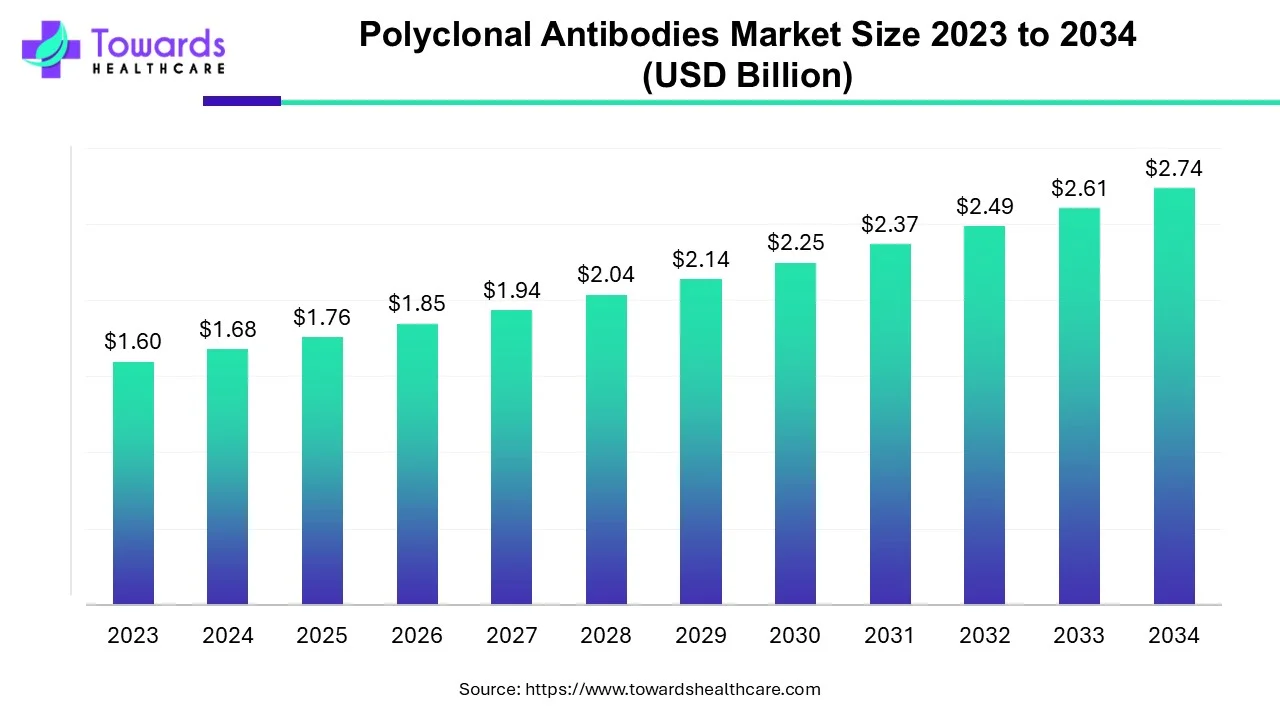
The market reflects this importance. Valued at US$ 1.68 billion in 2024, it is projected to reach US$ 2.74 billion by 2034, growing at a steady CAGR of 5.04%.
Why Demand Keeps Growing
Healthcare systems across the world are dealing with rising cases of chronic diseases like cancer, autoimmune disorders, and infectious conditions. This growing burden is pushing demand for reliable diagnostic tools and effective treatments.
Polyclonal antibodies step in as a practical solution. Their ability to bind multiple targets increases detection accuracy and improves sensitivity in diagnostic tests.
At the same time, advancements in antibody production technologies are making these solutions more efficient and scalable. Scientists are now combining traditional methods with modern innovations like AI, speeding up research timelines.
The Science That Makes Them Valuable
Polyclonal antibodies are produced by B cells as part of the body’s natural immune response. This diversity is their biggest strength.
They are widely used in:
-
Immunoassays like ELISA and Western blotting
-
Flow cytometry and immunofluorescence
-
Detection of unknown or low-abundance antigens
-
Food safety and quality control processes
Because they amplify signals by binding to multiple epitopes, they often deliver stronger and more reliable results than single-target alternatives.
Market Trends That Are Changing the Game
Recent developments show how the industry is evolving beyond traditional boundaries.
Pharmaceutical companies are investing heavily in production facilities and antibody pipelines. At the same time, biotech startups are exploring new ways to design antibodies using artificial intelligence.
AI is emerging as a powerful tool. It helps researchers predict antibody behavior, improve stability, and reduce development time. This shift is not just about speed—it’s about precision and cost efficiency.
Another trend shaping the market is increased funding and partnerships. Strategic collaborations between biotech firms, governments, and research institutions are accelerating innovation.
Where the Market Finds Its Strength
Secondary Antibodies Take the Lead
Secondary antibodies dominate the market because they are essential in most laboratory techniques. They enhance signal detection, making experiments more accurate and reliable.
Their widespread use in diagnostics and research ensures consistent demand across industries.
Primary Antibodies Gain Momentum
While secondary antibodies lead, primary antibodies are growing faster. Researchers rely on them to directly detect target proteins, making them crucial for advanced studies.
Their role in understanding biological processes and developing therapies is driving this growth.
Diagnostics Drive the Core Demand
Diagnostics remain the largest application segment in the market. Hospitals and labs use polyclonal antibodies to detect diseases quickly and accurately.
Their ability to identify multiple epitopes makes them ideal for detecting complex or unknown antigens. This advantage becomes critical in early disease detection and monitoring.
On the other hand, biomedical research is gaining traction. Scientists use these antibodies to study proteins, understand disease mechanisms, and develop new treatments.
Animal Sources Still Matter
Rabbits continue to dominate as the primary source of polyclonal antibodies. Their strong immune response and ease of handling make them highly efficient for antibody production.
However, mice are emerging as the fastest-growing segment. Their availability and adaptability in controlled environments make them suitable for large-scale research.
This shift highlights how the industry balances tradition with innovation.
End-Users Are Expanding the Scope
Hospitals and Diagnostic Centers Lead Usage
Hospitals and diagnostic labs form the backbone of demand. They use polyclonal antibodies daily for disease detection and patient care.
The increasing focus on accurate diagnostics and personalized treatment is strengthening this segment.
Pharma and Biotech Companies Step Up
Pharmaceutical and biotechnology companies are rapidly expanding their use of polyclonal antibodies. They are not just using them for diagnostics but also for developing new therapies.
Their growing involvement reflects a broader shift toward biologics and targeted treatments.
Regional Landscape: Who Leads and Who Follows?
North America Sets the Pace
North America holds a dominant share of the market. Strong research infrastructure, high healthcare spending, and a mature biotech ecosystem give the region a clear advantage.
Collaborations between academia, industry, and government further accelerate innovation.
Asia Pacific Rises Fast
Asia Pacific is the fastest-growing region. Countries like China and India are investing heavily in healthcare and research.
A growing population, rising disease burden, and increasing awareness about advanced diagnostics are driving demand in this region.
Europe Builds on Innovation
Europe shows steady growth supported by strong research funding and technological advancements. Increasing clinical trials and collaborations are helping the region stay competitive.
Opportunities That Can Redefine the Market
The future of the polyclonal antibodies market lies in targeted therapies. Precision medicine is gaining momentum, and antibodies play a key role in this shift.
Here’s where the biggest opportunities lie:
-
Development of targeted cancer therapies
-
Expansion of antibody-based treatments for infectious diseases
-
Integration of AI in antibody design and production
-
Growth in personalized medicine and diagnostics
With antibody therapies already forming a multi-billion-dollar segment, the potential for expansion remains significant.
Challenges That Still Need Attention
Despite their advantages, polyclonal antibodies face certain limitations. Their lack of specificity can sometimes lead to cross-reactivity, affecting test accuracy.
In therapeutic applications, this can result in unintended side effects. Addressing these challenges will be crucial for long-term growth.
However, ongoing research and technological advancements are gradually reducing these risks.
A Market That Balances Tradition and Innovation
The polyclonal antibodies market stands at an interesting intersection. It relies on well-established biological principles while embracing cutting-edge technologies like AI.
This balance is what makes the market resilient and adaptable.
As healthcare continues to evolve, the demand for reliable, efficient, and versatile solutions will only grow. Polyclonal antibodies are well-positioned to meet this demand.
Access our exclusive, data-rich dashboard dedicated to the diagnostics sector – built specifically for decision-makers, strategists, and industry leaders. The dashboard features comprehensive statistical data, segment-wise market breakdowns, regional performance shares, detailed company profiles, annual updates, and much more. From market sizing to competitive intelligence, this powerful tool is one-stop solution to your gateway.
Access the Dashboard: https://www.towardshealthcare.com/access-dashboard
Checkout the Market Report Now at: https://www.towardshealthcare.com/checkout/5388
You can place an order or ask any questions, please feel free to contact us at sales@towardshealthcare.com
Europe Region – +44 778 256 0738
North America Region – +1 8044 4193 44
APAC Region: +91 9356 9282 04
Visit Our Website: https://www.towardshealthcare.com
Find us on social platforms: LinkedIn | Twitter | Instagram | Medium
About the Author