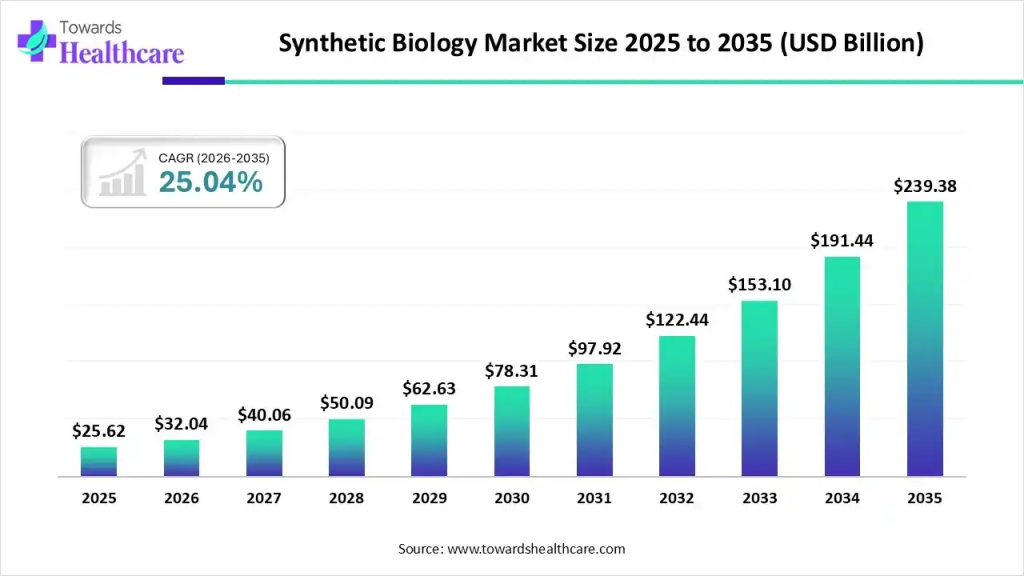
Synthetic biology is moving beyond laboratories and into healthcare, agriculture, chemicals, and sustainable manufacturing. The global synthetic biology market is expected to grow from USD 32.04 billion in 2026 to USD 239.38 billion by 2035, expanding at a 25.04% CAGR.
Synthetic biology involves redesigning biological systems or modifying genetic material to create useful products. Advances in gene editing, DNA synthesis, automation, and AI are making these processes faster and more precise.
Key Trends Shaping Synthetic Biology
Healthcare is leading growth, accounting for 50% of the market by application. Synthetic biology is being used in drug discovery, personalized medicine, vaccines, diagnostics, and advanced therapies.
PCR technology held the largest share, at 40%, supported by its precision and wide use in DNA amplification and disease testing. Meanwhile, genome editing is gaining attention as researchers explore more advanced ways to modify DNA.
By product, oligonucleotides, oligo pools, and synthetic DNA accounted for 45% of the market. These materials are essential for genetic research, testing, sequencing, and other synthetic biology applications.
AI and Gene Editing Create New Opportunities
AI is becoming an important tool for synthetic biology. Researchers can use AI models to design DNA sequences, predict biological activity, and improve the development of engineered biological systems. Combined with technologies such as CRISPR and advanced DNA synthesis, AI could help reduce development time and improve production efficiency.
Sustainability is another major opportunity. Synthetic biology can support bio-based chemicals, fuels, materials, and other alternatives to conventional production methods.
Regional Outlook
North America held the largest share in 2025, supported by strong biotechnology research, government funding, advanced healthcare infrastructure, and major companies.
Asia Pacific is expected to grow at the fastest rate, driven by increasing biotechnology investments, research activity, and government support in countries such as China, India, and Singapore.
Europe is also expected to see notable growth as research institutions and governments invest in synthetic biology, precision medicine, and sustainable biotechnology.
Download a Sample Report: https://www.towardshealthcare.com/download-sample/5339
Looking Ahead
The future of synthetic biology will likely be shaped by the combination of AI, gene editing, DNA synthesis, and automation. As these technologies become more accessible, their applications could expand across healthcare, agriculture, chemicals, energy, and environmental solutions.
With a projected USD 239.38 billion valuation by 2035, synthetic biology is becoming an important part of the next generation of biotechnology innovation.
About Us
Healthcare WebWire is a part of Towards Healthcare Research & Consulting which is a global healthcare market research and consulting firm dedicated to helping businesses make informed decisions through reliable market intelligence and strategic insights. We serve pharmaceutical, biotechnology, medical device, AI in healthcare, cell and gene therapy, digital health, and life sciences organizations with in-depth market research, custom consulting, competitive analysis, and growth forecasts. Our team combines industry expertise with rigorous research to deliver clear, actionable insights that support market expansion, product strategy, investment decisions, and long-term business growth. From emerging innovations to established healthcare markets, we help organizations understand where the industry is today and where it’s headed tomorrow.
You can place an order or ask any questions, please feel free to contact us at [email protected]
Europe Region – +44 778 256 0738
North America Region – +1 8044 4193 44
APAC Region: +91 9356 9282 04
Visit Our Website: Towards Healthcare Research & Consulting – Expert Consulting Solutions & Research Reports
Find us on social platforms: LinkedIn | Twitter | Instagram | Medium