The biotechnology industry has moved far beyond traditional pharma. Today, it is a high-tech ecosystem powered by gene editing, mRNA platforms, biologics manufacturing, and advanced diagnostics. What makes this sector particularly interesting is not just innovation—but how deeply it is shaped by revenue concentration, blockbuster drugs, and government funding systems.
Below is a clean, data-backed view of how the global biotech landscape actually looks based on real company financials and institutional disclosures.
| Company | Revenue (Latest) | R&D Spend | Key Revenue Driver / Insight |
|---|---|---|---|
| Amgen | $28.2B | $4.5B | Oncology + rare disease drugs dominate |
| Gilead Sciences | $27.1B | $4.3B | HIV drugs ~65% of total revenue |
| Biogen | $9.8B | $2.3B | Multiple sclerosis ~60% revenue share |
| Regeneron Pharmaceuticals | $13.1B | $4.0B | Eylea contributes ~65–70% revenue |
| Vertex Pharmaceuticals | $9.9B | $3.0B | Cystic fibrosis ~95% revenue dependency |
| Moderna | $6.8B | $4.5B | mRNA vaccines dominate revenue |
| BioNTech | $3.8B | $1.8B | COVID + oncology transition phase |
| Illumina | $4.5B | $1.0B | ~80% global DNA sequencing dominance |
| Thermo Fisher Scientific | $43.2B | $1.5B | Life sciences tools ~60% revenue |
| Danaher Corporation | $23.9B | $1.2B | Diagnostics + bioprocessing strength |
| Sartorius AG | $4.2B | $0.4B | Biomanufacturing systems (~70%) |
| Lonza Group | $7.2B | $0.6B | CDMO services for pharma companies |
| CSL Limited | $13.2B | $0.8B | Plasma therapies (~80% revenue) |
| CRISPR Therapeutics | $0.3B | $0.5B | Gene editing (early commercialization) |
| AbbVie | $54.3B | $7.0B | Immunology (Humira legacy blockbuster) |
| Novartis | $45.4B | $9.0B | Oncology + advanced therapies |
1. Biotech Giants: Where Revenue Is Highly Concentrated
The global biotech market is dominated by a small group of companies generating tens of billions in revenue, often driven by a few core therapies.
If your looking for more stats, insights, compititors data, strategies and more, access the dashboad and get every in depth detail at one place: https://www.towardshealthcare.com/access-dashboard
Amgen generated around $28.2B (2024), with strong performance across oncology, inflammation, and rare diseases. Despite a diversified portfolio of 27+ products, revenue remains concentrated in a limited set of blockbuster therapies.
Gilead Sciences reported $27.1B, where HIV treatments alone contribute nearly 65% of total revenue, showing how deeply dependent biotech firms are on single therapeutic areas.
Biogen recorded approximately $9.8B, with multiple sclerosis therapies contributing around 60% of total revenue, reinforcing the dominance of niche disease segments.
Regeneron Pharmaceuticals earned around $13.1B, heavily dependent on Eylea, which contributes nearly two-thirds of total sales, highlighting product-level concentration risk.
2. The New Biology Wave: mRNA, Gene Editing & Next-Gen Biotech
The biotech industry is rapidly shifting toward platform-based innovation rather than single-drug models.
Moderna reported about $6.8B revenue, largely driven by mRNA vaccines, still transitioning beyond COVID-era demand.
BioNTech stands at roughly $3.8B, gradually shifting toward oncology pipelines after pandemic-driven growth.
At the frontier of innovation, CRISPR Therapeutics remains in early commercialization with about $0.3B revenue, but its scientific impact is significant due to gene-editing-based therapies developed with Vertex Pharmaceuticals.
Also if you want to know how the market is performing across different regions? Visit our databook for detailed stats and numbers: https://www.towardshealthcare.com/dashboard/
3. Life Sciences Infrastructure: The Silent Backbone of Biotech
Behind every drug discovery pipeline lies a powerful ecosystem of tools, equipment, and manufacturing platforms.
Thermo Fisher Scientific leads this space with $43.2B revenue, more than 60% tied directly to life sciences workflows such as lab equipment, reagents, and diagnostics.
Danaher Corporation generates about $23.9B, with strong exposure to bioprocessing and diagnostics through its subsidiaries.
Illumina holds a dominant position in genomics with ~$4.5B revenue, powering most next-generation sequencing globally.
Biomanufacturing leaders like Sartorius AG ($4.2B) and Lonza Group ($7.2B) provide essential infrastructure for biologics production, making them critical enablers of modern pharma scale-up.
4. Big Pharma–Biotech Hybrids: Scale + Pipeline Power
Large pharmaceutical companies also function as biotech powerhouses due to their biologics and immunology pipelines.
AbbVie generated $54.3B, historically driven by Humira, which alone contributed over $20B annually at its peak.
Novartis recorded $45.4B, with a strong presence in oncology and advanced therapy platforms, supported by a pipeline of 200+ projects.
These companies combine scale with biotech innovation, making them structurally different from pure-play biotech firms.
5. Early-Stage Biotech: High Science, Low Revenue Reality
Many emerging biotech firms operate with minimal revenue but extremely high R&D intensity.
Companies like Beam Therapeutics, Sangamo Therapeutics, and Bluebird Bio generate under $0.5B in revenue, but their valuation is driven almost entirely by clinical-stage pipeline progress rather than current sales.
This reflects a core truth of biotech: value is often locked in future science, not present earnings.
6. Governments: The Real Engine Behind Biotech Growth
| Organization | Region | Key Budget / Activity | Core Biotech Insight |
|---|---|---|---|
| National Institutes of Health | USA | $47–48B annual budget | Major global biotech research funding body |
| U.S. Food and Drug Administration | USA | 55–60 drug approvals/year | 12–18 biologics approvals annually |
| European Medicines Agency | EU | 80–100 approvals/year | Strong biologics + advanced therapy approvals |
| Department of Biotechnology India | India | ₹2,000–2,500 crore budget | 1,000+ biotech startups ecosystem |
| China National Medical Products Administration | China | 70–90 drug approvals/year | Rapid biologics + pharma expansion |
| World Health Organization | Global | 300+ vaccine candidates tracked | Global infectious disease pipeline monitoring |
| European Commission | EU | €95.5B Horizon program | Major life sciences funding initiative |
| Centers for Disease Control and Prevention | USA | 1,000+ pathogen surveillance systems | Genomics + outbreak monitoring network |
| Biomedical Advanced Research and Development Authority | USA | Multi-billion biotech funding | Pandemic + biodefense innovation support |
| National Health Service | UK | 1M+ genomes in database | Large-scale genomic medicine program |
Biotechnology is heavily dependent on public funding, regulatory approvals, and global health infrastructure.
In the US, the National Institutes of Health allocates around $47–48B annually, making it one of the largest biomedical research funders in the world.
The U.S. Food and Drug Administration approves roughly 55–60 new drugs per year, including biologics, directly shaping market entry timelines.
In Europe, the European Medicines Agency handles 80–100 approvals annually, supported by the €95.5B Horizon Europe program, which significantly funds life sciences innovation.
India’s biotechnology ecosystem, led by the Department of Biotechnology India, operates with a budget of roughly ₹2,000–2,500 crore, supporting over 1,000 biotech startups across diagnostics, agriculture, and vaccines.
China’s China National Medical Products Administration approves around 70–90 drugs per year, reflecting its rapidly expanding biologics sector.
Globally, the World Health Organization tracks over 300 vaccine candidates, showing the massive scale of immunology and infectious disease research.
7. Key Industry Insights: What the Data Actually Shows
The numbers across companies and governments reveal clear structural patterns:
- Revenue concentration is extreme: Most biotech firms rely on 1–2 blockbuster drugs for majority revenue.
- Platform technologies are rising: mRNA, gene editing, and genomics are replacing single-drug dependency models.
- Infrastructure is critical but underrated: Companies like Thermo Fisher and Danaher enable global biotech scalability.
- Government systems control the pipeline: NIH funding and FDA/EMA approvals directly determine innovation speed.
- Early-stage biotech is science-heavy, revenue-light: Value depends more on clinical success than financial performance.
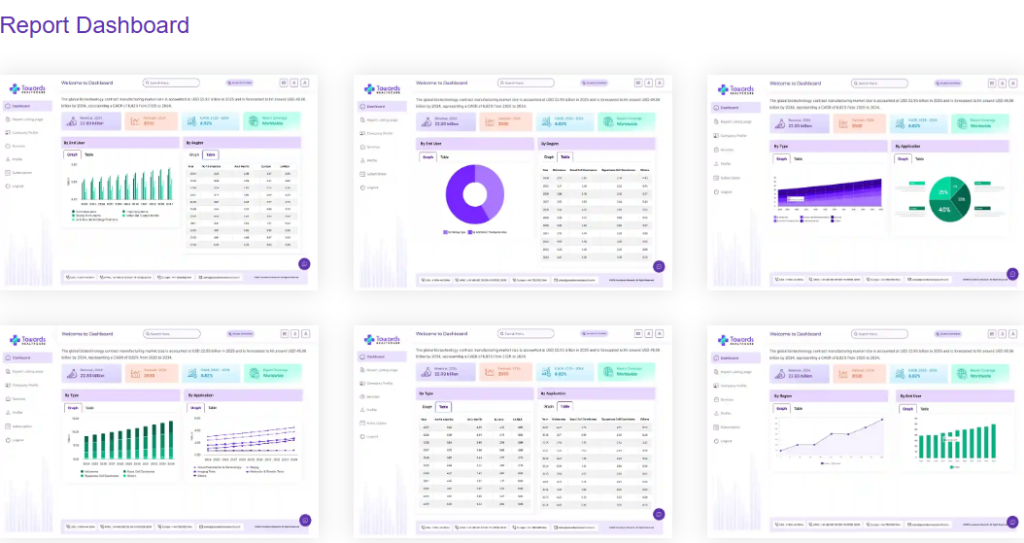
If your looking for more stats, insights, compititors data, strategies and more, access the dashboad and get every in depth detail at one place: https://www.towardshealthcare.com/access-dashboard
Also if you want to know how the market is performing across different regions? Visit our databook for detailed stats and numbers: https://www.towardshealthcare.com/dashboard/
Contact Details:
Europe Region – +44 778 256 0738
North America Region – +1 8044 4193 44
APAC Region: +91 9356 9282 04
Visit Our Website: https://www.towardshealthcare.com
Find us on social platforms: LinkedIn | Twitter | Instagram | Medium